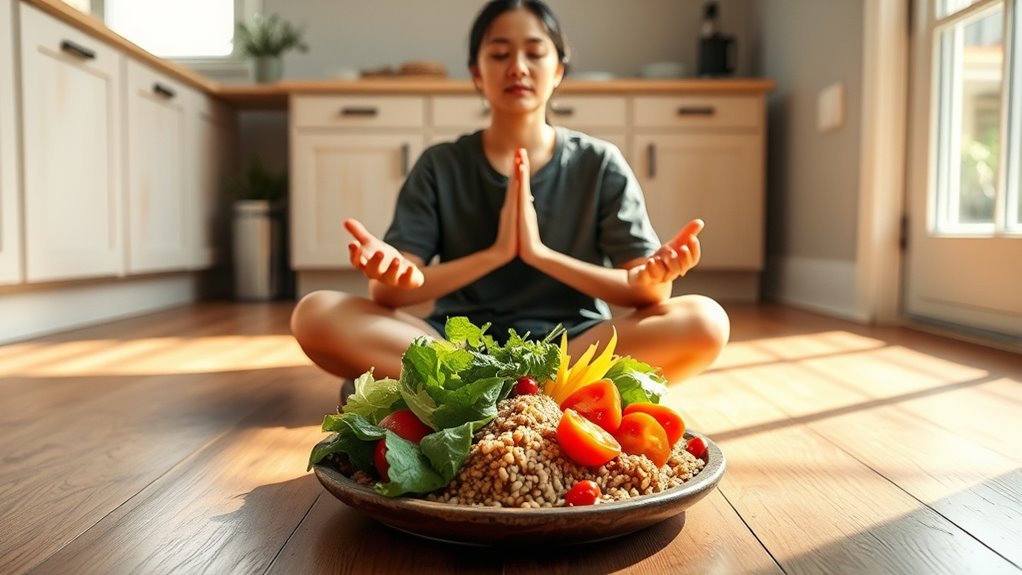

To practice Stoic habits for mindful eating and health, start by pausing before each meal to breathe, observe your thoughts, and recognize triggers like stress or boredom. Reflect daily on your eating habits and emotional responses to build awareness. Approach food with intention rather than impulsiveness, and incorporate acts of kindness to boost overall well-being. Keep exploring these habits to develop greater emotional resilience and healthier routines that support your long-term goals.
Key Takeaways
- Practice intentional pauses before meals to observe thoughts, feelings, and triggers, fostering mindfulness and emotional resilience.
- Use daily reflections to assess eating motivations, emotional influences, and identify patterns of mindless or impulsive eating.
- Cultivate self-awareness and control by recognizing triggers like boredom or stress, and responding thoughtfully rather than reactively.
- Incorporate acts of kindness and caring, such as mindful choices in daily routines, to reinforce overall well-being and mental clarity.
- Develop a flexible routine combining reflection and mindful pauses, promoting healthier habits without rigid rules or judgment.

In today’s fast-paced world, practicing mindful eating can considerably improve your overall health, and adopting Stoic habits offers a practical way to achieve this. One of the key benefits of integrating Stoic principles into your routine is building emotional resilience, which helps you stay centered amidst cravings, stress, or emotional triggers. When you approach your meals with intentionality, you create space for daily reflection, allowing you to understand your eating patterns and emotional responses better. This awareness strengthens your ability to resist impulsive choices and develop healthier habits over time.
Practicing mindful eating with Stoic habits fosters resilience and healthier, more intentional food choices.
To cultivate emotional resilience through mindful eating, start by pausing before each meal. Take a moment to breathe deeply and observe your thoughts and feelings. Are you eating out of boredom, stress, or genuine hunger? Recognizing these triggers aligns with Stoic teachings on self-awareness and control. Instead of reacting automatically, you consciously decide how to proceed, reinforcing your capacity to manage emotional triggers without becoming overwhelmed. Regularly practicing this pause enhances your resilience, making it easier to face temptations or setbacks with calm and clarity.
Daily reflection is another essential Stoic habit that complements mindful eating. At the end of each day, spend a few minutes reviewing your eating experiences. Ask yourself what motivated your food choices, whether you ate out of necessity or habit, and how your emotions influenced your decisions. Did you feel gratitude for nourishing your body? Did you notice moments of mindless eating or emotional overeating? By reflecting on these points, you develop a deeper understanding of your habits and emotional landscape. Over time, this practice helps you identify patterns, recognize triggers, and cultivate a more intentional relationship with food.
Integrating Stoic habits into your daily routine doesn’t mean forcing rigid rules but rather developing a mindful approach that fosters emotional resilience and clarity. When you combine daily reflection with mindful pauses before meals, you become more aware of your internal state and how it influences your choices. This awareness allows you to respond thoughtfully rather than react impulsively, leading to healthier eating habits and a more balanced mindset. Over time, these practices reinforce your capacity to handle emotional challenges and maintain focus on your health goals.
Additionally, choosing appropriate dog sweaters for your pet can contribute to your overall sense of well-being and mindfulness by caring for another living being with intention and love.

The Mindful Eating Journal: Prompts and Practices to Restore Your Relationship with Food
As an affiliate, we earn on qualifying purchases.
As an affiliate, we earn on qualifying purchases.
Frequently Asked Questions
How Can Stoic Principles Improve Long-Term Dietary Discipline?
You can improve long-term dietary discipline by embracing stoic principles like virtue cultivation and resilience building. When you focus on developing self-control and patience, you resist temptations more effectively. Practicing mindfulness helps you stay aligned with your values, making it easier to maintain healthy habits. Resilience allows you to bounce back from setbacks, reinforcing your commitment over time and turning discipline into a sustainable part of your life.
What Are Practical Daily Routines for Mindful Eating Inspired by Stoicism?
You can practice mindful eating daily by integrating mindful meal planning, where you intentionally choose nutritious foods and set an eating schedule. During meals, do dietary mindfulness exercises like paying close attention to textures, flavors, and sensations, and eating slowly. Pause between bites to assess fullness and gratitude. These routines help you stay present, cultivate discipline, and make healthier choices inspired by stoic principles.
How Does Stoic Philosophy Address Emotional Eating Habits?
Did you know that 38% of emotional eaters struggle with impulse control? Stoic philosophy teaches you to build emotional resilience by recognizing triggers and practicing self-discipline. When faced with emotional eating urges, pause and reflect on your values. This helps you manage feelings without resorting to food. By cultivating impulse control, you strengthen your ability to face emotions calmly and make mindful choices that support your health.
Can Stoic Practices Help With Overcoming Food Cravings?
Yes, Stoic practices can help you overcome food cravings by strengthening your emotional resilience and impulse control. When cravings hit, remind yourself that you control your reactions, not your urges. Practice mindfulness and pause before giving in, analyzing whether the craving aligns with your values. Over time, this cultivates discipline, making you more resilient to impulsive eating and empowering you to make healthier choices.
What Role Does Self-Reflection Play in Maintaining Healthy Eating Habits?
You might think self-reflection is unnecessary, but it’s essential for maintaining healthy eating habits. By practicing self-awareness development, you identify triggers and patterns that lead to unhealthy choices. This process boosts emotional resilience, helping you stay committed even during cravings or setbacks. Regular self-reflection sharpens your understanding of habits, empowering you to make mindful decisions. Ultimately, it keeps you aligned with your health goals and fosters lasting positive change.

PRIMEPATIO Meditation Cushion, Meditation Pillow for Sitting on Floor, Large Yoga Zabuton Pillows Washable, Zafu Set with 2 Knee Supports, 3 Shapes for Comfortable Sitting, Dark Grey
Dual Layers Support System: Includes a 24"x24" meditation cushion and a 17.7"x9.8" mat. This scientifically balanced support cradles…
As an affiliate, we earn on qualifying purchases.
As an affiliate, we earn on qualifying purchases.
Conclusion
So, there you have it—your foolproof Stoic guide to mindful eating. Just remember, when temptation strikes, pretend you’re on a sacred mission to tame your cravings, not just avoiding dessert. After all, who needs pleasure when you can master the art of disciplined restraint? Embrace these habits, and soon you’ll be the philosopher of portion control—because nothing says “wise” like turning a simple snack into a moral victory.

Self Regulation Workbook For Teen Boys: Daily Activities To Promote Growth Mindset, Improve Stress Management, Raise Emotional Intelligence, And Create Resilient Teenagers (Self Help for Teen Boys)
As an affiliate, we earn on qualifying purchases.
As an affiliate, we earn on qualifying purchases.

The Compassionate Kitchen: Buddhist Practices for Eating with Mindfulness and Gratitude
As an affiliate, we earn on qualifying purchases.
As an affiliate, we earn on qualifying purchases.