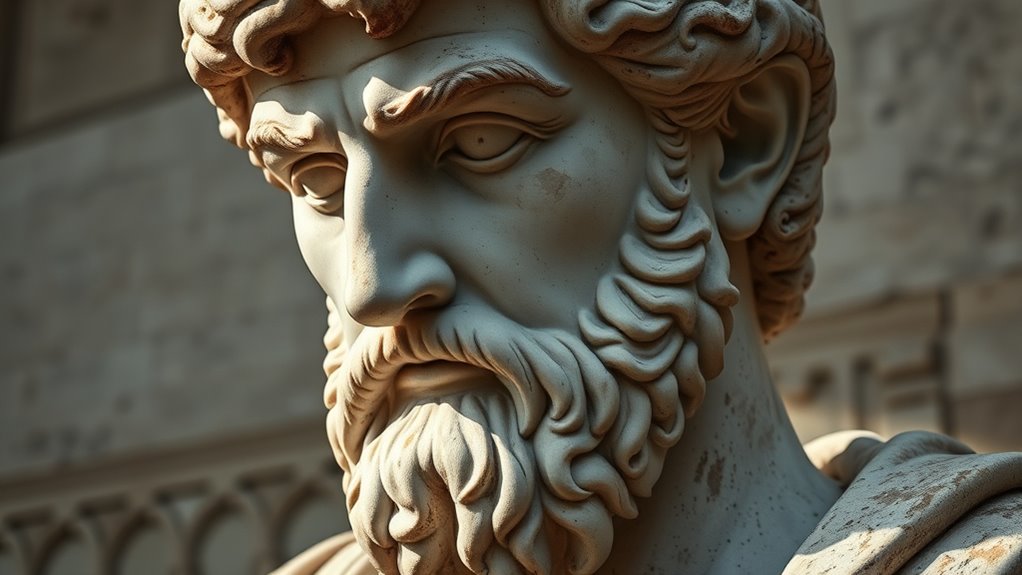

Marcus Aurelius teaches that true leadership comes from virtues like wisdom, justice, temperance, and courage, not external power. Focus on embodying discipline and integrity, especially when facing setbacks, as these moments build resilience and moral strength. By acting with fairness and self-control, you inspire trust and loyalty in others. If you want to discover more quotes that highlight virtuous leadership and how to lead with moral strength, keep exploring these insights.
Key Takeaways
- True leadership is rooted in virtue, exemplifying wisdom, justice, courage, and temperance regardless of external circumstances.
- Setbacks and challenges are opportunities to demonstrate resilience and reinforce moral integrity.
- Maintaining self-discipline and composure models ethical behavior and inspires trust among followers.
- Leadership reflects character; acting with fairness and humility fosters loyalty and ethical influence.
- Virtues guide decisions more than external power, emphasizing inner strength and moral clarity.

Reflecting on leadership through the lens of Marcus Aurelius reveals timeless lessons about virtue, resilience, and self-discipline. As a leader, you’re constantly faced with challenges that test your character. Marcus’s teachings emphasize that true leadership isn’t about power or control; it’s about embodying Stoic virtues—wisdom, courage, justice, and temperance—that serve as your ethical compass. These virtues guide your decisions and actions, especially when circumstances become difficult. By internalizing these principles, you build resilience, knowing that external events are beyond your control, but your responses are within your power. This mindset fosters inner strength, enabling you to lead with integrity even under pressure.
True leadership is rooted in virtue, resilience, and self-discipline, guiding your actions beyond external circumstances.
Marcus’s wisdom offers clear ethical guidance that helps you navigate complex situations. He believed that a leader’s primary duty is to act in accordance with nature and reason, demonstrating justice and fairness in every decision. When faced with dilemmas, you’re encouraged to pause, reflect, and consider what aligns with these virtues rather than succumbing to impulse or external pressures. This approach cultivates consistency and trust among those you lead. Marcus urged leaders to practice self-discipline, recognizing that mastery over your desires and emotions is essential for moral clarity. When you maintain composure and discipline, you set a powerful example for others and foster a culture of integrity. Additionally, understanding the importance of projector technology can help leaders create environments that enhance clarity and focus, similar to how a well-calibrated projector improves image quality.
Many of Marcus’s quotes serve as ethical anchors, reminding you to prioritize the common good over personal gain. His emphasis on humility and service encourages you to view leadership as a responsibility rather than a privilege. When you encounter setbacks or criticism, remember Marcus’s counsel to remain steadfast and patient, understanding that setbacks are opportunities for growth. Through practicing Stoic virtues daily, you develop resilience that withstands adversity and promotes ethical consistency. This unwavering commitment to virtue not only enhances your leadership but also inspires those around you to act with integrity.
Ultimately, Marcus Aurelius teaches that authentic leadership is rooted in virtue and self-awareness. By adhering to Stoic virtues as your ethical guidance, you cultivate resilience and moral clarity. Your leadership becomes a reflection of your character—steadfast, just, and disciplined. When you lead with integrity, you foster trust and loyalty, creating a legacy built on virtue. Marcus’s insights remind you that true leadership isn’t about dominance but about exemplifying the virtues that elevate those you serve, guiding them toward a more virtuous and resilient community.
Top picks for "marcu aureliu leadership"
Open Amazon search results for this keyword.
As an affiliate, we earn on qualifying purchases.
Frequently Asked Questions
How Can Marcus Aurelius’s Leadership Lessons Be Applied Today?
You can apply Marcus Aurelius’s leadership lessons today by practicing Stoic resilience, staying calm amid challenges, and maintaining ethical decision making. Embrace self-discipline and focus on your principles, even when faced with difficult choices. By cultivating inner strength and integrity, you inspire trust and foster a positive environment. His teachings remind you to lead with humility, wisdom, and a commitment to doing what’s right, regardless of external pressures.
What Are Common Misconceptions About Marcus Aurelius’s Leadership Style?
Imagine walking through a quiet, ancient library where Stoic misconceptions and leadership myths drift like whispers. You might think Marcus Aurelius’s style is rigid or emotionless, but that’s far from true. His leadership emphasizes resilience, humility, and integrity. Many believe he was detached, yet he practiced empathy and self-awareness. These myths distort his true approach, which focused on inner strength and guiding with wisdom, not cold authority.
Which of His Quotes Best Exemplify Modern Leadership Values?
You should focus on Marcus Aurelius’s quote, “Waste no more time arguing what a good man should be. Be one,” which exemplifies modern leadership values like integrity and leadership ethics. It encourages you to embody Stoic virtues such as discipline and responsibility, showing that true leadership isn’t about words but actions. This quote inspires you to lead by example, aligning with contemporary principles of authentic and ethical leadership.
How Did Marcus Aurelius Handle Ethical Dilemmas as a Leader?
You see that Marcus Aurelius handled ethical dilemmas with unwavering moral integrity, prioritizing the greater good over personal gain. He believed in thoughtful ethical decision making, often reflecting on his duties and responsibilities. By staying disciplined and committed to virtue, he modeled how leaders should navigate complex situations, demonstrating that integrity and moral clarity are essential for effective and honorable leadership.
Are There Modern Leaders Inspired by Marcus Aurelius’s Philosophy?
Yes, many modern leaders draw inspiration from Marcus Aurelius’s philosophy, embodying Stoic resilience and practicing ethical mentorship. You might notice leaders who emphasize integrity, self-discipline, and resilience in tough times, reflecting his teachings. They use his insights to navigate challenges with calm and clarity, fostering trust and loyalty. By embracing his principles, these leaders inspire others to develop inner strength and ethical conduct, ensuring their leadership remains principled and resilient.
Conclusion
As you walk the path of leadership, remember Marcus Aurelius’s words are your guiding stars. Let integrity be your compass, shining brightly through storms and calm alike. Embrace humility like a gentle breeze, steady and invigorating. With each step, carry the weight of wisdom and the light of virtue, forging a trail that others will follow. In your journey, be the steady flame that illuminates the way, inspiring trust and resilience in every heartbeat.