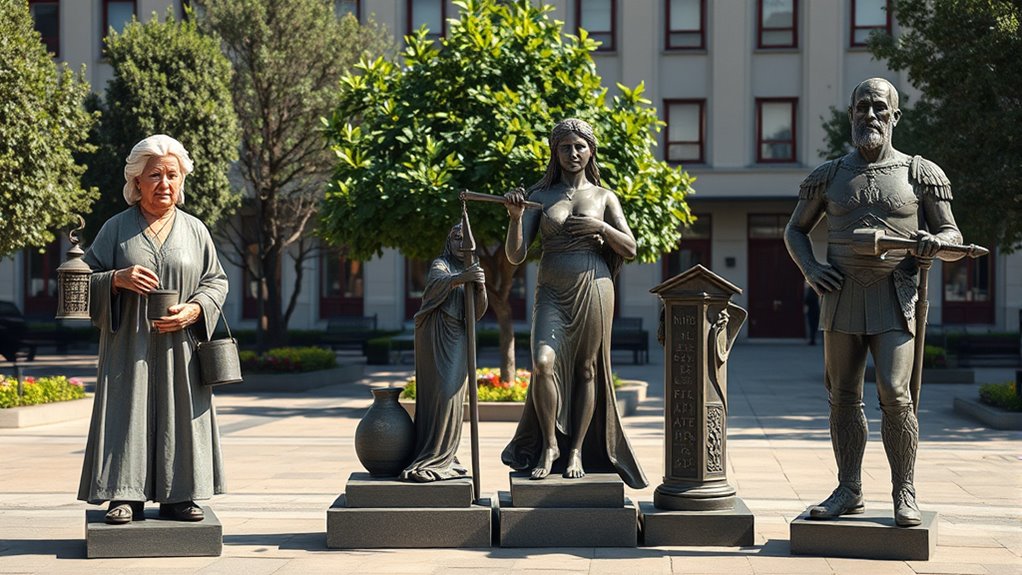

The four virtues—prudence, justice, temperance, and courage—serve as guiding principles for ethical living. Prudence helps you make wise decisions; justice encourages fairness and responsibility; temperance teaches control over desires; and courage empowers you to face challenges bravely. These timeless quotes inspire you to develop character and integrity. If you want to discover more about how these virtues shape a meaningful life, keep exploring further.
Key Takeaways
- Quotations about prudence emphasize wisdom, careful judgment, and self-reflection in decision-making.
- Justice quotes highlight fairness, moral responsibility, and the importance of equity in society.
- Temperance sayings focus on moderation, self-control, and resisting excess for long-term well-being.
- Courage quotes inspire facing fears, resilience, and acting bravely despite challenges.
- These virtues are reinforced through timeless quotes that serve as moral lessons across history.

Virtues shape our character and guide our actions, often captured most powerfully through memorable quotes. These words serve as timeless reminders of the principles that foster virtue development, inspiring us to lead better lives. When you reflect on historical quotes about virtues, you begin to see how these ideals have shaped human behavior across centuries. For example, the ancient Greeks emphasized prudence as a key to wise decision-making, and their words still resonate today. Socrates famously said, “The unexamined life is not worth living,” highlighting the importance of prudence in personal growth. Recognizing the value of careful judgment helps you navigate complex situations, ensuring your actions align with reason rather than impulse. Through virtue development, you can internalize these lessons, making prudence a natural part of your character. Developing virtues like prudence and justice also involves cultivating analytical thinking, which enables you to assess situations thoroughly before acting.
Virtues guide our actions, inspiring growth through timeless quotes and lessons across history.
Justice, another fundamental virtue, finds powerful expression in history’s words as well. It’s the moral compass that guides fairness and equity. When you think about justice, consider Martin Luther King Jr.’s statement: “Injustice anywhere is a threat to justice everywhere.” This quote reminds you that acting justly isn’t just about individual morality but about contributing to a fairer society. Embracing justice means holding yourself accountable and ensuring your actions uphold fairness, even when it’s difficult. Over time, virtue development in justice encourages you to stand up against inequality, fostering trust and harmony in your relationships and community.
Temperance, often associated with moderation, is equally essential. It teaches you to control desires and act with balance. Historical quotes about temperance, like Aristotle’s assertion that virtue lies in the “mean,” emphasize that excess often leads to downfall. When you practice temperance, you find harmony in your life — avoiding extremes and cultivating self-control. This virtue helps you resist temptations and make choices rooted in long-term well-being rather than fleeting pleasures. Through ongoing virtue development, temperance becomes a guiding principle that stabilizes your behavior and sustains your integrity.
Courage completes the quartet of virtues, empowering you to face fears and challenges head-on. Famous quotes, such as Winston Churchill’s “Courage is what it takes to stand up and speak,” illustrate that true bravery isn’t the absence of fear but the willingness to act despite it. Developing courage involves pushing beyond comfort zones, which builds resilience and confidence. When you embrace this virtue, you become someone who confronts difficulties with resolve, inspiring others around you. Historical quotes about courage serve as enduring lessons that strengthen your resolve and encourage you to act rightly, even in adversity.
In all, these virtues—prudence, justice, temperance, and courage—are woven into the fabric of human history through powerful quotes. They serve as guiding stars in your virtue development, reminding you of the timeless principles that shape a good, meaningful life.

TIQLAB Electric Height Adjustable Standing Desk 47.2×23.6 inch, Sit Stand Desk with Splice Board, Memory Controller, White Frame & Maple Top Computer Workstation for Home Office
30 minutes assembly - The package comes with step-by-step instructions, clearly labeled parts, and a specialized L-shaped allen...
As an affiliate, we earn on qualifying purchases.
Frequently Asked Questions
How Do These Virtues Apply in Modern Everyday Life?
You apply these virtues in everyday life by making practical decisions, balancing your actions, and standing up for what’s right. In modern ethical dilemmas, prudence guides you to think carefully before acting, justice ensures fairness, temperance helps you control impulses, and courage empowers you to face challenges. These virtues help you navigate complex situations with integrity, fostering better relationships and a more ethical approach to daily challenges.
Can Someone Excel in One Virtue but Struggle With Others?
You can definitely excel in one virtue but struggle with others; about 60% of people experience virtue imbalance. For example, someone might show remarkable courage but lack temperance. Cross-cultural virtues highlight that different societies prioritize virtues differently, making it common to favor certain qualities over others. This imbalance doesn’t mean failure—it’s part of human diversity, and developing all virtues takes time and conscious effort.
Are These Virtues Universally Accepted Across Different Cultures?
You’ll find that these virtues aren’t universally accepted across cultures due to cross-cultural interpretations and their historical evolution. Different societies prioritize virtues differently based on their values and traditions. While some cultures emphasize justice and temperance, others may focus more on courage or prudence. Understanding these variations helps you appreciate how moral ideals adapt over time and across diverse cultural landscapes, shaping what people deem virtuous in their unique contexts.
How Can These Virtues Be Cultivated Intentionally?
You can cultivate these virtues intentionally by practicing self-discipline development and integrating strategies like setting clear goals, reflecting on your actions, and seeking feedback. Focus on daily habits that reinforce each virtue—like patience for temperance or honesty for justice. Consistently applying these virtue integration strategies helps you build character, making these qualities more natural over time. Stay committed, and you’ll see meaningful growth in your moral development.
What Are Common Misconceptions About Each Virtue?
You might think virtues are fixed traits, but stereotypes often distort them. For example, prudence is seen as mere cautiousness, but it’s about wise decision-making across cultures. Justice isn’t always about fairness universally, as cultural differences shape its meaning. Temperance isn’t just moderation, and courage isn’t reckless bravery. These misconceptions overlook how diverse cultural values influence what each virtue truly entails, making understanding nuanced and context-dependent.

Veken 63 x 28 Inch Electric Standing Desk, Sit to Stand Up, Work Home Office Computer Table for Study, Walking Pad, Writing, and Games, Wooden Desktop Desks, Brown
【Friendly Remind】This Veken standing desk is built with joined pieces (not one whole) .
As an affiliate, we earn on qualifying purchases.
Conclusion
Remember, embodying these virtues is like tending a garden—you nurture them daily to see them flourish. Prudence guides your choices, justice ensures fairness, temperance keeps you balanced, and courage helps you face challenges. When you live by these virtues, you shape a character that shines brightly, much like a lighthouse guiding others safely through storms. Keep practicing, and your integrity will be your compass, guiding you to a more fulfilled and meaningful life.

OffiGo U Shaped Electric Standing Desk with Keyboard Tray, 55 Inch Height Adjustable Desk with Power Outlets & LED Lights, Sit Stand Table with Monitor Stand for Home, Office, White
Extra Usage Space: This OffiGo U shaped standing desk features a dual corner design that provides more workspace...
As an affiliate, we earn on qualifying purchases.

ErGear Height Adjustable Electric Standing Desk, 48 x 24 Inches Sit Stand up Desk, Memory Computer Home Office Desk, Black
Electric Height Adjustable Standing Desk for Comfortable Work - Switch effortlessly between sitting and standing with this electric...
As an affiliate, we earn on qualifying purchases.