

Stoics value virtue above all else because they believe true happiness comes from within, rooted in moral character rather than external possessions or fleeting pleasures. By focusing on developing qualities like wisdom, courage, and justice, you build resilience and inner peace regardless of life’s ups and downs. Acting in line with your values fosters authenticity and self-trust. If you stay committed, you’ll discover how cultivating virtue offers lasting fulfillment and strength in every situation.
Key Takeaways
- Stoics believe virtue is the only true good, providing lasting happiness regardless of external circumstances.
- Valuing virtue cultivates inner resilience, enabling one to face life’s challenges with moral strength.
- Prioritizing virtues like wisdom, justice, and temperance guides ethical decision-making and personal growth.
- Virtue aligns actions with core values, fostering self-trust, integrity, and respect from others.
- Living virtuously offers a sense of purpose and fulfillment that external possessions cannot provide.
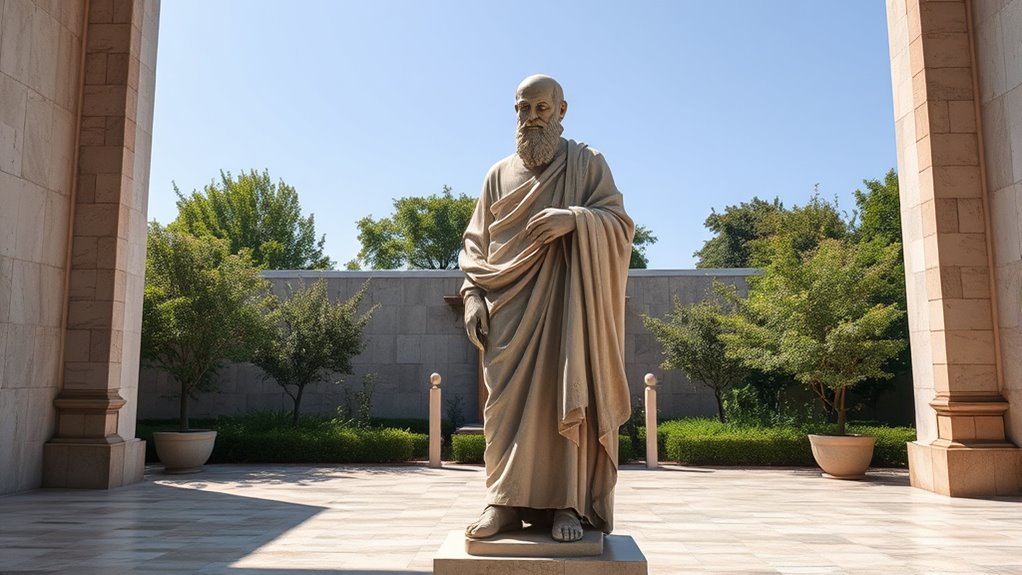
Many Stoics believe that true happiness comes from living a virtuous life, not from external possessions or circumstances. To them, your moral character and personal integrity are the foundation of a fulfilling life. When you focus on cultivating these qualities, you create a strong inner core that remains resilient regardless of what life throws your way. It’s about aligning your actions with your values, ensuring that your behavior reflects honesty, fairness, and courage. This internal consistency builds trust in yourself and earns respect from others, fostering a sense of peace and purpose.
Living with virtue means you prioritize your moral character over fleeting pleasures or material gains. You recognize that external things—money, status, possessions—are temporary and outside your control. Instead, you dedicate yourself to developing qualities like wisdom, temperance, justice, and courage. These virtues shape your character and guide your decisions, helping you act rightly even when it’s difficult. Personal integrity becomes your compass, guiding you to do what’s right because you value virtue itself, not just the outcome. When your actions are rooted in integrity, you avoid hypocrisy and stay true to your principles, which in turn nurtures self-respect and inner harmony.
Prioritizing moral character over fleeting pleasures fosters integrity, inner harmony, and resilience through virtues like wisdom, justice, temperance, and courage.
The Stoic emphasis on virtue encourages you to see setbacks and challenges as opportunities to demonstrate your moral character. When you face adversity, instead of blaming external circumstances, you focus on how you respond. Are you acting with patience and honesty? Are you maintaining your composure and acting justly? These responses reinforce your sense of integrity and help you grow stronger morally. Over time, this mindset shifts your focus from external validation to internal growth. You learn to find contentment not in what you possess but in the quality of your character. Additionally, understanding the value of wealth and reputation in the context of virtue can help you maintain perspective during life’s fluctuations.
Moreover, valuing virtue influences your relationships and how you interact with others. When you prioritize moral character and personal integrity, you build trust and respect. People are drawn to those who act consistently and ethically. This creates a sense of community and purpose, as your actions contribute to a greater good. Basically, by living virtuously, you affirm your identity as a person of integrity, which makes your life more meaningful and resilient. You understand that true happiness isn’t about external circumstances but the quality of your moral character. That realization empowers you to navigate life’s ups and downs with clarity, confidence, and a steady commitment to virtue.
Top picks for "stoic value virtue"
Open Amazon search results for this keyword.
As an affiliate, we earn on qualifying purchases.
Frequently Asked Questions
How Do Stoics Define “Virtue” Specifically?
You might wonder how Stoics define “virtue” specifically. They see virtue as excellence in moral character development, encompassing qualities like wisdom, courage, justice, and temperance. To them, virtue isn’t just good behavior but a way of living that aligns with nature and reason. By cultivating these qualities, you develop true moral excellence, leading to a fulfilled, resilient life. Virtue, then, becomes your path to inner harmony and ethical living.
Can Virtue Be Cultivated Intentionally or Is It Innate?
You can cultivate virtue intentionally through moral development, effort, and reflection. While some innate qualities may influence your capacity for virtue, it’s largely a skill you develop over time. By practicing self-control, wisdom, and courage daily, you shape your character. Virtue isn’t solely innate; it’s something you actively nurture, making it accessible to everyone willing to commit to moral growth and self-improvement.
How Do Stoics Handle Moral Dilemmas Conflicting With Virtue?
Imagine facing a moral ambiguity where your values clash. Stoics handle ethical conflicts by grounding themselves in virtue, even when it’s tough. They remind themselves that virtues like wisdom and justice guide their choices, helping them navigate dilemmas with clarity. Instead of avoiding conflict, you embrace it as a chance to practice virtue, trusting that staying true to your principles leads to true peace and integrity, no matter the challenge.
Is Virtue More Important Than Happiness in Stoic Philosophy?
In Stoic philosophy, virtue is more important than happiness because it directly influences your success and emotional resilience. When you prioritize virtue, you build inner strength that helps you handle life’s challenges calmly and wisely. While happiness can be fleeting, virtue offers lasting fulfillment and resilience, guiding your actions and ensuring true success. So, for you, cultivating virtue means creating a solid foundation for a meaningful, resilient life.
How Does Practicing Virtue Impact Modern Daily Life?
You might think practicing virtue is just for philosophers, but it actually transforms your daily life. When you engage in mindful decision making and stick to daily ethical routines, you build resilience and integrity. Ironically, by focusing on virtuous actions, you often find happiness more consistent than chasing fleeting pleasures. Virtue guides you through life’s chaos, helping you stay grounded and authentic amidst the noise.
Conclusion
So, now that you understand why Stoics prioritize virtue above all, imagine how embracing this mindset could transform your life. Will you let fleeting pleasures or external validation distract you from what truly matters? Or will you choose to cultivate inner strength and integrity, even when it’s hardest? The choice is yours—what path will you take? The journey toward virtue isn’t easy, but the rewards might just surprise you when you least expect them.