

If you notice you’re putting in more effort than your partner, it’s important to communicate your feelings openly without blame, using “I” statements. Set clear boundaries to protect your emotional well-being and reflect honestly on your motivations. Prioritize self-care and recognize when the imbalance affects your happiness. If efforts remain unequal despite honesty and boundaries, consider reevaluating the relationship’s potential. Want to learn more about maintaining your self-worth while managing imbalance?

Get books, candles and calm essentials delivered free — and shop member deals
- Fast, free delivery on millions of items
- Access to Prime Big Deal Days deals on October 6–7
- Prime Video, Amazon Music and more included
Key Takeaways
- Recognize and accept your feelings to avoid sacrificing self-worth for the relationship.
- Communicate your boundaries and concerns honestly to promote mutual understanding.
- Regularly self-reflect to ensure your efforts align with your values and emotional well-being.
- Reassess the relationship if effort remains unequal despite open dialogue.
- Prioritize self-care and emotional health over trying to compensate for imbalance.
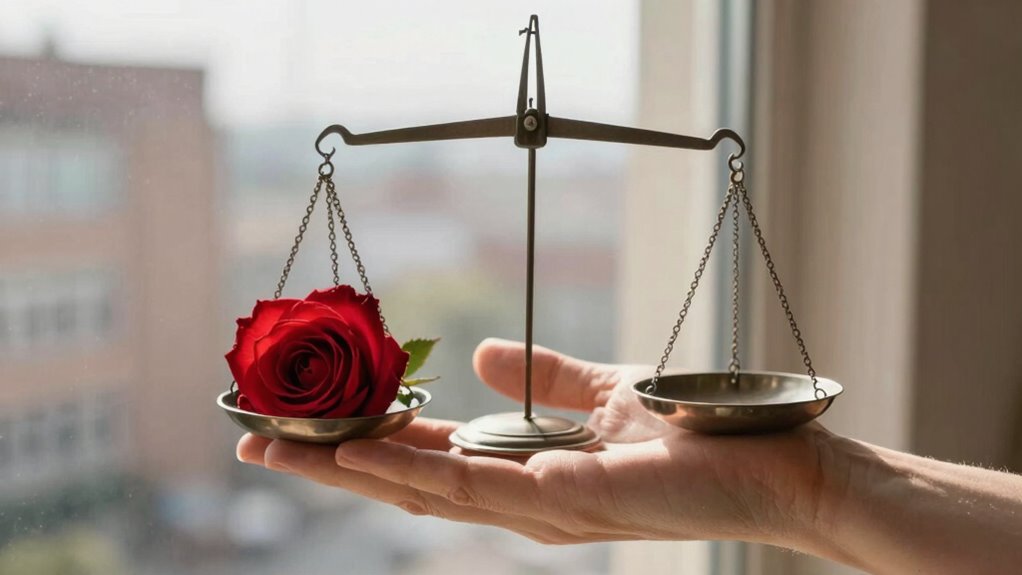
When you notice that your efforts in dating aren’t being reciprocated equally, it can feel frustrating and confusing. You might find yourself questioning if you’re doing too much or if your feelings are too much for the other person. At this point, setting emotional boundaries becomes crucial. Emotional boundaries help you protect your well-being by clarifying what you’re comfortable with and what you’re willing to accept. It’s about recognizing your limits and communicating them clearly, so you don’t get lost in trying to please someone else at the expense of your own needs. You deserve to feel respected and valued without constantly overextending yourself.
Self-reflection is a vital tool in this process. Take a step back and honestly assess your feelings and actions. Are you giving more than you’re receiving? Are your efforts driven by genuine interest or hope that the other person will change? By examining your motivations and patterns, you gain insight into what’s healthy for you and where you might need to draw the line. Self-reflection also helps you recognize whether your expectations are realistic and aligned with your values. If you realize that you’re consistently the one initiating conversations or making plans, it’s time to ask yourself if this imbalance is sustainable or if it’s draining your emotional energy. Recognizing unequal effort in dating can also be influenced by external factors, such as societal expectations or personal boundaries related to ethics and respect. For instance, understanding the typical resale value of your emotional investment can help you decide when to step back. Additionally, being aware of sauna safety tips can serve as a reminder to prioritize your well-being and recognize when a situation—whether physical or emotional—is no longer safe or healthy. Remember, just as proper DIY tools are essential for successful projects, having the right tools—like emotional awareness and boundaries—is crucial for maintaining healthy relationships. Furthermore, understanding the importance of self-care can reinforce your resilience and capacity to handle relationship challenges effectively.
Reflect on your motivations and patterns to ensure your efforts align with your values and emotional well-being.
Once you’ve identified the imbalance, communicate openly with your partner. Share your feelings without blame or accusations—use “I” statements to express how you feel about the effort disparity. For example, “I feel overwhelmed when I’m the only one reaching out,” instead of “You never do anything.” This kind of honest dialogue can help both of you understand each other better and determine if the relationship can be balanced. Remember, maintaining your emotional boundaries doesn’t mean you’re giving up; it means you’re respecting your needs and expecting the same from your partner.
If, after honest communication and self-reflection, the effort remains unequal, it’s a sign to reevaluate the relationship. You shouldn’t have to compromise your self-worth or constantly adjust your boundaries to keep someone’s interest. Prioritize your emotional health by ensuring your efforts are matched and that you’re not losing yourself in the process. A healthy relationship involves mutual effort, respect, and understanding. Protecting your emotional boundaries and practicing self-reflection will guide you toward healthier, more balanced connections—ones where you’re appreciated for who you truly are, not just for what you do.
emotional boundary setting tools
As an affiliate, we earn on qualifying purchases.
As an affiliate, we earn on qualifying purchases.
Frequently Asked Questions
How Do I Recognize When Effort Imbalance Is Unhealthy?
You recognize an unhealthy effort imbalance when you notice emotional awareness fading—like feeling consistently drained or unappreciated. Use communication strategies to express your feelings openly and listen to your partner’s responses. If your efforts aren’t reciprocated or you feel overwhelmed, it’s a sign that the imbalance needs addressing. Trust your instincts and prioritize self-care; healthy relationships involve mutual effort and respect.
Can Effort Imbalance Improve Over Time Naturally?
Studies show that 60% of relationships experience effort imbalances that can improve naturally over time. In relationship dynamics, effort imbalance can shift as both partners adjust and grow. Maintaining emotional resilience helps you stay patient and open, allowing change to happen. If you communicate honestly and give your partner space to reciprocate, effort levels often balance out, fostering healthier, more sustainable connections over time.
Should I Always Confront My Partner About Effort Differences?
You shouldn’t always confront your partner about effort differences immediately; instead, assess if communication barriers or misunderstandings are causing the imbalance. Use apology strategies to express your feelings calmly without blame, fostering open dialogue. If issues persist, addressing them calmly helps prevent resentment. Remember, consistent confrontation might strain the relationship, so choose moments when both of you are receptive, ensuring your concerns are understood without losing yourself in the process.
How Do I Maintain My Self-Worth During Imbalance?
Think of your self-worth as a delicate plant; it needs daily care to thrive. To maintain it during imbalance, prioritize self-care strategies like setting boundaries, practicing self-compassion, and engaging in activities that boost your confidence. Emotional resilience grows when you remind yourself of your value. Stay true to your needs, and don’t let the effort imbalance diminish your sense of self. You’re deserving of love and respect, no matter the circumstances.
What if My Partner Dismisses My Concerns?
If your partner dismisses your concerns, stay emotionally aware of your feelings and recognize their importance. Clearly set boundaries to protect your needs, communicating calmly yet firmly that your feelings matter. If they continue to dismiss you, consider whether this relationship aligns with your self-worth and emotional health. Prioritize your well-being, and don’t be afraid to step back if your concerns aren’t acknowledged or respected.
Conclusion
Remember, love is a delicate dance where balance keeps the rhythm alive. When effort feels uneven, imagine yourself as a lighthouse—steady and shining, guiding your relationship through stormy seas. Stay true to your light, and communicate openly. If your partner’s effort begins to match yours, the waters calm, and the journey becomes smoother. Keep your heart grounded but flexible, knowing that true connection blooms when both of you nurture the same garden.
Fall Picks
fall essentials
As an affiliate, we earn on qualifying purchases.