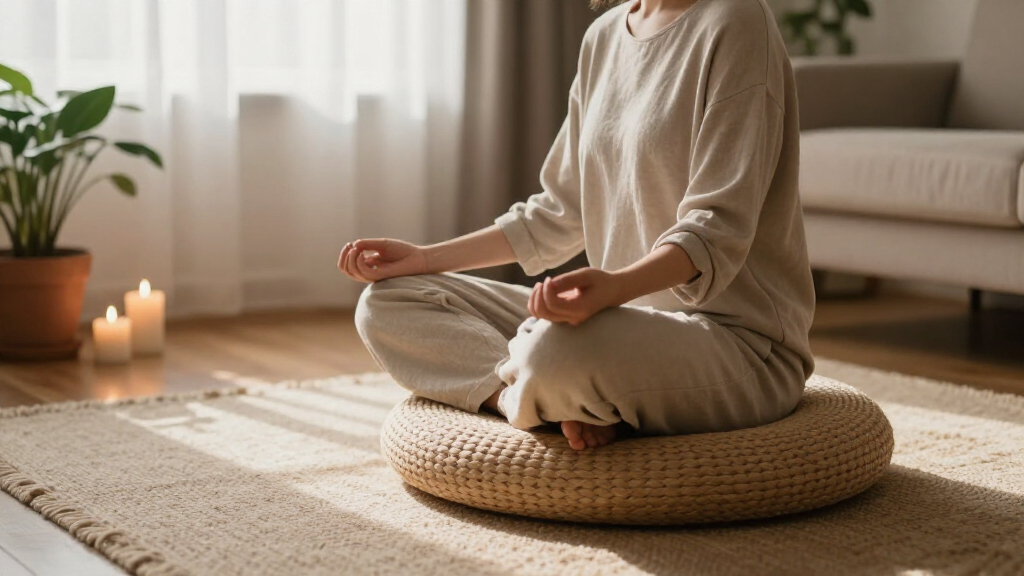

This guide helps you choose the right meditation cushion and position it correctly to foster relaxation and comfort during meditation. Suitable for beginners and those looking to improve their practice, this process takes about 30 to 45 minutes. Proper cushion selection and placement can reduce discomfort and enhance your focus, making meditation more effective and enjoyable.
Difficulty: Beginner | Time: 30-45 minutes
What You’ll Need
Tools & Materials:
- a meditation cushion or suitable alternative such as a folded blanket or pillow
Knowledge:
- basic understanding of meditation posture and comfort preferences
Ensure your space is quiet and free of distractions. Be prepared to spend some time trying different cushion positions to find what feels best for your body.

Retrospec Sedona Meditation Cushion, Buckwheat Pillow, Meditation Pillow
- Natural Buckwheat Hull Filling: Supports spine and hips during meditation
- Adjustable Firmness: Unzip to add or remove hulls
- Eco-Friendly Cotton Cover: Machine washable and sustainable
As an affiliate, we earn on qualifying purchases.
As an affiliate, we earn on qualifying purchases.
Before You Start
Verify that your chosen cushion is clean and in good condition. If using an alternative like a blanket, fold it appropriately beforehand. Avoid placing the cushion on uneven or slippery surfaces to prevent slipping during use.
Step-by-Step Instructions
Step 1: Select a suitable meditation cushion
Choose a cushion that provides enough height and firmness to support your hips comfortably. Common options include zafu (round cushion), zabuton (flat mat), or a firm pillow. The goal is to elevate your hips slightly above your knees when seated cross-legged, promoting an upright spine.
Tip:
If unsure, start with a small zafu or folded blanket. You can add or remove layers to adjust height and firmness.
Check:
You feel supported without strain, with your hips comfortably elevated and your spine upright.
Step 2: Position the cushion on a stable, flat surface
Place your cushion on a flat, stable surface such as a yoga mat, carpet, or hardwood floor. Ensure it does not slide when you sit on it by checking its grip and stability.
Tip:
If the surface is slippery, add a non-slip mat or a towel underneath the cushion.
Check:
The cushion remains steady when you sit, with no wobbling or slipping.
Step 3: Sit on the cushion in a comfortable posture
Sit with your legs crossed or in a lotus or half-lotus position if comfortable. Rest your hands on your lap or knees. Sit upright, aligning your ears over your shoulders and your shoulders over your hips.
Tip:
If sitting cross-legged causes discomfort, try sitting on the edge of the cushion with your legs extended or use a chair with your feet flat on the ground.
Check:
Your spine is straight but relaxed, and your hips are supported to prevent discomfort or slouching.
Step 4: Adjust your posture for comfort and support
Use cushions or blankets behind your lower back if needed to maintain an upright posture. Ensure your knees are at or below hip level and that your pelvis is tilted slightly forward for a natural curve.
Tip:
Maintain a relaxed jaw, slightly closed mouth, and relaxed shoulders to promote ease and reduce tension.
Check:
You feel balanced, with minimal tension in your back and shoulders, and a natural upright posture.
Step 5: Check and fine-tune your positioning
Adjust the cushion height, your sitting angle, or add extra padding as needed until you feel fully comfortable. Ensure your weight is evenly distributed on your sit bones.
Tip:
Stand up and sit down a few times to test comfort, making small adjustments as needed.
Check:
You can sit comfortably for at least 10-15 minutes without significant discomfort or shifting position.
Common Mistakes to Avoid
- Sitting with a slouched or collapsed posture — Use cushions and adjustments to maintain an upright spine, avoiding slumping forward or leaning back.
- Choosing a cushion that’s too soft or too low — Select a firm cushion that elevates your hips enough for a natural spine curve; add layers if needed.
- Placing the cushion on an unstable or slippery surface — Use non-slip mats or stable flat surfaces to prevent shifting during meditation.
Troubleshooting
Problem: Discomfort or pain after sitting
Solution: Adjust the cushion height or position, add extra padding, or switch to a different posture that relieves pressure.
Problem: Cushion slips or moves during use
Solution: Place a non-slip mat underneath, or switch to a more stable surface or cushion with better grip.
Problem: Difficulty maintaining an upright posture
Solution: Use additional support behind your lower back or sit on a slightly higher cushion for better alignment.
What Success Looks Like
You are seated comfortably with a straight, relaxed spine, hips elevated enough to prevent slumping, and no discomfort after at least 15 minutes of sitting. The cushion remains stable and provides support throughout your session.
Next Steps
Practice sitting on your cushion daily or as often as possible. Periodically check and adjust your positioning. When comfortable, explore different cushion styles or positions to find what best supports your meditation practice. Clean or replace your cushion as needed to maintain hygiene and comfort.
Frequently Asked Questions
How often should I replace my meditation cushion?
Replace or wash your cushion when it shows significant wear, becomes uncomfortable, or starts to lose support. Typically, cushions last 1-3 years with proper care.
Can I use a pillow instead of a traditional meditation cushion?
Yes, a firm pillow or folded blanket can serve as a substitute if it provides adequate height and support for your hips and back.
What if I find sitting cross-legged uncomfortable?
Try sitting on the edge of the cushion with your legs extended or use a chair with your feet flat on the ground, maintaining an upright posture.
How do I know if my posture is correct?
Your spine should be straight without strain, your hips slightly elevated, and your head aligned over your shoulders. You should feel relaxed but alert.