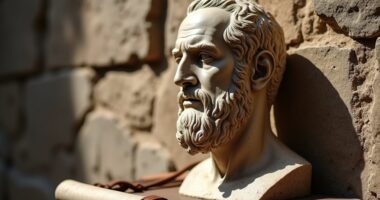

During the Islamic Golden Age, thinkers like Al-Farabi and Averroes integrated Stoic virtues and rational contemplation into their ethical views. They emphasized cultivating wisdom, courage, justice, and temperance for moral growth and societal harmony. Rational reflection helped them understand divine law and improve character. This fusion of Stoic ideas with Islamic thought shaped a unique philosophical landscape. If you explore further, you’ll discover how these principles influenced morality, spirituality, and cultural expression across the period.
Key Takeaways
- Islamic philosophers integrated Stoic virtues like wisdom, justice, temperance, and courage into their ethical frameworks.
- Rational contemplation was emphasized as a means to understand divine law and achieve moral growth.
- Al-Farabi linked virtues and rational reflection to the concept of the virtuous city, promoting societal harmony.
- Averroes highlighted reason’s role in interpreting religious texts and fostering spiritual and moral development.
- Artistic and cultural expressions incorporated natural materials symbolizing divine harmony, reflecting Stoic and Islamic philosophical integration.

During the Islamic Golden Age, philosophers deeply engaged with Greek Stoic ideas, integrating them into their own rich intellectual traditions. This synthesis led to a unique philosophical landscape where Stoic concepts like virtue ethics and rational contemplation found new expression within Islamic thought. You might notice how these thinkers emphasized the importance of cultivating virtues such as wisdom, courage, justice, and temperance, aligning closely with Stoic ideals. They believed that living a virtuous life was essential for achieving happiness and harmony, and this conviction shaped their approach to ethics and moral development.
Islamic philosophers integrated Stoic virtues like wisdom, courage, justice, and temperance into their ethical frameworks during the Golden Age.
In your exploration of these thinkers, you’ll see how they prioritized rational contemplation as a means to understand the universe and one’s place within it. They argued that by engaging in deliberate, reflective thought, individuals could attain a deeper insight into divine principles and their own nature. This process of rational contemplation was not just a philosophical exercise but a practical tool for moral growth. It encouraged you to scrutinize your motives, refine your character, and align your actions with universal virtues. Philosophers like Al-Farabi and Averroes believed that through disciplined reasoning, humans could access higher truths and live in accordance with divine law, therefore creating a harmonious life rooted in virtue. Additionally, they integrated natural materials into their architectural and artistic expressions, symbolizing the harmony between human creations and divine order.
Al-Farabi, often called the “Second Teacher” after Aristotle, integrated Stoic ideas into his concept of the virtuous city, where rulers and citizens alike practiced rational contemplation to achieve moral excellence. He viewed virtue ethics as a pathway to societal and personal well-being, emphasizing that rational reflection was essential for understanding the nature of good and evil. Averroes, meanwhile, emphasized the importance of reason in understanding religious texts and divine law, often drawing parallels between Stoic rationality and Islamic theology. For him, rational contemplation was a sacred duty, allowing believers to navigate complex moral dilemmas and cultivate virtues that aligned with divine will.
Together, these philosophers expanded Stoic ideas, showing you that virtue ethics and rational contemplation aren’t just abstract concepts but practical guides for living ethically and thoughtfully. Their work demonstrates that by cultivating virtues through disciplined reason, you can attain a life of moral integrity and spiritual fulfillment. This integration of Stoic ideas into Islamic philosophy created a legacy that underscored the importance of reason and virtue as central to human flourishing, inspiring future generations to seek harmony between faith, reason, and ethical living.

The Daily Stoic: 366 Meditations on Wisdom, Perseverance, and the Art of Living
As an affiliate, we earn on qualifying purchases.
As an affiliate, we earn on qualifying purchases.
Frequently Asked Questions
How Did Stoic Ideas Influence Islamic Political Thought During the Golden Age?
You see that Stoic influence on political leadership emphasized virtue, wisdom, and justice, shaping Islamic thinkers’ views on rulers’ moral responsibilities. The Stoic approach to justice inspired ideas of fairness, moral integrity, and the ruler’s duty to serve the common good. This perspective encouraged leaders to govern with virtue and prioritize justice, fostering a more ethical and balanced approach to governance during the Islamic Golden Age.
Were There Any Direct Philosophical Exchanges Between Stoics and Islamic Scholars?
You wonder if there were direct dialogues between Stoics and Islamic scholars. While no formal exchanges or debates exist, ancient texts and philosophical ideas circulated widely, inspiring later thinkers. Islamic scholars studied Greek works, translating and commenting on them, which fostered indirect influence. These texts served as silent dialogues, shaping Islamic philosophy through shared concepts of virtue, reason, and ethics, creating a bridge across cultures without direct contact.
How Did Islamic Theologians Interpret Stoic Concepts of Virtue and Ethics?
Islamic theologians interpreted stoic concepts of virtue and ethics through the lens of virtue ethics and ethical reasoning. You see, they emphasized inner moral development, aligning virtues like wisdom, courage, and temperance with Islamic virtues. They believed that cultivating these virtues guides ethical reasoning, helping believers achieve moral excellence. While they integrated some Stoic ideas, they adapted them to fit Islamic theology, emphasizing divine guidance alongside human virtue.
Did Stoic Philosophy Impact Islamic Medical and Scientific Practices?
Imagine a river flowing through your life, shaping everything it touches. Stoic philosophy influenced Islamic medical and scientific practices by emphasizing stoic medicine, which promotes mental tranquility, and stoic ethics, guiding moral decisions. These ideas helped scholars develop a balanced approach to health and knowledge, encouraging resilience and rationality. Your understanding of these principles shows how philosophical currents can shape practical fields, fostering a harmonious blend of mind and body in scientific pursuits.
What Role Did Stoic Ideas Play in Islamic Mystical and Spiritual Traditions?
You see that Stoic ideas deeply influence Islamic mystical and spiritual traditions, especially through Stoic meditation techniques that promote inner calm and self-awareness. These practices emphasize mystical virtue, aligning with spiritual growth and moral excellence. By adopting Stoic concepts, practitioners cultivate resilience and tranquility, integrating these ideas into their spiritual journeys, which enhances their connection with the divine and fosters a profound sense of inner peace.
The Golden Age of Islamic Philosophy: From Al-Kindi to Averroes (Early Islamic History Collection)
As an affiliate, we earn on qualifying purchases.
As an affiliate, we earn on qualifying purchases.
Conclusion
As you reflect on this rich fusion of Stoic philosophy and Islamic thought, it’s clear that these ideas aren’t just relics of the past—they’re timeless guides for resilience and virtue. Just as stars illuminate the night, thinkers like Al-Farabi and Averroes shine a light on how wisdom transcends cultures and centuries. So, will you embrace this enduring legacy, letting their insights steer your journey through life’s storms? The choice, like philosophy itself, is yours to make.

The Virtues: A Very Short Introduction
As an affiliate, we earn on qualifying purchases.
As an affiliate, we earn on qualifying purchases.

Meditations: Philosophical Contemplations of a Roman Emperor
As an affiliate, we earn on qualifying purchases.
As an affiliate, we earn on qualifying purchases.