

For a first book on Stoicism, I’d choose The Little Book of Stoicism for its practical introduction, while Meditations offers direct access to Marcus Aurelius and The Daily Stoic breaks the philosophy into short daily readings. The right choice depends on whether you want ancient sources, a modern explanation, a structured primer, or brief prompts for everyday reflection. Older translations can feel more demanding, while adapted guides may trade some historical texture for accessibility. Collections offer breadth but can be harder to approach than one focused book. Read on for my comparison of all 15 options and a recommendation by reader type.
Key Takeaways
- The Little Book of Stoicism is the most approachable starting point here; it explains practical ideas before asking readers to work through ancient texts.
- Meditations appears in several editions, but the choice is mainly about translation and presentation, not different teachings from Marcus Aurelius.
- The Major Works of the Stoics set stands apart for readers who want Marcus Aurelius, Seneca, and Epictetus together, though it asks for more sustained reading.
- The Daily Stoic suits a short daily routine better than a reader seeking a continuous argument or a full account of Stoic history.
- Quote collections and journals offer convenient reflection, but they provide less philosophical depth than primary texts or structured introductions.


| stoicism philosophy book | Subject | Format |
|---|---|---|
| Letters from a Stoic | Stoic philosophy | Book |
| The Little Book of Stoicism: T | Stoic philosophy | Book |
| How to Be a Stoic: Using Ancie | Stoic philosophy | Book |
| Modern Stoicism: Your Guide to | Stoic philosophy | Book |
| Meditations: A New Translation | Stoic philosophy | Book |
| The Complete Guide to Stoicism | Stoic philosophy | Hardbound |
| Meditations | Stoic philosophy and self-reflection | — |
| Marcus Aurelius | Stoic philosophy | — |
| Stoicism 101: From Marcus Aure | Stoic philosophy | — |
| Major Works of the Stoics 3-Bo | — | Hardcover |
| The Wisdom of the Stoics Boxed | Stoic philosophy | Boxed set |
| Greatest Stoic Quotes of All T | Stoic philosophy | Quote collection |
| Stoicism: How to Use Stoic Phi | Stoic philosophy | Book |
| Stoicism: The Essential Journa | Stoicism | Journal |
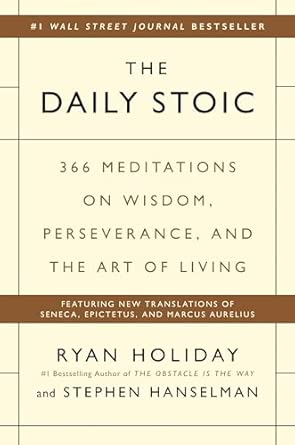
| The Daily Stoic: 366 Meditatio | Stoic philosophy | Meditations |
More Details on Our Top Picks
Letters from a Stoic
Seneca’s letters give readers Stoicism in its original voice: reflections on virtue, hardship, time, and how to live well. I rank this for readers who want to encounter an ancient Stoic author directly, rather than begin with a modern guide. Compared with How to Be a Stoic, it offers less step-by-step help applying ideas to current routines, but its correspondence lets Seneca develop those ideas across varied subjects. That makes it rewarding for readers who like to pause and interpret as they go. The tradeoff is that the advice comes from a different era and the collection is not presented here with details about translation or notes. Readers seeking a structured introduction may find The Little Book of Stoicism more immediately practical.
Pros:- Presents Stoic thought through Seneca’s own letters
- Addresses resilience, ethics, and virtuous living
- Offers reflections across multiple themes rather than a single modern framework
Cons:- May take more effort to apply to present-day situations than a modern guide
- Provided product data does not specify translation, notes, or other edition details
Best for: Readers interested in Seneca’s original writing who are comfortable drawing their own practical lessons from philosophical letters
Not ideal for: Beginners seeking a clearly structured, modern introduction or guided exercises
- Format:Book
- Author:Seneca
- Content type:Collection of letters
- Subject:Stoic philosophy
- Themes:Resilience, ethics, virtuous living, personal growth
- Language:Not specified in provided product data
Our verdict“Choose this if you want Seneca’s own reflections; choose How to Be a Stoic for a more direct bridge to modern life.”
The Little Book of Stoicism: Timeless Wisdom to Gain Resilience, Confidence, and Calmness
Practical Stoic principles aimed at resilience, confidence, and calmness give this book a clear everyday focus. I’d place it ahead of more text-centered options for readers who want Stoicism framed around personal development. Compared with Seneca’s Letters from a Stoic, it promises a more direct route from philosophy to daily life, while offering less of the texture of an ancient author’s own writing. The description emphasizes useful principles but does not identify particular exercises, chapter structure, or examples, so readers should not assume a workbook-style approach. Its focus on emotional strength may appeal to someone building an entry point into Stoicism, though the product information suggests some interest in philosophy will help. For a named modern approach to applying ancient ideas, How to Be a Stoic is the clearer alternative.
Pros:- Centers practical Stoic principles on daily life
- Explicitly focuses on resilience, confidence, and calmness
- Presents a personal-development angle distinct from ancient letter collections
Cons:- Provided information does not describe specific methods, examples, or chapter contents
- May be less suitable for readers focused on close study of ancient Stoic texts
Best for: Readers seeking an accessible Stoic framework for building calm and resilience in everyday life
Not ideal for: Readers who want primary texts, detailed historical context, or confirmed exercises and examples
- Format:Book
- Subject:Stoic philosophy
- Focus:Practical principles for daily life
- Themes:Resilience, confidence, calmness
- Intended use:Personal development and emotional strength
- Language:Not specified in provided product data
Our verdict“Pick this for a personal-development framing of Stoicism, while choosing Letters from a Stoic for Seneca’s original voice.”
How to Be a Stoic: Using Ancient Philosophy to Live a Modern Life
Ancient philosophy applied to modern life is the organizing promise here, making this my pick for readers who want a practical bridge between Stoic ideas and present-day choices. The description highlights resilience, self-control, and mindfulness, so the value is in connecting familiar life concerns with Stoic teachings. Compared with Letters from a Stoic, this option is framed for contemporary application rather than direct engagement with Seneca’s letters. It also gives a more explicit modern-life signal than Modern Stoicism: Your Guide to Stoic Philosophy, whose description leans toward resilience and mindful living without naming the same ancient-to-modern approach. The tradeoff is that the supplied information says it may be brief for in-depth study and light on historical context. Readers wanting a fuller ancient text should look to Seneca or Marcus Aurelius instead.
Pros:- Explicitly connects ancient Stoicism with modern living
- Focuses on resilience, self-control, and mindfulness
- Offers a more applied framing than primary-text collections
Cons:- May not provide enough depth for readers pursuing detailed philosophical study
- Description indicates limited historical context
Best for: Readers new to Stoicism who want ancient principles connected to modern routines and decisions
Not ideal for: Students seeking extensive historical background or sustained academic treatment of Stoic philosophy
- Format:Book
- Subject:Stoic philosophy
- Approach:Ancient philosophy applied to modern life
- Themes:Resilience, self-control, mindfulness
- Intended use:Practical guidance for modern living
- Language:Not specified in provided product data
Our verdict“Choose this for a modern application of Stoic ideas; choose Letters from a Stoic for direct reading of an ancient source.”
Modern Stoicism: Your Guide to Stoic Philosophy
Emotional resilience and simpler decisions define this guide’s stated appeal for readers trying to bring Stoic ideas into a fast-paced life. I’ve ranked it for that everyday focus, especially for people more interested in mindful living than in reading an ancient author’s work. Compared with How to Be a Stoic, its description puts more emphasis on decisions and simplifying life, while How to Be a Stoic makes the ancient-to-modern connection more explicit. Against The Little Book of Stoicism, it shares a practical self-development direction but highlights decision-making as a distinct use. The drawback is that the supplied description mentions no detailed examples or exercises, and readers who want a more theoretical account may find it insufficiently developed. Treat it as a practical guide whose exact method is not specified in the available product data.
Pros:- Connects Stoicism with everyday decision-making
- Emphasizes emotional resilience and mindful living
- Offers a contemporary self-guidance angle distinct from ancient texts
Cons:- Provided description does not explain specific exercises or examples
- May feel too theoretical for readers who need concrete step-by-step practice
Best for: Readers seeking Stoic-inspired guidance for calmer decisions and mindful living amid a busy routine
Not ideal for: Readers who need described exercises, detailed examples, or a historically grounded primary text
- Format:Book
- Subject:Stoic philosophy
- Approach:Practical guidance for contemporary life
- Focus:Emotional resilience and life decisions
- Themes:Mindful living, simplifying decisions
- Language:Not specified in provided product data
Our verdict“Choose this for a stated focus on mindful decisions, while How to Be a Stoic offers a clearer ancient-to-modern framing.”
Meditations: A New Translation (Modern Library)
Marcus Aurelius’s personal reflections make this the choice for readers who want to sit with Stoic ideas in a classic text. The new translation is the edition detail supplied here, and it matters because translation shapes how a reader encounters the emperor’s concise, reflective writing. Compared with Letters from a Stoic, it offers Marcus Aurelius’s inward meditations rather than Seneca’s letters and advice; neither is described as a guided modern course. It also differs from How to Be a Stoic, which is framed around applying ancient philosophy to modern life. This edition’s tradeoff is a lack of listed commentary or annotations, so readers who want context or explanation may prefer a guided introduction. The supplied data does not identify the translator or specify additional edition features.
Pros:- Presents a classic Stoic work by Marcus Aurelius
- Identifies the edition as a new translation
- Suits reflective reading and independent interpretation
Cons:- No additional commentary or annotations are listed
- Translator and other edition details are not specified in the supplied data
Best for: Readers who want to read Marcus Aurelius in a modern translation and reflect on Stoic ideas independently
Not ideal for: Readers who need extensive commentary, historical guidance, or practical exercises alongside the text
- Format:Book
- Author:Marcus Aurelius
- Work:Meditations
- Edition:Modern Library
- Translation:New translation; translator not specified in provided product data
- Subject:Stoic philosophy
- Language:Not specified in provided product data
Our verdict“Choose this for Marcus Aurelius’s reflective text in a new translation; choose How to Be a Stoic for a modern application guide.”
The Complete Guide to Stoicism (Deluxe Hardbound Edition)
Broad coverage in a hardbound format gives this edition a different role from Stoicism 101, which is framed as a primer around selected ideas and thinkers. This guide is described as an in-depth exploration with both practical insights and historical context, so it may suit readers who want a wider starting map before turning to primary texts such as Meditations (Penguin Classics). The hardbound format also makes it a more substantial shelf copy than an adaptation aimed chiefly at easier reading.
The tradeoff is the thin product information: no contents, author, or specific edition features are provided, so I can’t judge how the historical and practical material is organized or sourced. Readers who prefer a known ancient text or clear contemporary adaptation may find the other titles easier to evaluate. Choose this for its stated breadth, while recognizing the detail behind that promise is unspecified.
Pros:- Described as covering Stoic philosophy in depth
- Combines practical insights with historical context
- Hardbound format suits a lasting reference copy
Cons:- No author or table of contents is provided
- The depth and sourcing of its coverage are unclear
Best for: Readers seeking one hardbound overview that promises both historical context and practical Stoic ideas.
Not ideal for: Primary-text readers or buyers who need a specified author, contents list, or annotation details before choosing.
- Format:Hardbound
- Edition:Deluxe
- Subject:Stoic philosophy
- Coverage:In-depth exploration
- Approach:Practical insights and historical context
- Intended audience:Beginners and advanced readers
Our verdict“Choose this hardbound guide if you want a broad stated survey and can accept limited information about its contents.”
Meditations (Penguin Classics)
Marcus Aurelius in his own reflective writings makes this the clearest choice here for readers who want a foundational Stoic text rather than a modern guide. As a Penguin Classics edition, it is presented as accessible to contemporary readers, while Marcus Aurelius – Meditations: Adapted for the Contemporary Reader takes the opposite route by reshaping the work for easier modern reading. That distinction matters: this edition keeps the draw of approaching the classic itself, while the adaptation may reduce friction for readers new to older philosophical writing.
The listing gives little information about translation, notes, or other edition features, and it specifically lacks detailed annotations. Readers looking for explanations of historical references may prefer the broader contextual promise of The Complete Guide to Stoicism. I’d pick this for direct engagement with Marcus Aurelius, with the caveat that readers may need outside context to unpack difficult passages.
Pros:- Presents Marcus Aurelius’s personal writings
- Offers direct engagement with a major Stoic work
- Penguin Classics edition is described as accessible to modern readers
Cons:- Detailed annotations are not provided
- Translation and edition features are unspecified
Best for: Readers who want to read Marcus Aurelius’s Stoic reflections in a classic edition and are comfortable with limited notes.
Not ideal for: Beginners who want a modern paraphrase or substantial commentary alongside the text.
- Work:Meditations
- Author:Marcus Aurelius
- Series:Penguin Classics
- Type:Personal writings
- Subject:Stoic philosophy and self-reflection
- Annotations:Detailed annotations not specified
Our verdict“Choose this edition for direct reading of Marcus Aurelius, and choose the contemporary adaptation if ease of language matters more.”
Marcus Aurelius – Meditations: Adapted for the Contemporary Reader
A contemporary adaptation of Meditations is aimed at readers who want Marcus Aurelius’s ideas in a more approachable form. That makes it a distinct alternative to Meditations (Penguin Classics): the Penguin edition is presented as the classic text, while this version prioritizes accessibility for modern readers. For someone beginning with Stoicism, a smoother entry into the material may make it easier to follow its reflections on philosophy and personal growth without first tackling a less adapted presentation.
The same choice creates the main tradeoff: the original text is not included, so readers who want to study Aurelius’s wording or compare translations should choose the Penguin edition instead. The listing also gives no detailed annotations or commentary, leaving the adaptation’s editorial approach unclear. I’d treat it as a reading aid for approachability, not a substitute for a clearly identified primary-text edition or a contextual guide such as Stoicism 101.
Pros:- Adapts Meditations for contemporary readers
- Offers an accessible route into Marcus Aurelius’s ideas
- Connects Stoic writing with personal growth
Cons:- Does not include the original text
- No detailed annotations or commentary are specified
Best for: Newcomers who want an accessible adaptation of Marcus Aurelius before attempting a classic-text edition.
Not ideal for: Readers studying the original wording, comparing translations, or seeking detailed commentary.
- Work:Meditations
- Author:Marcus Aurelius
- Edition type:Adaptation
- Intended reader:Contemporary readers
- Subject:Stoic philosophy
- Stated focus:Philosophy and personal growth
Our verdict“Choose this adaptation for a more approachable introduction to Meditations, but choose the Penguin Classics edition to read the classic text.”
Stoicism 101: From Marcus Aurelius and Epictetus to the Role of Reason and Amor Fati, an Essential Primer on Stoic Philosophy
A focused introduction to key Stoic ideas makes this the most clearly beginner-oriented pick in this group. Its description names Marcus Aurelius, Epictetus, reason, and Amor Fati, giving readers a set of concepts and figures to organize their first encounter with the philosophy. Compared with The Complete Guide to Stoicism, which promises a wider in-depth survey, this primer signals a more selective route in. And unlike Meditations (Penguin Classics), it is framed as an overview rather than a primary text, which may be less demanding for someone still learning the vocabulary.
The tradeoff is that the listing notes limited historical context and supplies no specific edition or publisher details. Readers who want sustained engagement with the ancient works will need to move on to texts such as Meditations or the three-work boxed set. This makes most sense as a first orientation, rather than a complete account of Stoic history or practice.
Pros:- Introduces Marcus Aurelius and Epictetus
- Covers reason and Amor Fati
- Positioned as an accessible primer
Cons:- Historical context is described as limited
- Publisher and edition details are unspecified
Best for: First-time readers who want an accessible overview organized around major Stoic thinkers and concepts.
Not ideal for: Readers seeking detailed historical scholarship or full primary texts by Stoic authors.
- Type:Primer
- Subject:Stoic philosophy
- Featured thinkers:Marcus Aurelius and Epictetus
- Concepts covered:Reason and Amor Fati
- Approach:Accessible overview
- Historical context:Limited, according to the product description
Our verdict“Choose this primer to get oriented around central Stoic figures and ideas before moving to the original works.”
Major Works of the Stoics 3-Book Boxed Set: Meditations; Letters from a Stoic; Discourses and Selected Writings
Three major Stoic works in one boxed set give this collection a wider primary-text scope than Meditations (Penguin Classics), which centers on Marcus Aurelius alone. The selection spans Meditations, Seneca’s Letters from a Stoic, and Epictetus’s Discourses and Selected Writings, so readers can compare how different Stoic authors express the tradition. The hardcover presentation also makes the set a cohesive choice for readers building a small philosophy shelf.
Its breadth comes with a real learning curve: the description warns that the texts may feel dense, and no commentary or modern interpretation is included to guide newcomers. That makes Stoicism 101 an easier first step for readers who need concepts explained before tackling ancient writing. I’d choose this set for sustained reading across primary sources, while readers seeking a single accessible introduction may find it more demanding than useful at the outset.
Pros:- Collects three major Stoic works
- Includes writings by Marcus Aurelius, Seneca, and Epictetus
- Hardcover boxed set offers a unified physical collection
Cons:- Texts may be dense for casual readers
- No commentary or modern interpretation is included
Best for: Readers ready to compare primary Stoic writings by Marcus Aurelius, Seneca, and Epictetus in one hardcover collection.
Not ideal for: Casual beginners who want modern explanations or commentary alongside ancient texts.
- Collection:3-book boxed set
- Format:Hardcover
- Included work:Meditations
- Included work:Letters from a Stoic
- Included work:Discourses and Selected Writings
- Featured authors:Marcus Aurelius, Seneca, and Epictetus
- Commentary:No included commentary or modern interpretation
Our verdict“Choose this set if you want several core Stoic texts together and are prepared to read them without explanatory commentary.”
The Wisdom of the Stoics Boxed Set (Deluxe Hardbound Edition)
The Wisdom of the Stoics Boxed Set suits readers who want Stoic writings gathered in a substantial hardbound format. Its broad collection is the main draw: compared with The Daily Stoic, which organizes its appeal around short daily meditations, this set points toward reading across Stoic teachings rather than following a day-by-day routine. That makes it a better fit for philosophy enthusiasts who value a collected edition, and a less direct choice for someone seeking a clearly described beginner course or practical exercises. The product information does not identify the included authors, texts, or contents, so buyers have less guidance on what the collection covers. I’d choose it for the physical presentation and range implied by the set, while readers who need a defined reading plan may prefer a more specific introduction.
Pros:- Boxed set format presents the collection as a substantial edition
- Hardbound presentation may appeal to readers who value durable physical books
- Collection of Stoic teachings offers broader scope than a daily meditation format
Cons:- Available details do not name the included authors or writings
- No contents list or reading guidance is provided
- Its broad philosophy focus may not suit readers seeking direct self-help exercises
Best for: Philosophy enthusiasts looking for a hardbound collection of Stoic writings to keep or give as a gift
Not ideal for: Newcomers who want a clearly outlined introduction, named texts, or step-by-step exercises
- Format:Boxed set
- Binding:Hardbound
- Edition:Deluxe
- Subject:Stoic philosophy
- Content type:Writings and teachings
- Number of volumes:Not specified
Our verdict“Choose this set if you value a hardbound collection of Stoic teachings and can accept limited information about its contents.”
Greatest Stoic Quotes of All Time: Wisdom From Marcus Aurelius, Seneca, Epictetus And The Stoicism That Built Empires
Greatest Stoic Quotes of All Time is for readers who want short passages from Marcus Aurelius, Seneca, and Epictetus without committing to a full classical text. Its quote-led approach makes dipping in easy; compared with Letters from a Stoic, it offers less sustained argument and context, but more immediate access to selected lines of wisdom. That difference matters: a quote can prompt reflection, yet it cannot explain how an idea fits into a philosopher’s wider reasoning. The listing describes the material as organized and readable, but provides no chapter details or examples of the commentary, if any. I’d pick it as a light companion or starting point for browsing familiar Stoic themes, not as a replacement for reading the original works in depth.
Pros:- Features quotes attributed to Marcus Aurelius, Seneca, and Epictetus
- Short-form structure supports reading in brief intervals
- Organized presentation is described as easy to read
Cons:- Quote selections offer limited explanation and philosophical context
- No contents or chapter summaries are provided
- The available details do not clarify how quotations are sourced or grouped
Best for: Readers who want brief Stoic passages from major philosophers for casual browsing or reflection
Not ideal for: Readers seeking historical context, sustained arguments, or close study of original Stoic texts
- Format:Quote collection
- Featured philosophers:Marcus Aurelius, Seneca, and Epictetus
- Subject:Stoic philosophy
- Content style:Selected quotations
- Reading approach:Brief, organized entries
- Commentary details:Not specified
Our verdict“Pick this for quick access to Stoic quotations, but choose a full text such as Letters from a Stoic for deeper study.”
Stoicism: How to Use Stoic Philosophy to Find Inner Peace and Happiness
Stoicism: How to Use Stoic Philosophy to Find Inner Peace and Happiness centers on applying Stoic ideas to emotional resilience and personal growth. That practical aim separates it from Meditations: A New Translation, which presents Marcus Aurelius’s own reflections rather than framing the subject as a modern guide to application. Readers looking for an accessible bridge between philosophy and daily concerns may prefer this title; those who want primary-source writing should start with the classical text instead. The description promises practical advice, but gives no examples, exercises, or account of how the guidance is structured. That makes it harder to judge how actionable the book will feel. I’d treat it as a practice-oriented option for readers interested in calm and resilience, with limited detail available about the depth of its instruction.
Pros:- Focuses on using Stoic philosophy in personal life
- Connects the subject with emotional resilience
- Addresses inner peace and happiness as practical aims
Cons:- The description does not provide concrete examples of its advice
- Theoretical treatment may not satisfy readers seeking detailed exercises
- The available information does not explain the book’s structure or depth
Best for: Self-development readers who want a modern guide connecting Stoic philosophy with emotional resilience
Not ideal for: Readers who want primary Stoic texts, detailed case studies, or a clearly documented exercise program
- Format:Book
- Subject:Stoic philosophy
- Focus:Practical application
- Stated aims:Inner peace and happiness
- Related themes:Personal growth and emotional resilience
- Examples or exercises:Not specified
Our verdict“Choose this modern application-focused guide if emotional resilience is your priority, and choose Meditations for a primary Stoic voice.”
Stoicism: The Essential Journal for Self Development and Emotional Intelligence Mastery
Stoicism: The Essential Journal takes a participatory approach: its 365 daily lessons are intended to make readers engage with Stoic ideas over time. That gives it a different role from The Daily Stoic, which is described as a collection of meditations; this title is framed as a journal for self-development and emotional intelligence. The daily structure may help readers build a regular reflective habit, but it also asks for sustained commitment. The listing does not show sample pages or explain whether prompts invite written responses, so buyers cannot tell how much actual journaling the book supports. I’d choose it if a yearlong routine sounds motivating and the format matters more than a detailed account of the lessons. Readers who prefer simply reading short reflections may find The Daily Stoic the clearer fit.
Pros:- 365 daily lessons provide a defined yearlong structure
- Journal format suggests active reflection rather than reading alone
- Connects Stoic practice with emotional intelligence and resilience
Cons:- Daily use requires a sustained time commitment
- No sample pages or lesson details are provided
- The available description does not clarify the journal prompts or writing space
Best for: Readers who want a yearlong daily structure for reflecting on Stoic ideas and personal development
Not ideal for: Readers who prefer occasional reading or want to preview the prompts and lesson content before choosing
- Format:Journal
- Lessons:365 daily lessons
- Subject:Stoicism
- Stated focus:Self-development and emotional intelligence
- Related themes:Mental toughness and resilience
- Sample pages:Not provided
Our verdict“Choose this journal if you want a structured daily reflection habit; opt for The Daily Stoic if you mainly want short readings.”
The Daily Stoic: 366 Meditations on Wisdom, Perseverance, and the Art of Living
The Daily Stoic organizes Stoic-inspired reflection into 366 meditations, making it a strong fit for readers who want a short daily reading routine. Compared with Stoicism: The Essential Journal, it is presented as meditations rather than a journal with daily lessons, so it better suits someone who wants to read and reflect without relying on a writing routine. Its focus on wisdom, perseverance, and living well gives the collection a broad personal-development angle. The tradeoff is that daily entries may not offer the sustained argument or historical depth found in Letters from a Stoic. The available description does not identify a specific edition or provide sample entries, so readers cannot judge the tone or depth in advance. I’d choose it for regular bite-sized reflection, not close study of classical texts.
Pros:- 366 meditations support a yearlong daily reading habit
- Organizes reflections around wisdom, perseverance, and living well
- Reading-led format suits readers who do not want a journal routine
Cons:- Short meditations may provide less depth than full classical works
- The description does not include sample entries
- Specific edition details are not provided
Best for: Readers who want a brief Stoic-inspired meditation for each day of a year
Not ideal for: Readers seeking original classical texts, detailed commentary, or a journal built around written prompts
- Format:Meditations
- Number of entries:366
- Subject:Stoic philosophy
- Themes:Wisdom, perseverance, and the art of living
- Reading approach:Daily reflections
- Edition details:Not specified
Our verdict“Choose this for a daily meditation habit, and turn to Letters from a Stoic for extended arguments in a classical source.”

How We Picked
I ranked these books by how well they help a reader understand and use Stoic philosophy, with attention to clarity, source material, practical guidance, and reading format. A strong general pick should explain Stoic ideas accurately while giving readers a clear way to keep learning. For ancient works, I considered the value of access to the original authors alongside the demands of translation and aphoristic writing. For modern guides, I weighed ease of entry against how much philosophical context they offer.
The order reflects those differences. Accessible guides rank highly for readers who want a usable introduction; primary texts and multi-author collections rise for readers seeking historical depth. Daily readings, quote books, and journals serve narrower habits, so they rank lower as all-purpose accounts of Stoicism even when their formats may fit some buyers better. Editions with similar source material are distinguished by their stated approach, such as a contemporary adaptation versus a classics presentation.
| stoicism philosophy book | Subject |
|---|---|
| Letters from a Stoic | Stoic philosophy |
| The Little Book of Stoicism: T | Stoic philosophy |
| How to Be a Stoic: Using Ancie | Stoic philosophy |
| Modern Stoicism: Your Guide to | Stoic philosophy |
| Meditations: A New Translation | Stoic philosophy |
| The Complete Guide to Stoicism | Stoic philosophy |
| Meditations | Stoic philosophy and self-reflection |
| Marcus Aurelius | Stoic philosophy |
| Stoicism 101: From Marcus Aure | Stoic philosophy |
| Major Works of the Stoics 3-Bo | — |
| The Wisdom of the Stoics Boxed | Stoic philosophy |
| Greatest Stoic Quotes of All T | Stoic philosophy |
| Stoicism: How to Use Stoic Phi | Stoic philosophy |
| Stoicism: The Essential Journa | Stoicism |
| The Daily Stoic: 366 Meditatio | Stoic philosophy |
Factors to Consider When Choosing Stoicism Philosophy Books
I’d start by choosing the kind of reading experience you want, then match it to your interest in ancient sources and your available time. These decisions matter more than owning the largest collection.
Choose Between a Guide and a Primary Text
A modern guide explains concepts in a sequence, which can help if terms such as virtue, judgment, and assent are new to you. A primary text lets you hear an ancient author directly, but works such as Meditations are not organized like modern textbooks. Before buying, ask whether you want explanation first or are comfortable pausing to interpret short passages. One common mistake is choosing a famous ancient title and expecting it to answer every practical question on its own. A guide can provide context, while the original works give you the source material. Readers who want both can start with an accessible introduction and add an ancient text afterward.
Check the Translation and Editorial Approach
Translations of ancient Stoic works can differ in vocabulary, sentence flow, notes, and how much historical context they provide. A contemporary rendering may read more smoothly, while a classics edition may suit readers who value an established literary presentation. Adaptations can make ideas easier to approach, though they may paraphrase more freely than a direct translation. Look at sample pages and the edition description before choosing between versions of Meditations. Do not assume that a different cover means a substantially different work. If you plan to study the text closely, notes and explanatory material may matter as much as readable prose.
Match the Format to Your Reading Habit
A book of daily entries works well for short, regular sessions, while a continuous guide or collection rewards longer stretches of attention. Think about whether you are likely to return to a page each morning, read chapters in order, or consult a passage as needed. A daily format can make a reading routine easier to maintain, but short entries may leave less room for connected argument. A large anthology can be useful for browsing, yet its size may make it less inviting if you want a clear path through the ideas. Choose the format that fits the habit you already have or want to build. The most useful book is one whose structure supports the way you actually read.
Decide How Much Historical Breadth You Want
Stoicism is represented by several ancient writers, and a book focused on one author gives a narrower view than a collection spanning Marcus Aurelius, Seneca, and Epictetus. A single text can be easier to follow and revisit. A multi-author set offers contrasting voices and a wider sense of the tradition, but it requires more time and may not supply a unified teaching plan. Beginners sometimes mistake a large collection for the easiest starting point. If your aim is to compare ancient perspectives, breadth is useful; if you want to begin applying a few core ideas, a focused introduction may serve you sooner. Consider whether you want a first step or a small personal library.
Treat Journals and Quote Books as Supplements
Prompts and selected quotations can help turn reading into reflection, especially if writing helps you examine your reactions. They are different from a full explanation of Stoic ethics, logic, and practice. A journal may guide you to record thoughts, but its usefulness depends on whether you will write consistently and whether its prompts fit your needs. Quote collections are easy to dip into, though selections can separate sayings from their original context. A common buying mistake is expecting a compact inspirational format to replace foundational reading. If your main goal is philosophical understanding, pair a journal or quote book with a guide or primary work. If your goal is a brief reflection habit, the lighter format may be enough.
Frequently Asked Questions
Which book should I choose if I have never read Stoic philosophy?
I’d begin with The Little Book of Stoicism if you want a modern explanation organized for practical use. It offers a gentler entry point than starting with a collection of ancient works. If you prefer to hear an ancient author early, you can read it alongside a manageable edition of Meditations. Expect Marcus Aurelius’s notes to be reflective fragments rather than a step-by-step course. Choosing a guide first can make those fragments easier to place.
Should I buy a new translation of Meditations or a contemporary adaptation?
Choose a translation if you want to read Marcus Aurelius’s text in an edition presented as a translation, with the wording and editorial choices that entails. Choose an adaptation if ease of reading is your leading concern and you accept a more interpretive rendering. Compare sample passages, since a familiar title alone does not tell you how the prose will feel. Readers studying Stoicism closely may prefer an edition that explains its translation and includes useful notes. Readers seeking a first encounter may find an adaptation less demanding.
Is a boxed set a better starting point than one Stoicism book?
A boxed set makes sense if you already want to read across multiple ancient authors and are prepared to work through several different styles. It gives you broader source material than a single introductory guide, but it may offer less direction about where to begin or how the ideas fit together. If you are unsure whether Stoicism suits you, one focused book is a simpler first commitment. You can add a collection later once you know which writers or questions interest you. For a gift to a curious beginner, consider whether the recipient prefers guided explanations or original texts.
Can The Daily Stoic teach me Stoicism on its own?
The Daily Stoic is structured for brief readings and reflection, which can help create a steady routine. That format is different from a sustained introduction to the philosophy or a close reading of ancient texts. If you want a daily prompt, it may fit your purpose well. If you want to understand how Stoic ideas connect and developed, add a guide or primary work. The choice depends on whether your goal is a reading habit, a deeper account, or both.
Are quote books or journals enough if I mainly want practical exercises?
They may be enough for a light reflection practice, especially if you already understand the ideas behind the prompts or quotations. A journal gives you space to examine your own judgments, while a quote collection offers short passages to revisit. Neither format necessarily provides the context or connected explanation of a guide or ancient work. If you are new to Stoicism, start with an introductory book or keep one nearby as a reference. That pairing helps you distinguish Stoic practice from general motivational advice.
Conclusion
For the best overall starting point, I recommend The Little Book of Stoicism for readers who want a clear, practical introduction. Readers seeking a strong value in breadth can look to a multi-work collection, while The Complete Guide to Stoicism is the premium-style choice for someone who prefers a substantial hardbound presentation. Beginners who want ancient writing should start with an accessible edition of Meditations, ideally with a guide for context. For a daily habit, choose The Daily Stoic; for written reflection, consider the Stoicism journal. If you want the widest view of ancient voices, the Major Works of the Stoics set is the better fit. Match the book to your reading goal, then add another format when you know what you want to explore next.