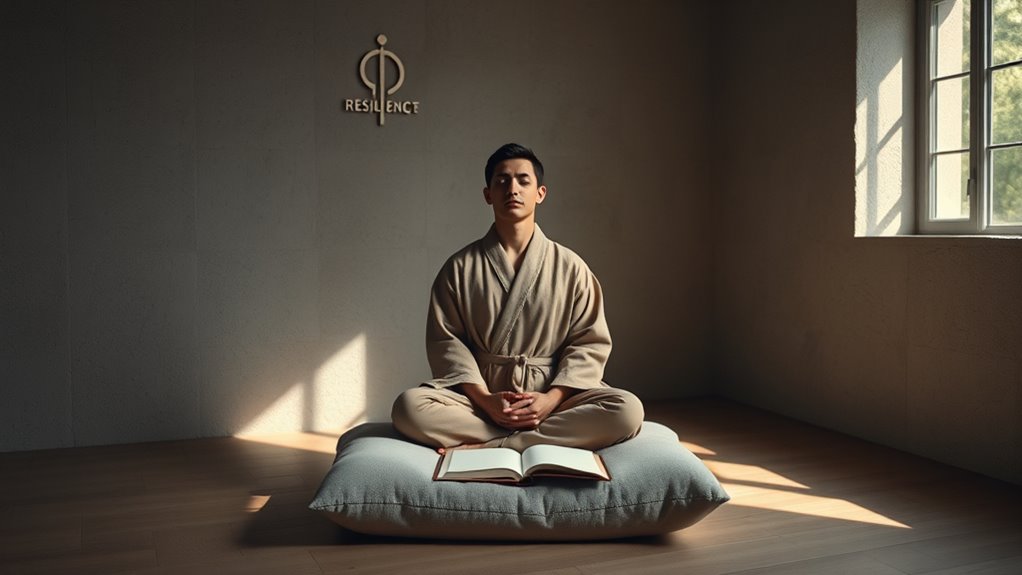

Stoicism can help you manage anxiety and depression by teaching you to focus on what you can control and accept what you cannot. Practicing mindfulness, observing your thoughts without judgment, and shifting your perspective can build resilience and calm your mind. Reflection and journaling can improve self-awareness and help reframe negative beliefs. By applying these principles, you’ll find more peace during turbulent times—if you’re enthusiastic to explore how these ancient practices can support your mental health, keep going.
Key Takeaways
- Stoicism teaches focusing on controllable actions to reduce feelings of helplessness related to anxiety and depression.
- Mindfulness techniques from Stoicism help observe thoughts without judgment, fostering emotional resilience.
- Regular reflection and journaling improve self-awareness, identify triggers, and reframe negative beliefs.
- Accepting external events as they are promotes peace and reduces frustration during challenging times.
- Applying Stoic principles cultivates inner calm, mental stability, and a balanced perspective on life’s difficulties.

Have you ever wondered how ancient philosophy can help you manage modern mental health challenges? Stoicism, a philosophy rooted in resilience and rationality, offers practical tools that can make a real difference when dealing with anxiety and depression. One of the core ideas is learning how to control your reactions to external events—something that’s especially useful when emotions threaten to overwhelm you. By adopting mindfulness techniques inspired by Stoic principles, you can cultivate a state of awareness that keeps you grounded during turbulent times. These techniques encourage you to observe your thoughts and feelings without immediate judgment, helping you step back from spiraling into negative thought patterns. When you practice mindfulness, you become more attuned to the present moment, which reduces the tendency to ruminate on past mistakes or worry about future uncertainties. This heightened awareness builds emotional resilience, enabling you to bounce back more quickly from setbacks and setbacks that often fuel anxiety and depression. Practicing these techniques can help you develop a more balanced perspective, reducing the emotional impact of stressors.
Stoicism emphasizes the importance of distinguishing between what you can control and what you cannot. Applying this idea can drastically reduce feelings of helplessness and frustration. When you focus your energy on actions within your influence, instead of stressing over uncontrollable circumstances, you develop a more stable mental state. This shift in perspective helps to diminish anxiety, which often stems from fears about the unknown or uncontrollable. Over time, practicing this mindset strengthens your emotional resilience by reinforcing the understanding that your internal responses are within your power. It’s about accepting reality as it is, rather than how you wish it to be, which can bring a surprising sense of peace even amid chaos.
Furthermore, Stoic practices encourage journaling and reflection, which are powerful mindfulness techniques for managing mental health. By regularly examining your thoughts and emotions, you gain clarity on your triggers and patterns. This awareness allows you to reframe negative beliefs and build healthier mental habits. The process of reflection also fosters gratitude and a focus on what’s truly important, counteracting feelings of despair or emptiness. As you develop emotional resilience through these exercises, you become better equipped to handle life’s inevitable stressors with a calmer, more composed attitude. Ultimately, integrating Stoic principles into your daily routine offers a practical way to navigate anxiety and depression, empowering you to face challenges with greater strength, clarity, and inner calm.
Frequently Asked Questions
How Quickly Can Stoic Practices Improve Mental Health?
You might notice some improvements in your mental health within a few weeks of practicing Stoic techniques, but it varies based on your consistency and effort. Timeline expectations differ, so don’t get discouraged if progress feels slow. By practicing consistently—daily reflection, journaling, or mindfulness—you’ll gradually build resilience. Remember, Stoic practices are a long-term commitment, and sustained effort over months often yields the best results.
Are Stoic Principles Suitable for Severe Mental Health Conditions?
Yes, stoic principles can be a powerful tool even for severe mental health conditions. They help you build emotional resilience and master cognitive reframing, turning overwhelming emotions into manageable challenges. While they won’t replace professional treatment, they can complement therapy by empowering you to face difficulties with clarity and calm. Don’t underestimate their potential; they can transform your approach to life’s toughest struggles, making resilience feel like second nature.
Can Stoicism Replace Professional Therapy or Medication?
Stoicism can’t replace professional therapy or medication, as it has self-help limitations and philosophical boundaries. While practicing stoic principles can improve resilience and outlook, it doesn’t address underlying biological or psychological issues that require expert intervention. Relying solely on philosophy might overlook essential treatment options. You should view stoicism as a complementary tool rather than a substitute for professional mental health support.
What Are Common Misconceptions About Stoicism and Mental Health?
Many people believe that stoicism means suppressing emotions or ignoring mental health issues, which is a common misinterpretation myth. In reality, stoicism helps you build emotional resilience by accepting emotions without being overwhelmed. It’s not about avoiding feelings but understanding them. Don’t think stoicism replaces professional help; it’s a tool to complement your mental health journey, fostering strength and clarity during tough times.
How Do Cultural Differences Influence Stoic Approaches to Mental Health?
Imagine a river flowing across diverse landscapes—your stoic approach to mental health varies with cultural adaptation. In some cultures, emotional expression is encouraged, making stoicism seem distant, while others value resilience quietly. These differences shape how you practice stoicism, highlighting the importance of understanding cultural contexts. Embracing these variations helps you adapt techniques, fostering mental well-being that respects your background and emotional needs.
Conclusion
By embracing stoicism, you can navigate anxiety and depression like a steady ship amid turbulent seas. It teaches you to accept what you can’t control and focus on your responses, turning challenges into opportunities for growth. Remember, just as a lighthouse guides ships through storms, your practiced resilience can lead you through dark times. With patience and discipline, you’ll find strength within yourself, transforming struggles into stepping stones toward mental clarity and peace.