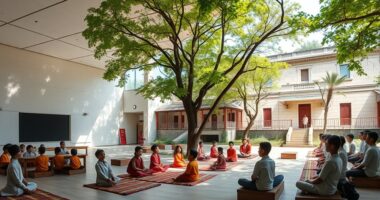

Stoicism and Taoism both teach you to embrace life’s flow and accept fate by aligning your thoughts, emotions, and actions with natural principles. Rather than resisting challenges, you learn to flow with circumstances, cultivating inner resilience and harmony. They emphasize understanding the mind-body connection, practicing mindfulness, and acting ethically. By following these paths, you’ll find balance and peace even amidst uncertainties. To discover how these philosophies can transform your life, explore their core ideas further.
Key Takeaways
- Both philosophies emphasize aligning with the natural flow of life (Tao) and accepting fate to cultivate inner peace.
- Stoicism advocates practicing mental discipline to maintain resilience amid external circumstances; Taoism encourages spontaneous, authentic action.
- Recognizing the mind-body connection helps navigate emotions and thoughts, fostering ethical responses rooted in virtue or intuition.
- Resisting life’s natural flow causes suffering; acceptance and inner strength lead to harmony and resilience.
- Integrating these principles promotes balanced, fulfilling living by aligning internal virtues with external actions.

Although Stoicism and Taoism originate from different cultural backgrounds—Ancient Greece and China—they both offer practical philosophies for achieving inner peace and resilience. Central to both is understanding the mind-body connection and practicing ethical living. When you embrace these principles, you learn to align your thoughts, emotions, and actions with the natural flow of life, fostering a sense of harmony within yourself and with the world around you.
Embrace the mind-body connection and ethical living to find harmony and resilience in life’s flow.
In Stoicism, you recognize that your mind plays a *vital* role in shaping your experience. By cultivating mental discipline, you can develop resilience against external events beyond your control. This philosophy emphasizes that true peace comes from internal mastery—controlling your reactions and maintaining equanimity regardless of circumstances. When you focus on your mind-body connection, you realize that your thoughts influence your feelings, which in turn affect your physical state. Practicing mindful reflection helps you distinguish between what you can change and what you must accept, guiding you toward ethical living by responding with virtue rather than impulse or resentment.
Taoism, on the other hand, teaches you to flow with the natural order—what the Chinese call the Tao. Instead of resisting life’s changes, you learn to align your actions with its rhythms. This alignment requires awareness of your mind-body connection, recognizing how your thoughts and feelings can either disrupt or facilitate harmony. Ethical living, in Taoism, means acting spontaneously and authentically, guided by intuition and a deep understanding of the interconnectedness of all things. When you live ethically in this way, you cultivate humility, compassion, and simplicity, which allow you to move gracefully through life’s uncertainties.
Both philosophies emphasize that resisting life’s natural flow creates suffering. You are encouraged to accept what comes your way and respond with wisdom and kindness. This mindset nurtures resilience because it shifts your focus from fighting external circumstances to cultivating inner strength and clarity. When you integrate the mind-body connection into your daily life, you become more aware of how your thoughts and emotions influence your well-being and your interactions. Ethical living becomes a natural extension of this awareness, inspiring you to act with integrity and compassion, even in challenging situations.
In essence, both Stoicism and Taoism remind you that harmony stems from aligning your internal world with the external flow. By strengthening your mind-body connection and practicing ethical living, you develop resilience and peace that endure beyond fleeting hardships, guiding you toward a balanced and fulfilling life.
Frequently Asked Questions
How Do Stoicism and Taoism Address Emotional Resilience Differently?
You find that stoicism emphasizes emotional acceptance by controlling your reactions and focusing on what you can change, strengthening your resilience strategies. Taoism, however, encourages you to embrace the natural flow of emotions, trusting that resilience comes through harmony with life’s rhythms. While stoicism promotes mental discipline, Taoism guides you to adapt effortlessly, fostering emotional resilience through acceptance and aligning with the universe’s flow.
Can These Philosophies Be Integrated Into Modern Mental Health Practices?
Imagine blending a river’s flow with a steady mountain’s strength. You can integrate these philosophies into modern mental health by using mindfulness techniques inspired by Taoism’s flow and stoic resilience. This fusion enhances therapeutic applications, helping you accept what you can’t control while actively engaging with the present. Such an approach offers a balanced, holistic path to emotional resilience, fostering harmony and strength in your mental well-being.
What Are Common Misconceptions About Stoicism and Taoism?
You might believe that stoicism and Taoism promote emotional suppression or passivity, but that’s a myth. Many think they’re just about strict discipline or avoiding conflict, yet they’re about embracing life’s flow and accepting change. Cultural stereotypes often paint them as rigid or overly simplistic, but in reality, they encourage flexibility, mindfulness, and harmony. Myth busting these misconceptions helps you see these philosophies as practical tools for modern living.
How Do These Philosophies Influence Leadership and Decision-Making?
You’re influenced by these philosophies when you practice ethical decision making and adaptive leadership. They teach you to stay calm amidst change, accept what you can’t control, and focus on harmony. This helps you lead with integrity, adapt to challenges gracefully, and make decisions rooted in balance and resilience. By embracing these principles, you foster trust, foster growth, and create a more resilient, thoughtful approach to leadership in any situation.
Are There Specific Rituals or Practices Associated With Each Philosophy?
You may find that both philosophies gently guide you through meditative practices or ritual ceremonies to deepen understanding. Stoicism encourages reflective journaling and mindfulness, while Taoism favors acts like Tai Chi or tea ceremonies to connect with natural flow. These rituals aren’t strict rules but subtle routines that foster harmony, self-awareness, and inner calm, helping you embrace life’s natural rhythm with grace and resilience.
Conclusion
By embracing both Stoicism and Taoism, you can learn to flow with life’s natural rhythm and accept what you can’t control. These philosophies suggest that surrendering to the present moment and trusting the universe’s flow lead to more peaceful, harmonious living. While some say fate is fixed, others believe you shape your destiny through mindset. Ultimately, blending these ideas helps you find balance—trusting the process while actively engaging with life’s unfolding journey.