
TL;DR
Play games included with Prime
Start a Prime free trial and play with Amazon Luna on your devices.
As an affiliate, we earn on qualifying purchases.
One finished video can spawn an entire publishing kit—metadata, marketing assets, distribution files—without relying on cloud tools. This approach boosts privacy, speeds up production, and keeps content on your machine. It’s perfect for indie creators, authors, and publishers wanting full control.
Imagine finishing a video and having a whole set of marketing, metadata, and distribution assets ready—without ever leaving your computer. That’s the promise of a local-first workflow that turns one video into a full publishing kit, saving hours of manual repurposing. The best part? Your content stays private, your files remain under your control, and you skip the slow, often insecure cloud dependency.
This article walks through how a single source can become a multi-platform publishing powerhouse, and why doing it offline isn’t just a neat trick, but a game-changer for creators who value privacy, speed, and full ownership.
Key Takeaways
- A local-first workflow can turn a single video into a full publishing kit, including metadata, clips, and promotional assets.
- Working offline preserves privacy, reduces delays, and eliminates ongoing subscription costs.
- The process involves four steps: ingest, understand, review, and dispatch—quick and straightforward.
- Generated assets include titles, descriptions, thumbnails, blog drafts, media kits, and distribution files, ready for upload.
- While AI automates much, human oversight remains vital for nuance, branding, and accuracy.
As an affiliate, we earn on qualifying purchases.
What exactly does ‘one video in, a whole publishing kit out’ produce?
This approach turns a single video into a bundle of assets: titles, descriptions, thumbnails, short clips, blog drafts, newsletter blurbs, social media posts, and even media kits. For example, a 30-minute webinar can generate a YouTube-ready title, a TikTok clip, a LinkedIn article, and a press-ready media kit—all from one video file.
It’s like pressing a button and watching your entire promotional and publishing universe unfold. Instead of manually creating each asset, you get a set of drafts, ready for your review and editing.
The significance of this process lies in its ability to drastically reduce the time and effort required to prepare multiple assets for different platforms. By automating the initial creation, creators can focus more on refining their message rather than tedious, repetitive tasks. However, this also introduces a tradeoff: reliance on AI-generated drafts means some assets may initially lack nuance or the specific tone you want. Human oversight remains crucial to ensure the assets align perfectly with your brand and message.

Why is a local, offline workflow a huge advantage?
Working offline means your content stays on your machine—no uploads, no third-party servers. This boosts privacy, especially if you handle sensitive content or unreleased projects. Plus, it cuts down on upload times and avoids vendor lock-in.
Imagine you’re managing a confidential training video. With a cloud tool, you’d worry about leaks or delays. But with a local workflow, everything happens in your own digital workshop, safe and swift. According to recent trends, many creators now prefer local solutions to keep control and avoid privacy pitfalls.
Beyond privacy, offline workflows offer a significant advantage in terms of speed. When processing is done locally, the entire pipeline becomes faster because it’s limited only by your hardware’s capabilities, not by internet bandwidth or server load. This means quicker turnarounds, especially critical when deadlines are tight. Yet, it’s important to consider that local processing might require more powerful hardware and some technical setup, which could be a barrier for beginners. Still, for those who prioritize control, these investments are often worthwhile, providing peace of mind and immediate access to assets without dependency on external services.

Step-by-step: How does one source video turn into a publishing kit?
- Ingest: Drop your video file or paste a link. The system detects the channel and pulls in the content.
- Understand: AI transcribes speech, analyzes visuals, and fuses data into a timestamped scene log.
- Review: You see drafts of titles, descriptions, clips, and assets. Make edits, regenerate parts, or approve.
- Dispatch: The system packages all approved assets—metadata, clips, social posts, media kits—and saves them locally.
It’s a quick, four-step process that turns a raw video into a full set of publish-ready files. This streamlined process is designed to maximize efficiency, but it also means that your initial outputs might need human refinement to ensure they meet your standards and branding. The tradeoff here is between rapid automation and the nuanced touch only a human can provide. Recognizing this balance helps you leverage the speed of automation while maintaining quality and consistency across your assets.
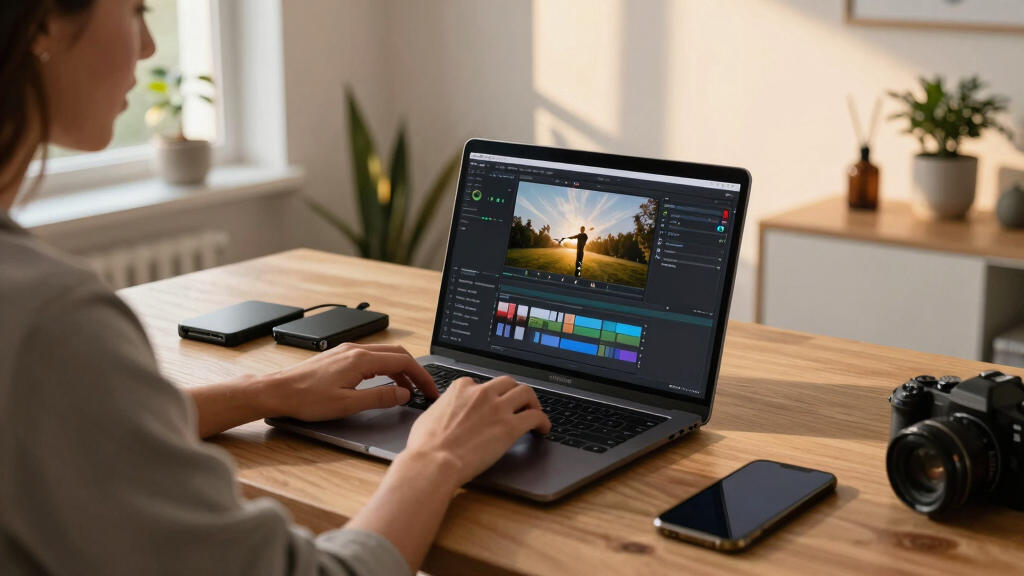
What kinds of files and assets does this process generate?
| Asset Type | Example | Purpose |
|---|---|---|
| Titles & Descriptions | Optimized YouTube titles, SEO-friendly descriptions, hashtags | Help videos get discovered and attract clicks |
| Thumbnails & Clips | Custom thumbnails, short clips for reels or TikTok | Engage viewers across platforms |
| Blog & Newsletter Drafts | Article briefs, email blurbs | Repurpose content for different audiences |
| Media Kits & Press Assets | High-res images, one-sheets, author bios | Support media outreach and branding |
| Metadata & Distribution Files | EPUB, MOBI, video distribution packages | Launch and sell content directly or via platforms |
All these files are generated locally, ready to upload or distribute on your terms. Understanding the variety of assets helps you plan your publishing strategy more effectively. For example, high-quality media kits can impress media outlets, while optimized titles and descriptions improve search visibility. Recognizing the purpose behind each asset allows you to tailor your review process, ensuring each piece aligns with your branding goals and audience expectations.

How does this compare to cloud-based publishing tools?
| Feature | Local Workflow | Cloud-Based Tools |
|---|---|---|
| Control & Privacy | Complete ownership; no data leaves your machine | Uploads happen to third-party servers, risking leaks |
| Speed & Responsiveness | Fast, instant processing; no internet lag | Dependent on internet speed; occasional delays |
| Cost & Dependence | One-time setup cost; no ongoing subscriptions | Recurring fees; vendor lock-in |
| Customization & Flexibility | Full control, tailor-made workflows | Limited by platform features and updates |
Choosing a local pipeline means owning your content.tent, cutting reliance on third parties, and customizing your publishing process without constraints. This control allows for greater flexibility in adapting workflows to your specific needs, which is especially important for niche or sensitive projects. However, it also requires a willingness to manage your own infrastructure and troubleshoot issues, which might be a barrier for some. The tradeoff is clear: greater independence and security versus a potentially steeper learning curve. The decision hinges on your priorities—whether you value control and privacy over convenience and ease of use.

Limitations and what still needs human touch
No system is perfect. AI can generate titles, descriptions, and clips, but human oversight ensures nuance, tone, and accuracy. For example, a video about art techniques might need a human to fine-tune the creative wording or select the best clip. Over-reliance on automation can lead to generic or inaccurate outputs that don’t fully capture your intent or branding style. Therefore, viewing AI-generated assets as drafts rather than final products is essential. This approach allows you to leverage automation for efficiency while applying your expertise to refine the assets, ensuring they resonate with your audience and maintain your quality standards. Recognizing where AI falls short helps you allocate your human resources more effectively, focusing on tasks that truly benefit from personal judgment and creativity.

Integrating with existing platforms and direct sales
This pipeline produces files ready for upload to any platform—YouTube, Amazon, your own website, or social networks. For authors, it simplifies the process of setting up ebook files, print-ready PDFs, and metadata for direct sales.
Many creators now combine this local workflow with tools that support direct sales, bypassing middlemen like Amazon. The generated media kits and metadata can be used to promote books, courses, or memberships directly on your website. This integration empowers creators to retain more control over distribution and revenue, reducing dependency on third-party platforms that often take significant commissions. Additionally, having assets prepared locally means you can quickly adapt and upload new content without waiting for cloud processing or platform approval delays. This flexibility is especially valuable for time-sensitive launches or customized marketing campaigns. For seamless integration, consider using compatible content management systems and sales platforms that accept your locally generated files, streamlining your entire publishing and sales process.

Privacy, speed, and cost: Why local wins
Keeping everything local means total control over your files and data. No worries about data breaches or service outages. Processing is lightning-fast—your edits and drafts appear instantly, with no waiting for uploads or server responses.
Plus, after the initial setup, there are no recurring fees. You pay once and operate offline—an attractive proposition for independent creators and publishers wanting to keep costs predictable. This model also allows you to work in environments with unreliable internet, ensuring your productivity isn’t hampered by connectivity issues. While the upfront investment in hardware or software might be higher, the long-term savings and security benefits often outweigh these costs, especially for those managing sensitive or proprietary content. Ultimately, this approach aligns with a philosophy of sovereignty over your creative assets, giving you peace of mind and the ability to operate independently of external service providers.
Frequently Asked Questions
What exactly does ‘one video in, a whole publishing kit out’ produce?
It creates a bundle of assets such as optimized titles, descriptions, thumbnails, short clips, blog drafts, media kits, and distribution files—all from a single video file. This streamlines your entire publishing process.
Is this process fully local, or does it still rely on cloud AI/services?
The workflow is designed to be local-first, meaning all processing happens on your machine. While some AI models may be embedded or run locally, the goal is to avoid uploading your content to third-party servers, preserving privacy and control.
What types of files can it generate—ebooks, print, audio, metadata?
It can produce a wide range of assets: video clips, metadata files for platforms, ebook formats like EPUB/MOBI, print-ready PDFs, promotional images, and media kits. Each asset supports different stages of your publishing or marketing campaign.
How much time does it save compared to manual repurposing?
Automating asset creation cuts down hours of manual work into minutes. Instead of tediously editing each asset by hand, you review AI drafts and approve—saving time and reducing errors.
Who is this ideal for: indie creators, publishers, or marketers?
It’s perfect for solo creators, small publishers, educators, and marketers who want full control over their content, speed up workflows, and keep sensitive data private without sacrificing quality.
Conclusion
Transforming a single video into an entire publishing package without relying on the cloud isn’t just a tech gimmick. It’s a practical shift that puts you in control—faster, safer, and more private. When you can produce everything you need from one source file, you free yourself from the endless cycle of manual repackaging and third-party dependency.
Next time you finish a video, ask yourself: what if your entire launch could be ready in minutes, all on your machine? That’s the future of independent publishing—simple, fast, and private.

Fall yard work Picks
leaf blowers
As an affiliate, we earn on qualifying purchases.