TL;DR

Turn your quiet moments into listening time
- Thousands of audiobooks, podcasts and originals
- Listen on your phone, tablet or Echo — also offline
- Cancel anytime
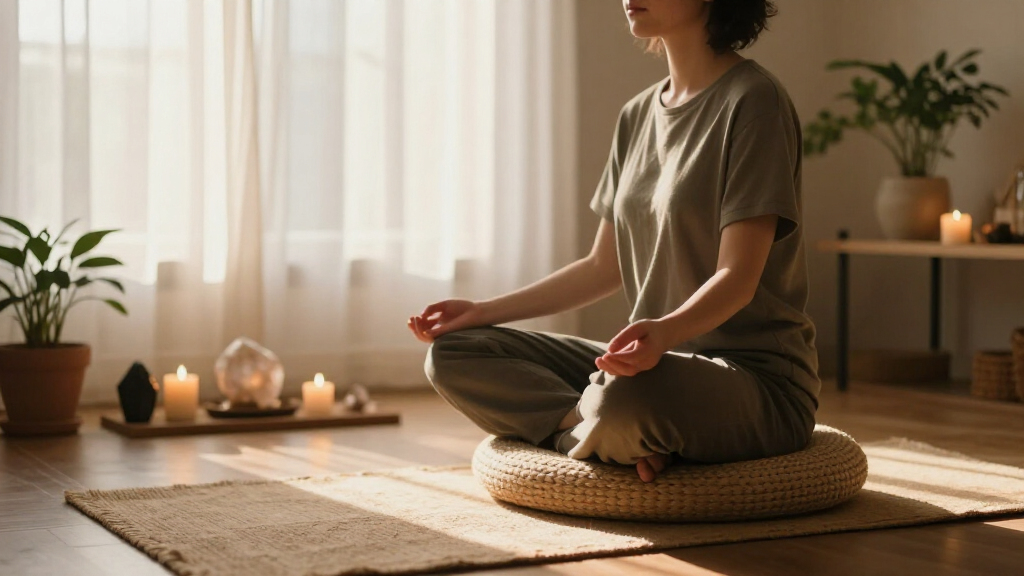
Meditation cushions and mats help you sit comfortably and support proper posture. The best choice depends on your body, preferences, and practice style. Testing different options makes all the difference.
Imagine sitting for 20 minutes with your back straight, hips comfortably elevated, and no nagging aches. That’s what the right meditation cushion or mat can do. Many practitioners overlook this simple tool, but it can make or break your seated experience.
You might think you can sit on a folded blanket or a firm pillow, and sometimes that’s enough. But if you’re serious about consistency and comfort, understanding your options can help you find a setup that feels natural and supportive. Today, we’ll explore the different types of cushions and mats, how they work, and how to pick what’s best for you.
A cushion that lifts your hips slightly above your knees improves posture and reduces back strain.
Shapes like zafus, crescent cushions, and rectangular pads serve different sitting styles and body needs.
Material choice affects support, weight, and maintenance; test different fillings if possible.
A mat under your cushion adds insulation and cushioning but is optional depending on your environment.
Adjustable fills and washable covers give you more control and ease of care over your seating setup.
What meditation cushions and mats do — and why they matter
Meditation cushions and mats are more than just comfort accessories; they serve as essential tools that influence your posture, stability, and overall experience. When you sit, gravity pulls your hips downward, which can cause your pelvis to tilt backward, leading to slouching and discomfort over time. Cushions elevate your hips, helping to maintain the natural curve of your spine, which is crucial for deep, sustained meditation.
Moreover, the right support minimizes unnecessary muscle tension, reducing fatigue and preventing discomfort that can distract you from your practice. Proper support also plays a critical role in injury prevention—especially if you have tight hips, knee issues, or back problems—by encouraging optimal alignment. Choosing the correct cushion or mat creates a stable, balanced foundation, allowing you to sustain longer sessions without distraction. Think of it as building a solid base for your practice; neglecting this can lead to fatigue, distraction, and even physical strain that hampers your progress.
As an affiliate, we earn on qualifying purchases.
The main types of cushions and what they do best
Understanding the nuances of cushion shapes helps you choose one that aligns with your body and practice style, ultimately enhancing your comfort and stability. For example, a zafu’s rounded shape concentrates support in the center, which encourages a balanced, upright posture. However, this shape might feel too high or narrow for some, potentially causing knee strain or discomfort if your hips are wider or if you prefer a more relaxed sitting position. Conversely, a crescent cushion’s U-shape offers more lateral support and space for the legs, making it ideal for wider hips or for those who prefer a more open, relaxed posture. This shape can reduce tension in the hips and knees by distributing support more evenly and allowing more freedom of movement.
The rectangular gomden provides a firm, flat support surface that can be layered with other cushions for custom height adjustments. This versatility allows you to fine-tune your sitting position, balancing support and flexibility as your practice evolves. Travel cushions prioritize portability but often sacrifice some stability—understanding their limitations helps prevent discomfort during longer sessions. Recognizing these tradeoffs is crucial because choosing a shape that does not support your natural posture can lead to misalignment, discomfort, or the need for constant readjustment, which distracts from meditation. The ideal cushion shape and size should complement your body’s natural curves and your preferred sitting style, promoting a relaxed, alert posture that sustains focus.
Ultimately, selecting a shape involves understanding how your body responds to support. For example, a cushion that is too high might lift your knees excessively, increasing strain on your hips and knees, while a too-low cushion might fail to elevate your hips enough, causing slouching or strain on your lower back. Deeply considering these factors ensures your seated posture is both comfortable and sustainable, enabling longer, more focused meditation sessions without constant repositioning.
How mats and cushions work together — or separately
Mats, often called zabutons, serve as a foundational layer that can significantly influence your sitting experience. They provide insulation from cold or hard surfaces, which is especially important if you practice on tiles or wooden floors, as cold can stiffen muscles and distract your focus. Additionally, mats add a cushioning layer that reduces pressure on your knees and ankles, making longer sessions more comfortable. The added layer not only improves comfort but also helps in maintaining proper alignment by preventing your body from sinking into hard surfaces, which can cause misalignment over time.
Using a cushion without a mat might be suitable if your environment already offers soft flooring, but the combination often enhances stability and comfort. For instance, a thick zabuton distributes your weight more evenly, reducing localized pressure points and encouraging better posture. Conversely, in environments with plush carpets, a mat might be unnecessary, and a cushion alone can suffice. The key lies in understanding how each element influences your sitting comfort and stability—adding layers when needed and simplifying when possible—so your practice remains sustainable and enjoyable.
Furthermore, the decision to use both or just one depends on your physical needs and environment. If you have sensitive knees, prefer a warmer surface, or practice in colder climates, layering a mat and cushion can be highly beneficial. On the other hand, if portability and ease of setup are priorities, a single cushion or a combined travel-friendly cushion-mat unit might be more practical. Recognizing these tradeoffs helps you tailor your setup to your specific needs, ensuring your seated practice remains comfortable, supportive, and adaptable to different environments.
Materials, firmness, and how to pick what’s best for you
The choice of materials inside your cushion impacts not only comfort but also durability and ease of maintenance. For example, buckwheat hulls conform to your shape over time, providing customized support that can help maintain spinal alignment and reduce pressure points, especially beneficial for those with sensitive hips or back issues. However, their weight and tendency to shift require consideration for portability and long-term use. Buckwheat also allows for adjustable firmness by adding or removing hulls, making it a versatile choice for different preferences and body types.
Kapok offers a lighter, springy feel that can be more inviting for those who prefer a plush seat, but it might compress over time, losing some support. Foam cushions are versatile—they come in various firmness levels, are lightweight, and easy to clean, but they often lack the adjustability of natural fillings and may not conform as well to your body. Cotton-filled cushions are softer initially but tend to compress with use, which can lead to uneven support unless regularly fluffed and maintained. Each material offers tradeoffs between support, weight, adaptability, and maintenance—understanding these helps you make an informed choice aligned with your needs.
Choosing the right firmness involves understanding how your body responds to support. A firmer cushion like buckwheat may help keep your hips open and spine aligned, reducing fatigue for those with tight hips or back issues. Softer fillings like kapok or foam might be preferable if you seek a more cushioned, relaxed posture that encourages comfort over extended periods. Personal comfort, injury history, and flexibility levels all influence what firmness is best for you. Additionally, selecting cushions with removable, washable covers simplifies ongoing maintenance, ensuring your cushion stays fresh and supportive over time. Testing different fillings, reading detailed reviews, or trying multiple options in person can help you find the most supportive and durable choice for your practice, fostering long-term comfort and stability.”
Conclusion
Choosing the right meditation cushion or mat is about tuning into your body’s needs. A simple shift — like switching from a flat pillow to a firm buckwheat zafu — can make all the difference in your practice’s comfort and consistency.
Think of your cushion as a personal ally, supporting your journey inward. The more you experiment, the better your seated meditation will feel. So, get curious, test options, and enjoy every moment of your practice.
Fall Picks
fall essentials
As an affiliate, we earn on qualifying purchases.