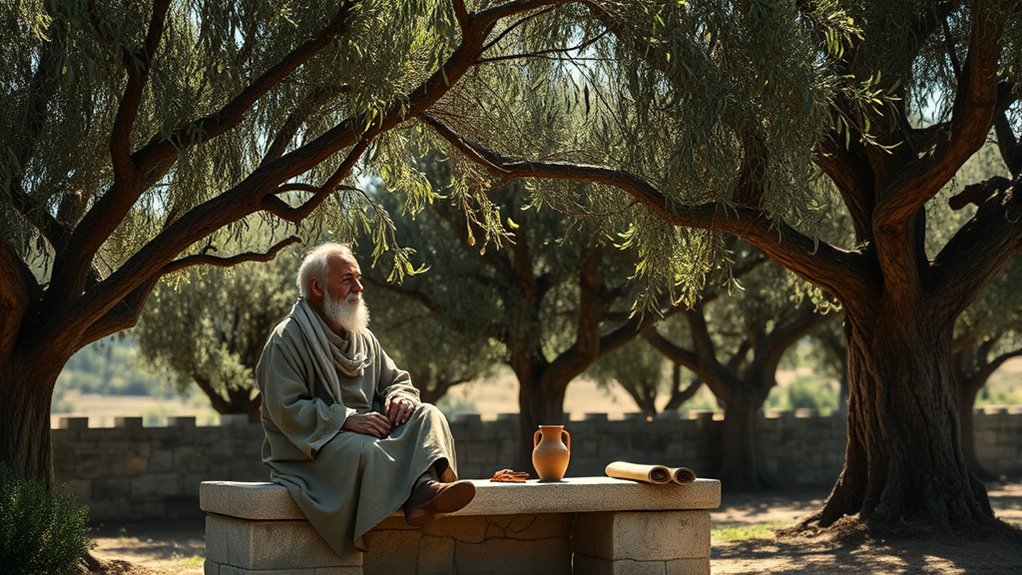

Imagining Seneca at your side inspires mindful reflection on his Stoic wisdom, guiding you to live purposefully and with integrity. By visualizing his calm presence, you deepen your understanding of virtue, patience, and self-control amid life’s challenges. This practice encourages you to internalize his insights, transforming admiration into deliberate action. Embracing the spirit of the sage helps you navigate difficulties with resilience and humility. Continue exploring, and you’ll discover how to apply these timeless lessons to your own life.
Key Takeaways
- Visualize Seneca’s calm demeanor to internalize virtues like patience, moderation, and self-control in daily life.
- Reflect on his ethical teachings to guide your decisions toward humility, resilience, and living in harmony with nature.
- Use contemplation to transform admiration into active practice, aligning your actions with Stoic principles.
- Consider Seneca’s perspective during challenges to cultivate inner peace and a grounded response to adversity.
- Let imagining Seneca’s presence inspire ongoing personal growth and reinforce a commitment to virtuous living.
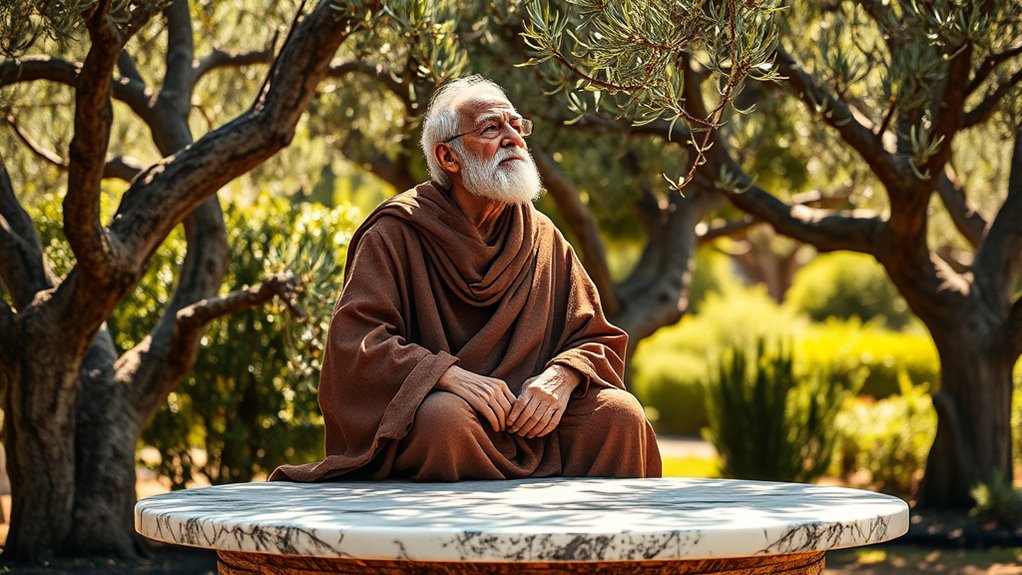
Have you ever wondered what it truly means to contemplate a sage? It’s more than just imagining someone wise and revered; it’s about engaging in mindful reflection that deepens your understanding of life and your place within it. When you picture Seneca at your side, you’re invited to step into a space where ethical guidance becomes clear and accessible. This isn’t simply an exercise in admiration but a deliberate act of seeking wisdom that can shape your choices and actions.
Contemplating a sage transforms admiration into mindful reflection that guides your choices and deepens your understanding of life.
In your meditation on Seneca, you start by considering his emphasis on virtue and self-control. You reflect on how he urged people to live in harmony with nature and to focus on what truly matters—inner peace rather than external success. This mindful reflection encourages you to pause and examine your own life, questioning whether your daily habits align with your values. As you picture Seneca’s calm demeanor and thoughtful words, a sense of clarity emerges, helping you prioritize what’s genuinely important. You realize that contemplating such a sage isn’t just about admiration but about integrating his insights into your own ethical compass.
When you imagine Seneca offering guidance, it’s easy to feel inspired to practice moderation and patience. You can picture him advising you to avoid excess and to find contentment in simplicity. This perspective offers ethical guidance that is practical and grounded—an anchor during turbulent times. By contemplating him, you learn to approach challenges with a measured mind rather than reactive emotion. Your mindfulness allows you to step back from impulsive reactions and consider the broader implications of your actions. Seneca’s teachings remind you that true strength lies in self-control and resilience, virtues you can cultivate through consistent reflection and intentionality. Recognizing the importance of contrast ratio and image quality in visual media can serve as a metaphor for balancing various aspects of life and perception.
Throughout this process, you’re not just passively observing but actively engaging with the principles he espoused. Each moment of mindful reflection becomes an opportunity to internalize lessons of virtue, patience, and humility. You start to see that contemplating a sage like Seneca isn’t a distant or abstract exercise; it’s a dynamic practice that guides your daily decisions. As you internalize his ethical guidance, you begin to live more intentionally, aligning your actions with your values. In this way, the presence of a sage becomes a guiding beacon, inspiring you to lead a more reflective, virtuous life—and to recognize that wisdom shared across time can illuminate your own path.

The Daily Stoic Journal: 366 Days of Writing and Reflection on the Art of Living
As an affiliate, we earn on qualifying purchases.
As an affiliate, we earn on qualifying purchases.
Frequently Asked Questions
How Can I Incorporate Seneca’s Teachings Into Daily Life?
You can incorporate Seneca’s teachings into daily life through practical application by embracing Stoic principles like focusing on what you can control and practicing gratitude. Make daily reflection a habit, reviewing your actions and thoughts to align with wisdom and virtue. When faced with challenges, pause and consider his advice, turning obstacles into opportunities for growth. This consistent effort helps you live more intentionally and resiliently.
What Specific Quotes From Seneca Inspire Contemplation?
You can find inspiration in Seneca’s quotes like, “We suffer more in imagination than in reality,” which reminds you to practice Stoic resilience by focusing on what you can control. Another powerful quote, “True happiness is to enjoy the present,” encourages virtue cultivation through mindfulness. Reflect on these daily, letting his words guide your responses to challenges and helping you develop inner strength and wisdom.
Is There a Recommended Meditation Practice Involving Seneca’s Philosophy?
You can practice Stoic visualization by imagining Seneca guiding you through challenges, helping you stay calm and rational. Combine this with mindful journaling to reflect on his teachings, noting how his wisdom applies to your life. As Seneca said, “True happiness is to enjoy the present.” This practice deepens your understanding, cultivating resilience and tranquility, making his philosophy a daily, lived experience.
How Does Seneca’s View on Emotions Compare to Modern Psychology?
Seneca’s view on emotions emphasizes emotional regulation through rational analysis, much like modern psychology’s approach. You’re encouraged to examine your feelings objectively, understanding their causes and controlling impulses. Unlike some contemporary methods, he advocates for accepting emotions without being overwhelmed, fostering resilience. By practicing this rational analysis, you develop greater emotional stability, helping you manage stress and adversity with Stoic calmness, aligning well with modern techniques for emotional regulation.
Can Contemplating Seneca Help With Modern Stress and Anxiety?
You might find that contemplating Seneca unlocks hidden strength against stress and anxiety. His teachings on Stoic resilience encourage you to face difficulties with calm and clarity, while mindful reflection helps you recognize fleeting emotions without being overwhelmed. By applying his wisdom daily, you create a mental armor that sharpens your inner peace, leaving you better equipped to handle life’s uncertainties with grace and steadiness.

The Complete Guide to Stoicism (Deluxe Hardbound Edition)
As an affiliate, we earn on qualifying purchases.
As an affiliate, we earn on qualifying purchases.
Conclusion
As you imagine Seneca beside you, remember that over 70% of people report feeling more grounded when reflecting on ancient wisdom. His insights remind you to embrace simplicity and resilience in your daily struggles. By contemplating the sage’s teachings, you cultivate inner strength and clarity. So, keep his words close—because in those quiet moments of reflection, you find the guidance to navigate life’s challenges with grace and purpose.

Retrospec Sedona Zafu Meditation Cushion with Buckwheat Hull Fill – Adjustable Yoga & Pilates Equipment Support – 17in Crescent Cotton Cover
NATURAL COMFORT & SUPPORT: Filled with sustainable buckwheat hulls, this meditation cushion elevates your practice by aligning your…
As an affiliate, we earn on qualifying purchases.
As an affiliate, we earn on qualifying purchases.
virtue and resilience coaching course
As an affiliate, we earn on qualifying purchases.
As an affiliate, we earn on qualifying purchases.