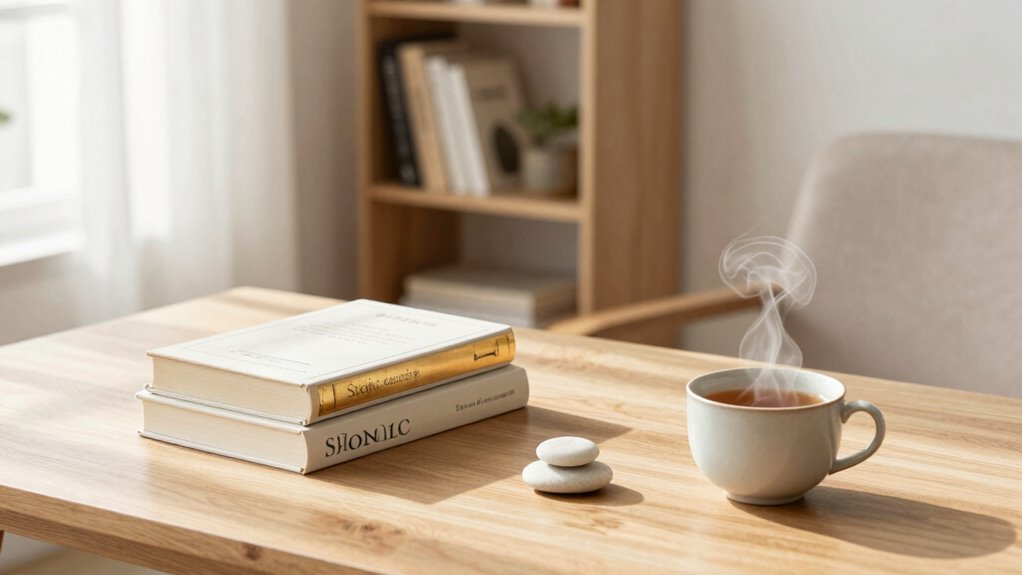

To build a calm home routine inspired by Stoicism, focus on foundational texts like Marcus Aurelius’ *Meditations*, Seneca’s letters, or Epictetus’ discourses to understand key principles. Incorporate mindful practices such as deep breathing, journaling reactions, and daily reflections on what’s within your control. Create a dedicated space for these routines to foster serenity. Consistency is key, and over time, these tools become second nature, helping you maintain emotional resilience at home—if you keep exploring, you’ll discover more ways to deepen your practice.
Key Takeaways
- Prioritize classic Stoic texts like Marcus Aurelius’ *Meditations* and Seneca’s letters for daily reflection and inspiration.
- Incorporate mindful practices such as deep breathing, pauses, and journaling into your daily routine.
- Designate a dedicated space at home for Stoic reading, journaling, and meditation to foster tranquility.
- Use daily reflections to focus on controllable responses and accept external circumstances calmly.
- Maintain consistency with routines to gradually strengthen emotional resilience and create a peaceful environment.

Creating a calm home routine can feel challenging in today’s busy world, but turning to Stoic principles offers practical guidance to cultivate tranquility amid chaos. One of the core strengths of Stoicism is its emphasis on developing emotional resilience—your ability to stay steady when faced with stress or setbacks. To build this resilience, you can incorporate mindful practices that help you stay present and aware of your thoughts and feelings. For example, start your day with a few minutes of reflection, contemplating what’s within your control and what’s not. This simple exercise keeps your focus on your responses rather than external circumstances, reducing unnecessary anxiety.
Start your day with reflection on what’s within your control to cultivate calm and reduce anxiety.
You might also find it helpful to keep a journal, jotting down your reactions to daily events and examining them through a Stoic lens. When you encounter frustration or disappointment, pause and ask yourself if the situation is within your control. If it is, plan a rational response; if not, remind yourself to accept it calmly. These mindful practices cultivate emotional resilience by reinforcing your capacity to respond thoughtfully instead of reacting impulsively. Over time, this habit strengthens your ability to maintain serenity even when external chaos surrounds you. Additionally, understanding and practicing these principles can help you develop emotional resilience, making it easier to navigate life’s challenges with calmness and clarity. Incorporating self-awareness into your routine can further deepen your practice of Stoic philosophy and enhance your emotional stability.
Another valuable resource is the wisdom found in classic Stoic texts like Marcus Aurelius’ “Meditations,” Seneca’s letters, and Epictetus’ discourses. These writings provide practical insights into managing your emotions and maintaining inner peace. You might set aside a few minutes each day to read and reflect on their teachings, applying them to your own life. This steady engagement helps ingrain Stoic principles into your daily routine, making calmness more natural and accessible. In fact, many of these texts emphasize the importance of mindfulness as a way to stay grounded and centered amid external upheavals. Developing a consistent reading habit can serve as a valuable tool for reinforcing your understanding of Stoic philosophy and fostering serenity. Incorporating literary sources like these into your routine can deepen your understanding and reinforce your commitment to serenity.
In addition, embracing daily routines that reinforce mindfulness—such as deep breathing exercises, meditation, or even simple pauses throughout your day—can anchor you amidst external upheavals. These practices serve as regular reminders to stay grounded, helping you reset your emotional state and approach challenges with clarity. By integrating Stoic wisdom into your home environment—whether through dedicated reading, journaling, or mindful pauses—you create a sanctuary where calmness can flourish.
Ultimately, building a calm home routine with Stoic resources isn’t about perfection but progress. You develop emotional resilience step by step, using mindful practices to stay centered and in control. With consistency, these tools become second nature, transforming your home into a space of peace amid life’s inevitable chaos.

The Daily Stoic Journal: 366 Days of Writing and Reflection on the Art of Living
As an affiliate, we earn on qualifying purchases.
As an affiliate, we earn on qualifying purchases.
Frequently Asked Questions
How Can Stoicism Help Reduce Daily Home Stress?
Stoicism helps reduce daily home stress by boosting your emotional resilience and encouraging mindfulness techniques. When you practice Stoic principles, you learn to accept what you can’t control and focus on your reactions, which calms your mind. By applying mindfulness, you stay present and aware of your feelings, preventing stress from escalating. This combination allows you to maintain a peaceful, balanced environment at home, even amid chaos.
Are There Specific Stoic Exercises for Family Routines?
Yes, you can practice family mindfulness by dedicating a few moments each day to shared reflection, helping everyone stay present. Incorporate exercises like journaling about emotional resilience or discussing daily challenges calmly. These activities strengthen your family’s ability to manage stress together, fostering calmness and understanding. Regularly practicing these stoic exercises encourages emotional resilience, making your home a more peaceful and supportive environment for everyone.
Can Stoic Principles Improve Communication at Home?
Yes, Stoic principles can improve communication at home. You’ll build emotional resilience by practicing acceptance and control over your reactions. Mindful listening helps you truly understand others without judgment, fostering calmer conversations. Applying Stoic virtues like patience and clarity encourages honest, respectful dialogue. As you develop these skills, you’ll create a more harmonious environment where everyone feels heard and valued, strengthening your family bonds.
What Are Common Misconceptions About Stoic Practices?
Imagine a calm lake, undisturbed by storms—that’s emotional resilience. Many think stoicism is about suppressing feelings, but it’s really about embracing mindfulness techniques to observe emotions without judgment. A common misconception is that stoics are emotionless; in reality, they cultivate awareness and strength. You learn to navigate life’s waves with clarity, not denial, turning challenges into opportunities for growth and inner peace.
How Long Does It Take to See Results From Stoic Routines?
You’ll start noticing improvements in emotional resilience and mindfulness techniques within a few weeks of consistent practice. While some may see quick gains, true results often take around a month or more, depending on your dedication. Regularly applying stoic routines helps you respond better to stress and stay calm. Stay patient and committed, as steady effort over time deepens your understanding and strengthens your calm, resilient mindset.
Conclusion
By embracing these Stoic resources, you’ll craft a home routine rooted in calm and resilience. Imagine a quiet lake—still, reflective, unwavering amid the chaos of daily life. With Stoic principles guiding you, even turbulent moments become gentle ripples. Your home transforms into a sanctuary of serenity, where inner peace flows as naturally as a calm, steady stream. In this contrast, you find strength not in absence of chaos, but in your unwavering calm amidst it.