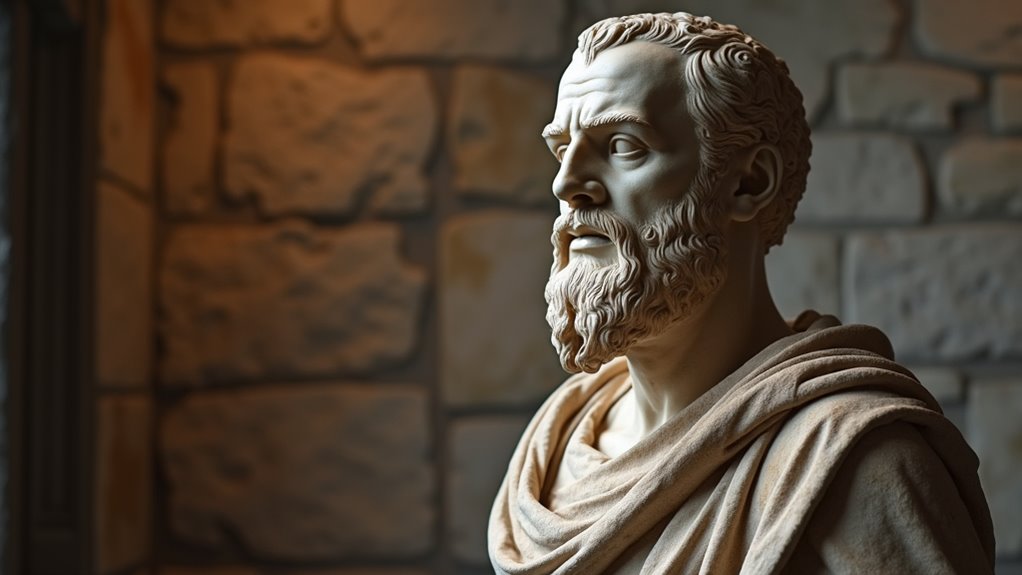

Zeno of Citium, born around 334 BCE, was a Greek philosopher who founded Stoicism, a school that teaches virtue, reason, and self-control as the keys to a good life. His ideas emphasize living morally and cultivating qualities like wisdom, courage, and temperance. He believed that inner peace comes from aligning your actions with your core values and exercising rational control over emotions. To understand his powerful teachings on how to master yourself, keep exploring his philosophy.
Key Takeaways
- Zeno of Citium (c. 334 BCE) founded Stoicism, emphasizing reason, virtue, and self-control as paths to a good life.
- His core ideas focus on virtue ethics, inner moral integrity, and aligning actions with nature’s rational order.
- Rational control over emotions and impulses is essential for achieving tranquility and resilience.
- Cultivating virtues like wisdom, courage, justice, and temperance requires conscious effort and practice.
- Zeno’s philosophy teaches that moral development and virtue are key to happiness and personal mastery.

Zeno of Citium, a Greek philosopher born around 334 BCE, is credited with founding Stoicism, a school of thought that emphasizes reason, virtue, and self-control. As you explore his ideas, you’ll find that Zeno believed the path to a good life hinges on understanding what truly matters and aligning your actions with that understanding. Central to his philosophy is virtue ethics, which asserts that living morally and cultivating personal virtues lead to happiness. Rather than relying on external circumstances, Zeno teaches that your inner character and moral integrity hold the key to tranquility. This focus shifts your attention inward, encouraging you to develop qualities like wisdom, courage, justice, and temperance. These virtues aren’t just ideals; they’re practical guides for daily behavior, helping you navigate life’s challenges with clarity and resilience.
Zeno’s Stoicism teaches that inner virtue and moral integrity lead to true tranquility and happiness.
Rational control plays a pivotal role in Zeno’s teachings. You’re encouraged to exercise reason as your primary tool for managing emotions and impulses. When faced with difficult situations or strong feelings, it’s your rational mind that helps you maintain composure and make sound decisions. Zeno believed that many of your struggles stem from letting passions override reason. By practicing rational control, you can prevent yourself from being carried away by fleeting desires or fears. This discipline isn’t about suppressing emotions but understanding and guiding them through rational thought. It’s about recognizing what’s within your power and accepting what’s outside of it—an idea that brings peace and stability to your life.
In your pursuit of virtue ethics, Zeno shows that moral development isn’t a matter of luck or external circumstances but a conscious effort. You’re called to cultivate your character, practicing virtues consistently until they become second nature. Rational control is the mechanism that helps you stay committed to this process, especially when temptations or setbacks arise. It’s not enough to know what’s right; you must actively choose to act rightly, guided by reason and virtue. Through this approach, your life becomes aligned with nature’s rational order, fostering a sense of harmony and purpose.
Ultimately, Zeno’s big ideas challenge you to see virtue as the foundation of a fulfilled life. By harnessing rational control and focusing on virtue ethics, you learn to master yourself, find inner peace, and face life’s inevitable ups and downs with resilience and integrity. His teachings remain powerful because they place responsibility on you—empowering you to shape your character and your destiny through reason and virtue.
Frequently Asked Questions
What Inspired Zeno to Develop Stoicism?
You’re curious about what inspired Zeno to develop Stoicism. He was driven by a desire to cultivate ethical resilience and personal virtue amidst life’s challenges. After experiencing personal setbacks and witnessing political turmoil, he sought a philosophy that emphasized inner strength, rationality, and moral integrity. These ideas helped him build a practical approach to enduring hardship and living a virtuous life, shaping Stoicism’s core principles.
Did Zeno Face Any Major Criticisms During His Life?
You might wonder if Zeno faced criticism during his life. Yes, he did. His ideas encountered philosophical opposition from skeptics and rivals who challenged his teachings. Critics questioned his views on virtue and emotions, often dismissing his Stoic philosophy. Despite this criticism faced, Zeno remained steadfast, engaging in debates and defending his ideas. His resilience helped establish Stoicism as a lasting school of thought amid ongoing philosophical opposition.
How Did Zeno’S Personal Experiences Influence His Philosophy?
You see, Zeno’s personal hardships, like losing loved ones and facing public debates, deeply shaped his philosophy. These struggles taught him resilience and the importance of inner calm. His experiences in confrontations and setbacks pushed him to develop ideas about virtue and emotional control. By facing adversity directly, he emphasized that true strength comes from within, guiding his followers to remain steady regardless of external circumstances.
What Was Zeno’S Relationship With Other Philosophical Schools?
You might wonder how Zeno navigated the fierce inter-school rivalries of his time. His relationships with other philosophical schools were complex—he sought philosophical influence but also challenged competing ideas. Zeno’s Stoicism often contrasted sharply with Epicurean or Skeptical views, fueling debates and shaping his unique approach. This dynamic pushed him to refine his teachings, leaving a lasting impact, even as rivalries fueled a deeper understanding of virtue, resilience, and self-control.
Are There Any Surviving Writings Directly Authored by Zeno?
You might wonder if any ancient manuscripts directly authored by Zeno survive today. Unfortunately, none have been found, and our knowledge of his ideas comes from later texts and philosophical debates. His writings influenced Stoicism’s development, but the lack of original works makes it challenging to fully understand his thoughts. Studying how later philosophers discussed him helps piece together his impact on philosophy’s history.
Conclusion
So, now that you’ve learned about Zeno and his revolutionary ideas, you might wonder how Stoicism can still influence your life today. His teachings remind you to focus on what you can control and stay resilient in tough times. Isn’t it worth embracing some of Zeno’s wisdom to find inner peace and strength? After all, isn’t that what philosophy is really about—guiding you through life’s challenges with clarity and purpose?