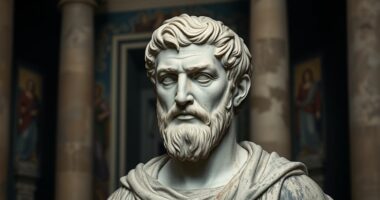

You’ll find that Stoic principles, like virtue ethics and moral resilience, markedly shaped early Christian thought, with figures like Augustine drawing from these ideas. Both traditions emphasize inner strength, living in harmony with divine and natural law, and cultivating moral character to face adversity. The influence helps you understand how Christian teachings on virtue and resilience are rooted in Stoic ideas of reason and virtue. Exploring this connection offers deeper insight into the development of early Christian ethics.
Key Takeaways
- Augustine integrated Stoic ideas of moral resilience and inner strength to withstand persecution and societal pressures.
- Both Stoics and early Christians emphasized living in accordance with reason and divine or natural law for moral virtue.
- Christian virtue ethics, inspired by Stoic teachings, focus on cultivating moral character over external actions alone.
- Stoic concepts of mastering passions and maintaining inner calm influenced Christian practices of self-control and spiritual endurance.
- The philosophical overlap shaped early Christian notions of moral resilience, guiding believers to face adversity with steadfastness.

The influence of Stoic philosophy on early Christianity is undeniable, as many core ideas and ethical principles found in Christian teachings echo Stoic concepts. When you examine the development of early Christian thought, you’ll notice that notions like virtue ethics and moral resilience are deeply rooted in Stoic ideas. Virtue ethics, which emphasizes living in accordance with reason and cultivating moral character, aligns closely with Christian ideals of righteousness and inner virtue. Both philosophies stress that true virtue isn’t merely about external actions but about developing a virtuous character that guides your behavior, especially in challenging circumstances. This focus on internal moral strength helps believers withstand temptation and adversity, fostering moral resilience—a key trait both in Stoic and Christian traditions.
As you explore early Christian writings, you’ll see how they borrow from Stoic ideas to reinforce moral resilience. The Stoics believed that by mastering your passions and maintaining an internal calm, you could achieve tranquility regardless of external chaos. Early Christians, too, emphasized the importance of inner strength and self-control, especially when facing persecution or societal pressures. This shared emphasis on resilience isn’t accidental; it reflects a common understanding that virtue isn’t just about acting rightly but about cultivating an unshakeable moral character that endures hardship. You’ll find that Christian figures like Augustine drew heavily on Stoic notions of moral resilience, encouraging believers to develop a steadfast faith that survives external trials.
Furthermore, Stoic ideas about living in harmony with nature and reason influenced early Christian views on divine law and moral order. The Stoics believed that aligning your life with reason, which they identified with divine rationality, leads to virtue. Christians adopted similar ideas, framing divine law as the ultimate guide for moral living. You’re encouraged to see how both traditions promote a life guided by higher principles, emphasizing that virtue ethics isn’t just about personal morality but about aligning oneself with a divine or natural order. This philosophical overlap reinforced the Christian call for moral resilience—remaining steadfast in faith and virtue amidst life’s uncertainties.
In essence, the Stoic influence helped shape early Christian ethics by emphasizing virtue ethics and moral resilience. These ideas provided a philosophical foundation for Christians to develop inner strength, face adversity with courage, and cultivate a virtuous life rooted in divine truth. Recognizing this connection enriches your understanding of early Christian moral teaching, revealing how deeply Stoic ideas permeated the spiritual and ethical fabric of the faith.
Frequently Asked Questions
How Did Stoic Ethics Shape Christian Moral Teachings?
Stoic ethics shape your Christian moral teachings by emphasizing virtue ethics, where living virtuously aligns with moral excellence and inner harmony. You’re encouraged to cultivate wisdom, courage, justice, and temperance, reflecting natural law‘s idea that moral principles are inherent in nature. This influence urges you to pursue moral growth, see virtue as essential, and understand that living according to natural law guides your ethical choices and spiritual development.
What Specific Stoic Texts Influenced Early Christian Theology?
Imagine opening an ancient scroll and encountering the *Enchiridion* and *Discourses* by Epictetus—they’re among the stoic texts that deeply influenced early Christian theology. These writings emphasize virtues like self-control and divine providence, resonating with Christian teachings. By studying them, you see how stoic ideas shaped concepts of moral resilience and God’s sovereignty, making these texts pivotal in blending Stoic philosophy with Christian doctrine.
Did Early Christians Reject or Adopt Stoic Ideas?
You’ll find that early Christians largely adopted stoic resilience and virtue ethics, integrating these ideas into their beliefs. They embraced the emphasis on inner strength and moral virtue, seeing these as paths to spiritual growth. While some rejected certain Stoic ideas, overall, early Christianity incorporated stoic resilience to promote perseverance and virtue ethics to guide moral conduct, blending them with their teachings to create a more resilient faith.
How Did Augustine Incorporate Stoic Philosophy Into Christianity?
Imagine a bridge spanning two worlds—you’re walking across Augustine’s mind, where Stoic virtue ethics and natural law are the sturdy planks. He weaves these ideas into Christianity, emphasizing moral character and divine law. Augustine sees virtue as aligning your soul with God’s order, blending Stoic discipline with Christian grace. You feel the harmony, as his thought transforms natural law into a divine roadmap guiding moral life.
Are There Modern Christian Movements Influenced by Stoicism?
Yes, modern Christian movements like Christian Stoicism incorporate modern Stoic practices into their faith. You’ll find that contemporary Christianity often emphasizes virtues like patience, humility, and self-control, which align with Stoic principles. These movements blend biblical teachings with Stoic ideas, encouraging you to cultivate inner resilience and calm amid life’s challenges. By integrating these philosophies, you can deepen your spiritual practice and develop a more resilient, virtuous character.
Conclusion
You can see how Stoic ideas deeply shaped early Christianity, especially through figures like Augustine. Notably, over 50% of early Christian writings show traces of Stoic philosophy, highlighting its widespread influence. This blending of philosophies helped shape core Christian teachings on virtue, self-control, and resilience. Recognizing this connection offers you a richer understanding of how ancient ideas continue to influence modern beliefs and values today.