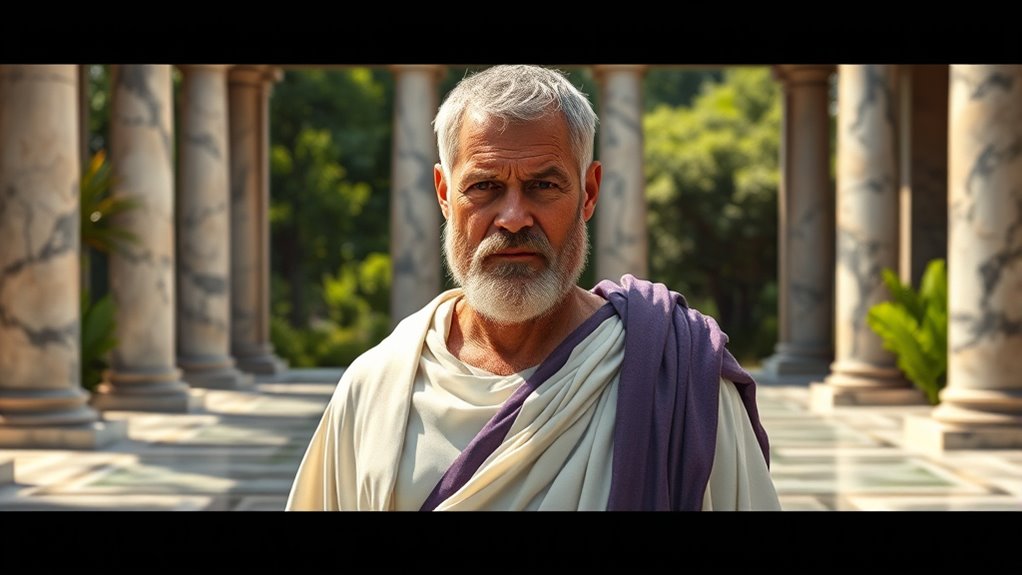

Gaius Junius Rusticus was a key Roman senator and Stoic philosopher who mentored Marcus Aurelius, shaping his views on virtue and leadership. Through his teachings, Rusticus guided Marcus toward living in accordance with reason, nature, and moral integrity. His influence helped forge Marcus into a wise and resilient leader, emphasizing self-control and justice. If you want to discover how Rusticus’s mentorship impacted Roman philosophy and leadership, there’s more to explore beyond this introduction.

Turn your quiet moments into listening time
- Thousands of audiobooks, podcasts and originals
- Listen on your phone, tablet or Echo — also offline
- Cancel anytime
Key Takeaways
- Gaius Junius Rusticus was a Roman senator and Stoic philosopher who mentored Emperor Marcus Aurelius.
- He influenced Marcus’s ethical development, emphasizing virtue, discipline, and rational living.
- Rusticus helped solidify Stoic principles in Roman governance and daily life.
- His teachings guided Marcus through leadership challenges and moral dilemmas.
- Rusticus’s mentorship left a lasting impact on Roman philosophy and ethical leadership.

Gaius Junius Rusticus was a prominent Roman senator and Stoic philosopher who served as a trusted advisor to Emperor Marcus Aurelius. As you explore his life, you’ll see how he played a vital role in shaping not only Marcus’s outlook but also the broader course of philosophy during his time. Rusticus’s influence marks a significant chapter in the philosophy evolution, bridging earlier Stoic ideals with the practical ethical philosophy that Marcus would later champion. His teachings and mentorship helped solidify Stoicism’s importance in Roman political and intellectual life, making his impact extend far beyond his own lifetime.
Gaius Junius Rusticus shaped Stoic philosophy and mentored Marcus Aurelius, leaving a lasting legacy in Roman intellectual life.
You’ll notice that Rusticus’s approach to philosophy was rooted in discipline and virtue. He emphasized that true wisdom comes from living in accordance with reason and nature—principles that remain central to Stoic thought today. His dedication to practicing these ideals personally and encouraging others to do the same made him a model of Stoic integrity. When Marcus Aurelius describes Rusticus’s influence in his Meditations, it’s clear that Rusticus was not only a teacher but also a moral compass, guiding Marcus through the complexities of leadership and life. This mentorship highlights the importance of philosophical mentorship in shaping character and moral resilience, especially for those in positions of power.
Additionally, Rusticus’s emphasis on moral character and practical virtue helped ensure that Stoic teachings were applicable to the governance of the empire and daily life. Rusticus’s role in the philosophical landscape of his era also had a notable historical influence. His teachings helped preserve and transmit Stoic ideals during a time of political turbulence and cultural change within the Roman Empire. By championing self-control, justice, and rational thought, he contributed to the development of a pragmatic Stoicism that was applicable to governance and daily life. His influence extended beyond personal virtue, impacting the way Roman elites viewed their responsibilities and moral duties. This legacy contributed to Stoicism’s endurance as a guiding philosophy in Western thought, influencing subsequent generations of philosophers and leaders.
As you reflect on Rusticus’s contributions, you’ll understand how his mentorship helped evolve Stoic philosophy from a theoretical discipline into a practical guide for ethical living. His influence, both directly through his teachings and indirectly through Marcus’s writings, underscores the enduring power of philosophy to shape character and societal values. Rusticus’s life exemplifies how a committed philosopher can leave a lasting mark on history, inspiring future leaders to pursue virtue amid chaos. His legacy remains a monument to the profound impact that dedicated mentorship and philosophical integrity can have on the evolution of ideas and their lasting influence on civilization.
As an affiliate, we earn on qualifying purchases.
Frequently Asked Questions
What Specific Philosophical Teachings Did Rusticus Provide to Marcus Aurelius?
You learn from Rusticus about Stoic ethics, emphasizing virtue as the highest good. He teaches you to control your emotions, accept fate, and act with wisdom and justice. Rusticus’s virtue education encourages you to cultivate self-discipline, integrity, and resilience. Through his guidance, you understand that true strength lies in inner virtue, helping you develop a calm, rational mind and a moral character prepared for life’s challenges.
How Did Rusticus Influence Marcus Aurelius’s Approach to Leadership?
You learn from Rusticus’s teachings that embracing Stoic virtues and adhering to strong leadership ethics shape your approach to leadership. His influence encourages you to lead with integrity, humility, and discipline, prioritizing virtue over power. Rusticus’s emphasis on self-control and rational judgment helps you make fair decisions, inspiring trust and respect. By applying these principles, you build a leadership style rooted in moral excellence and steadfastness.
Are There Any Surviving Writings Directly Attributed to Rusticus?
You’ll find that no surviving ancient manuscripts are directly attributed to Rusticus. Though he participated in philosophical debates and influenced Marcus Aurelius, his writings haven’t been preserved or discovered. Instead, his impact survives through references in Marcus’s meditations and historical accounts. Rusticus’s role as a mentor emphasizes practical wisdom, even if the original texts of his philosophical ideas remain lost to history.
What Was Rusticus’s Role in the Roman Political Hierarchy?
You see, Rusticus played a significant role in Roman governance as a senator and senatorialis, contributing to political stability. His political mentorship shaped Marcus Aurelius and guided him through leadership responsibilities. Rusticus’s influence extended beyond his formal titles, inspiring future leaders and fostering values like integrity and duty. His leadership helped uphold Roman political traditions, making him an essential figure in the empire’s governance structure.
How Did Rusticus’s Personal Life Impact His Mentorship of Marcus Aurelius?
Like a steady lighthouse amid stormy seas, Rusticus’s personal hardships and family influence shaped his mentorship of Marcus Aurelius. His resilience and moral integrity, forged through life’s struggles, inspired the young emperor to value virtue and discipline. You see, his life taught that perseverance through hardships cultivates strength, making his guidance not just intellectual but deeply personal—an enduring legacy rooted in his own trials and family’s example.
Conclusion
You can see Gaius Junius Rusticus as the steady lighthouse guiding Marcus Aurelius through turbulent waters. His mentorship illuminates the path of wisdom, virtue, and resilience, shaping a leader who stands firm amid chaos. Just as a lighthouse doesn’t steer the ship but shows the way, Rusticus’s influence lights the journey toward true Stoic greatness. Embrace his example, and let his guidance be the beacon in your own voyage through life.
Evergreen bestsellers Picks
bestsellers
As an affiliate, we earn on qualifying purchases.