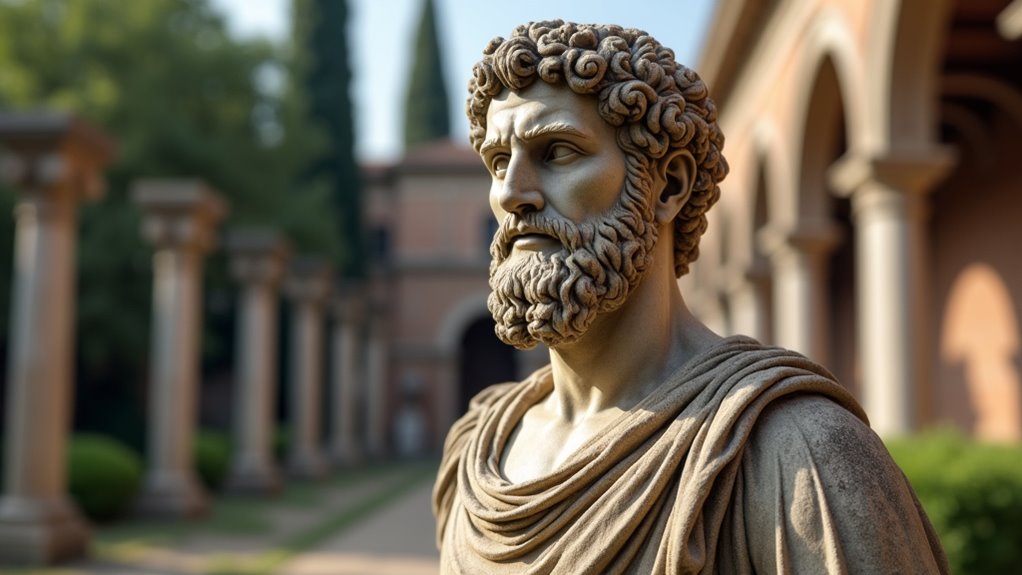

Discover seven life lessons from Marcus Aurelius, the philosopher king whose Stoic principles can guide your leadership and resilience. By embodying virtues like wisdom, humility, and integrity, you learn to lead by example and stay calm amid adversity. Embrace inner strength, accept what you can’t control, and prioritize justice and empathy. These timeless insights can help you build a lasting legacy and become a more effective, grounded leader—if you continue exploring these powerful ideas.
Key Takeaways
- Embrace virtue and integrity as guiding principles to lead by moral example and inspire others.
- Cultivate resilience by accepting what is beyond control and maintaining inner tranquility during adversity.
- Practice humility and trust in others, recognizing leadership as a moral responsibility rather than authority.
- Apply Stoic wisdom to act justly, fairly, and with empathy, fostering environments of respect and cooperation.
- Focus on legacy through disciplined self-awareness, long-term vision, and commitment to the common good.
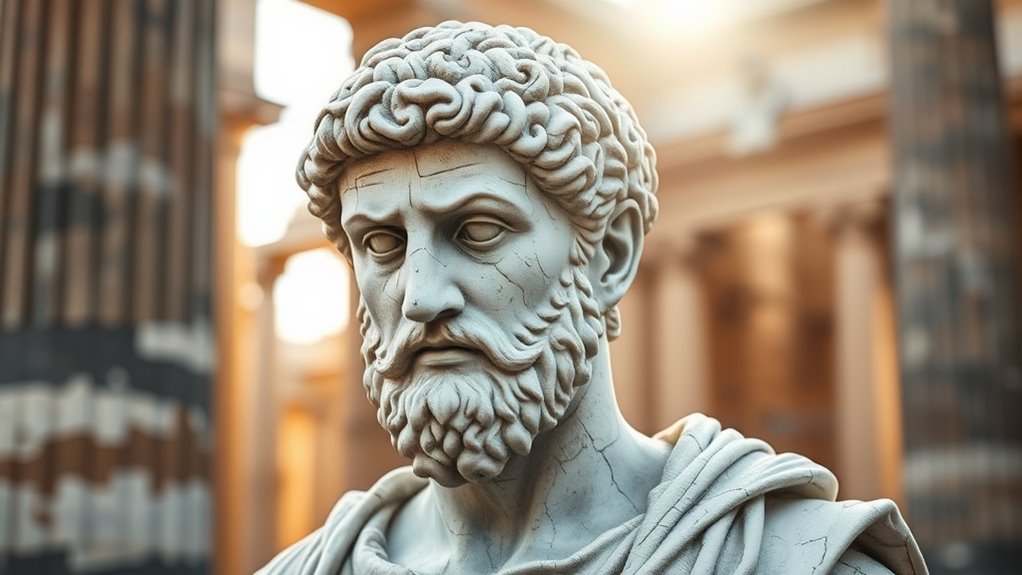
Marcus Aurelius, often called the philosopher king, exemplifies how wisdom and leadership can intertwine. His life offers powerful lessons on applying Stoic principles to lead with integrity, resilience, and purpose. As you reflect on his example, you’ll see that true leadership isn’t just about authority; it’s about embodying virtues that inspire others and withstand life’s inevitable challenges. Marcus demonstrated that leadership qualities rooted in discipline, humility, and a calm, rational mind are essential for guiding others effectively. His commitment to Stoic principles—such as accepting what you cannot control, maintaining inner tranquility, and acting justly—serves as a blueprint for modern leaders seeking authentic influence.
By studying his approach, you learn that leadership begins from within. Marcus’s Stoic principles emphasize self-awareness and self-control, indispensable traits for anyone in a position of power. He believed that a leader’s strength lies in mastering one’s emotions and reactions, especially during crises. When faced with adversity, he remained steadfast, viewing obstacles as opportunities for growth rather than insurmountable setbacks. This mindset is essential for cultivating resilience, allowing you to stay composed and make rational decisions even under pressure. Marcus’s leadership qualities also highlight the importance of humility. Despite wielding immense authority, he practiced humility, recognizing his limitations and valuing the contributions of others. This humility fosters trust and loyalty, qualities that elevate your capacity to lead effectively. Additionally, understanding the importance of financial management and legacy planning can help ensure that your leadership and wealth endure beyond your lifetime.
Furthermore, Marcus Aurelius teaches that leadership isn’t about asserting dominance but about serving others with virtue. His writings encourage you to prioritize justice, fairness, and empathy in your actions. When you lead with these principles, you create an environment of respect and cooperation. His example reminds you that true authority is earned through consistency and moral integrity, not through fear or coercion. The wisdom embedded in his Stoic teachings underscores that a leader’s role is to guide others toward their best selves, often by leading through example and maintaining unwavering principles. Applying these lessons can help you develop leadership qualities that are resilient, ethical, and inspiring, regardless of your circumstances.
In essence, Marcus Aurelius’s life exemplifies how integrating Stoic principles into your leadership style transforms challenges into opportunities for growth. His legacy encourages you to cultivate inner strength, act justly, and lead with humility. By embodying these qualities, you’ll not only become a more effective leader but also inspire others to pursue virtue and resilience in their own lives. His example remains a timeless reminder that true leadership is rooted in wisdom, discipline, and a steadfast commitment to the common good.
Frequently Asked Questions
What Were Marcus Aurelius’S Biggest Challenges as Emperor?
You face significant challenges as emperor, including managing imperial rebellions and responding to deadly plague outbreaks. These issues test your leadership, forcing you to balance military efforts and public health crises. You must stay resilient, making tough decisions to protect Rome and its people. Steering through rebellions and plagues demands strategic thinking, patience, and strength—traits that defined Marcus Aurelius’s reign and his approach to leadership during tough times.
How Did Marcus Aurelius Influence Modern Leadership?
You might think leadership is about power, but Marcus Aurelius shows it’s about stoic resilience and ethical decision making. His influence on modern leaders encourages you to stay calm under pressure, prioritize integrity, and act thoughtfully. These principles help you navigate challenges with strength and morality. By embracing his philosophy, you learn that true leadership isn’t just about authority but about virtue and resilience in the face of adversity.
What Personal Sacrifices Did Marcus Aurelius Make?
You might wonder about the personal sacrifices Marcus Aurelius made. He prioritized daily discipline, dedicating himself to duty and Stoic principles, often putting the needs of Rome above his own comfort. He endured hardships, such as ruling during wars and crises, while maintaining humility and self-control. His sacrifices included personal leisure and emotional attachments, demonstrating his commitment to the greater good and his philosophical ideals.
Did Marcus Aurelius Have Any Notable Mentors or Influences?
You might wonder if Marcus Aurelius had notable mentors or influences. He was deeply shaped by Stoic mentorship and philosophical influences, especially by Epictetus and Seneca, whose teachings emphasized virtue, resilience, and self-control. These ideas profoundly impacted his thinking, guiding him through leadership challenges and personal struggles. By embracing these influences, he cultivated wisdom and composure, exemplifying how mentorship and philosophical teachings can shape a leader’s character and actions.
How Is Marcus Aurelius’S Philosophy Relevant Today?
You might wonder how ancient philosophy applies today. Marcus Aurelius’s teachings on Stoic resilience remind you to stay calm amid chaos, while his emphasis on ethical leadership guides you to act with integrity. These lessons help you navigate modern challenges, fostering inner strength and responsible decision-making. His philosophy encourages you to remain resilient and ethical, proving timeless relevance in personal growth and leadership.
Conclusion
By embracing Marcus Aurelius’s lessons, you can face life’s challenges with resilience and clarity. Imagine overcoming a tough breakup by practicing acceptance and focusing on your inner strength, just as he did amid chaos. Remember, your mindset shapes your reality. Apply these lessons daily, and you’ll find greater peace and purpose. Ultimately, like the philosopher king, you have the power to lead a more meaningful, composed life—no matter what obstacles come your way.