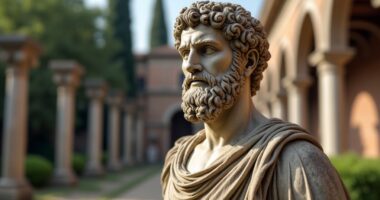
Epictetus’s Enchiridion is a practical guide to living a resilient and virtuous life. It teaches you to focus on what you can control—your reactions and choices—and accept what’s outside your influence. By cultivating inner tranquility and self-discipline, you can turn setbacks into growth opportunities. If you embrace these principles, you’ll find peace amid chaos and develop mental strength. Keep exploring, and you’ll discover how to apply these timeless ideas to your everyday life.
Key Takeaways
- The Enchiridion is a concise manual emphasizing how inner control and virtue lead to happiness despite external chaos.
- It teaches that our responses, not external events, determine our emotional well-being.
- The handbook encourages practicing self-discipline, moderation, and detachment from fleeting pleasures.
- It highlights examining and questioning perceptions to reduce unnecessary suffering and promote rational thinking.
- Overall, it offers timeless guidance on cultivating resilience, inner peace, and meaningful living through Stoic principles.

Have you ever wondered how to live a wiser, more resilient life? If so, you’re not alone. Many people turn to ancient wisdom to navigate modern challenges, and Epictetus’s Enchiridion offers a timeless guide rooted in practical philosophy. This small but powerful manual distills Stoic principles into actionable advice you can apply daily. It’s designed not just to inspire, but to help you develop mental strength, emotional resilience, and a clearer perspective on what truly matters.
At its core, the Enchiridion emphasizes that your happiness depends less on external circumstances and more on how you respond to them. It teaches you to focus on what’s within your control and accept what isn’t. This approach is central to Stoic philosophy, which encourages practicing virtue and maintaining inner tranquility regardless of external chaos. By embracing these Stoic principles, you learn to detach your peace from fleeting events, fostering a sense of calm and stability that withstands life’s inevitable ups and downs.
Happiness depends on your response, not external events—cultivate virtue and inner tranquility amid life’s chaos.
Practically, the manual guides you to reframe your thinking about setbacks and difficulties. Instead of reacting with frustration or despair, you’re encouraged to see obstacles as opportunities for growth. When faced with adversity, you remind yourself that your response determines your experience—that you have the power to choose your attitude. This mindset shift is a cornerstone of practical philosophy, transforming challenges into chances to practice patience, courage, and discipline.
The Enchiridion also urges you to cultivate self-control and discipline in your daily life. It emphasizes that true freedom comes from mastering your desires and passions rather than being enslaved by them. By aligning your actions with your values and practicing moderation, you build resilience against temptation and impulsiveness. This discipline not only strengthens your character but also helps you stay focused on your long-term goals, making you less susceptible to fleeting pleasures or external influences.
Moreover, Epictetus teaches that you should examine your judgments and perceptions carefully. Often, suffering arises from mistaken beliefs or irrational thoughts. By questioning your assumptions and viewing situations objectively, you reduce unnecessary suffering and gain clarity. This practice of mindful reflection is a key aspect of Stoic principles, empowering you to respond thoughtfully rather than react impulsively. Additionally, ongoing practice of self-awareness enhances your capacity to maintain emotional stability and make rational choices in complex situations.
In essence, the Enchiridion serves as a concise yet profound guide to living a resilient, meaningful life through practical philosophy. It encourages you to adopt Stoic principles that foster inner strength, emotional stability, and a sense of purpose. By applying its teachings daily, you can navigate life’s uncertainties with confidence, resilience, and wisdom.
Frequently Asked Questions
How Can Enchiridion Be Applied in Modern Daily Life?
You can apply Enchiridion in your daily life by practicing practical mindfulness, focusing on what you can control, and accepting what you can’t. Use daily discipline to remind yourself of these principles, helping you stay resilient during challenges. By embracing these Stoic ideas, you’ll develop greater emotional strength, reduce stress, and live more intentionally, making each day more manageable and fulfilling.
What Are the Main Differences Between Epictetus and Other Stoic Philosophers?
Imagine a river guiding your journey—this is how Epictetus differs from other Stoics. His focus on practical ethics flows like a direct current, emphasizing actionable principles over abstract theory. While others like Marcus Aurelius explore introspection, Epictetus’s philosophical methodology is hands-on, teaching you to master your responses and choices daily. His teachings serve as a clear map for steering life’s turbulent waters with resilience and clarity.
Is Enchiridion Suitable for Beginners in Philosophy?
You might wonder if the Enchiridion is suitable for beginners in philosophy. The answer is yes; it offers a beginner-friendly, introductory overview of Stoic principles. Its concise, practical guidance helps you understand core ideas without complex jargon. As a starting point, it’s accessible and straightforward, making it ideal for those new to philosophy who want to grasp essential concepts and apply them to everyday life.
How Does Enchiridion Address Emotional Resilience?
Imagine your emotions as a stormy sea—steady ships face waves with resilience. The Enchiridion teaches you to build emotional strength by focusing on what you can control and accepting what you cannot. It offers resilience strategies like practicing self-discipline and shifting perspective, helping you remain anchored amid life’s tempests. By mastering these principles, you develop inner calm and unwavering resilience, turning turbulent emotions into steady waters.
Can Enchiridion Help With Managing Relationships?
You can use the Enchiridion to improve your relationships by setting emotional boundaries and practicing self-control. It encourages you to focus on what’s within your power and accept what you can’t change. By applying its teachings, you’ll handle conflicts more calmly and avoid unnecessary emotional turmoil. This approach helps you build healthier connections, resolve disagreements more effectively, and maintain inner peace despite external challenges.
Conclusion
By embracing Epictetus’ teachings, you learn to stay steady amid life’s storms. His wisdom reminds you that you can’t control everything, but you can control your reactions. When challenges strike, remember, it’s not the blow that defines you but how you respond. Keep this handbook close, and you’ll find that life’s hurdles become stepping stones. Sometimes, you’ve got to roll with the punches to come out stronger on the other side.