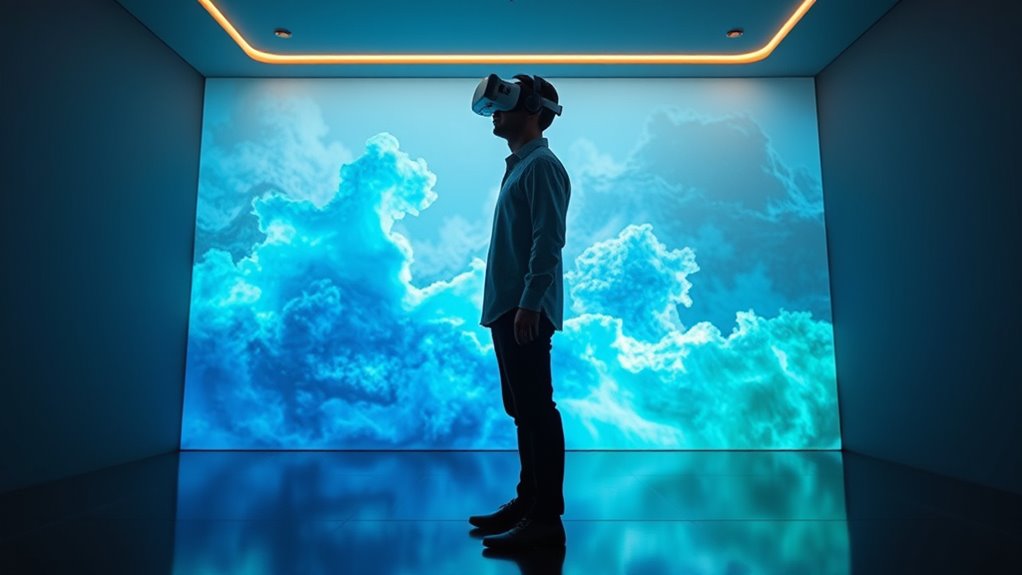

In virtual reality, you have a unique chance to practice Stoic virtues like resilience and mindful detachment. By focusing on internal virtues rather than external simulations, you strengthen emotional stability and develop inner contentment. Virtual worlds challenge you to respond ethically and reinforce your character, helping you stay grounded amid artificial distractions. Maintaining awareness of what’s real versus virtual sharpens your judgment. Continue exploring to discover how you can turn these artificial environments into powerful tools for philosophical growth.
Key Takeaways
- Virtual reality offers immersive environments for practicing Stoic virtues like patience, resilience, and mindful detachment.
- Maintaining awareness of virtual versus real experiences helps preserve emotional stability and inner tranquility.
- Engaging ethically in VR involves using simulations for self-improvement rather than escapism.
- Practicing mindful detachment in virtual worlds reinforces resilience and independence of judgment.
- VR can be a valuable tool for philosophical growth when aligned with Stoic principles and balanced with real-world grounding.

As virtual reality becomes more immersive and accessible, it offers new opportunities to practice and apply Stoic principles. In these artificial worlds, you can cultivate mindful detachment, learning to observe your experiences without becoming overly attached to the simulated environment or the emotions it stirs. Instead of losing yourself in the digital illusion, you can develop a clear awareness of what’s real and what’s not, fostering a sense of inner stability. This mindful detachment helps you remain centered, even amid the vivid distractions that virtual worlds provide. It encourages you to recognize that your happiness and tranquility shouldn’t depend on external circumstances—whether those circumstances are physical reality or virtual simulation. By practicing this awareness, you reinforce the Stoic idea that true contentment comes from within, not from external stimuli.
Engaging in ethical immersion becomes essential as you navigate these digital realms. Virtual reality offers a unique chance to simulate situations that challenge your virtues—whether it’s practicing patience, compassion, or resilience. But it’s crucial to approach these experiences ethically, ensuring that your engagement fosters growth rather than escapism. You might use VR to rehearse difficult conversations or to imagine yourself embodying virtues you want to strengthen. The goal is to immerse yourself ethically, meaning you’re intentionally using these virtual environments as tools for self-improvement, rather than as distractions or escapist escapes. This ethical immersion aligns with Stoic ideals, where the focus is on developing virtue and wisdom through mindful engagement. It’s about consciously choosing experiences that reinforce your character and values, not merely seeking entertainment or fleeting pleasure.
In this context, you learn to differentiate between superficial engagement and meaningful practice. Virtual worlds can be powerful for testing your responses to challenging scenarios, but only if you approach them with a disciplined mind. Each encounter becomes an opportunity to reflect on your reactions, to remain detached from the desire for immersion itself, and to focus on what the experience reveals about your inner state. By cultivating mindful detachment, you avoid becoming emotionally entangled with the digital environment, maintaining your independence of judgment and emotional resilience. Incorporating awareness of spiritual energy can enhance your capacity to stay grounded and centered amidst virtual distractions, helping you maintain a balanced perspective. Practicing ethical immersion ensures that your virtual experiences serve your growth, aligning with the Stoic pursuit of virtue. This balance allows you to leverage virtual reality as a valuable tool for philosophical practice—an arena where you can strengthen your character while remaining grounded in reality.
Top picks for "stoicism virtual reality"
Open Amazon search results for this keyword.
As an affiliate, we earn on qualifying purchases.
Frequently Asked Questions
Can Stoic Principles Be Applied Directly to Virtual Environments?
Yes, you can apply stoic principles directly to virtual environments. By practicing digital detachment, you focus on maintaining inner tranquility despite virtual distractions. Embracing virtual virtue helps you act ethically and with integrity within digital spaces. You control your reactions, choose meaningful interactions, and stay grounded in reality. This way, stoicism guides you to navigate artificial worlds wisely, fostering resilience and calm amid the digital chaos.
How Does Virtual Reality Affect Emotional Resilience?
Virtual reality can challenge your emotional resilience by creating immersive experiences that test your emotional adaptation. As you navigate these artificial worlds, you might encounter intense scenarios that either strengthen or weaken your resilience building. By staying mindful and practicing self-control, you can harness VR’s potential to enhance emotional resilience, making it easier to handle real-world stressors and uncertainties with greater calm and stability.
What Are the Ethical Considerations of Stoicism in VR?
You should consider that stoicism in VR raises ethical questions about digital authenticity and moral boundaries. As you navigate artificial worlds, you might question whether maintaining emotional detachment aligns with genuine virtue or if it risks detaching you from real-world responsibilities. It’s crucial to stay mindful of how virtual experiences impact your moral sense and guarantee that your actions uphold integrity, rather than blur the lines between authentic virtue and simulated escapism.
Is It Possible to Practice Mindfulness Effectively in Virtual Worlds?
You can definitely practice mindfulness effectively in virtual worlds, but it’s a tightrope walk. Mindfulness meditation helps you stay present, yet virtual distractions often tempt you to drift away. To succeed, you need to stay disciplined and aware of your focus. While virtual environments can enhance your experience, they also challenge your ability to maintain genuine mindfulness amidst the digital noise. Stay grounded, and you’ll find balance.
How Might VR Influence Our Perception of Reality and Virtue?
VR can profoundly influence your perception of reality and virtue by creating immersive environments that prompt perception shifts. You might find yourself more inclined toward virtual virtues, adopting moral virtues within the digital world. However, this can blur boundaries, challenging your understanding of real-world virtues. Use VR intentionally to reinforce virtuous behavior, but stay grounded to maintain clarity between virtual and authentic perceptions of reality and virtue.
Conclusion
As you navigate the virtual domain, remember Epictetus’s wisdom: you can’t control the world, only your reactions. Like a sailor steering through stormy seas, your mindset guides you amid artificial worlds. Embrace the serenity of Stoicism, and you’ll find balance, even when pixels threaten to pull you away from reality. Ultimately, it’s your inner compass that determines whether these digital landscapes serve as mere illusions or opportunities for growth.