

Zeno of Citium, the founder of Stoicism, emerged after a shipwreck inspired him to seek a life of virtue, reason, and emotional resilience. He believed true happiness comes from living in harmony with nature and cultivating virtues like wisdom, courage, justice, and temperance. His teachings focus on self-control and accepting what’s beyond your control. To discover how Zeno’s ideas shaped a philosophy still relevant today, explore how his vision for a just, virtuous society endures.
Key Takeaways
- Zeno of Citium, originally from Cyprus, founded Stoicism after a shipwreck led him to Athens.
- He emphasized virtue, rational control, and living in harmony with nature as paths to happiness.
- Zeno promoted societal unity through shared virtues and moral development rooted in reason.
- Although no writings survive, his teachings influence modern resilience, ethics, and leadership.
- His core ideas include emotional resilience, mindfulness, and the pursuit of inner peace through virtue.

The Daily Stoic: 366 Meditations on Wisdom, Perseverance, and the Art of Living
As an affiliate, we earn on qualifying purchases.
As an affiliate, we earn on qualifying purchases.
The Life and Legacy of Zeno of Citium
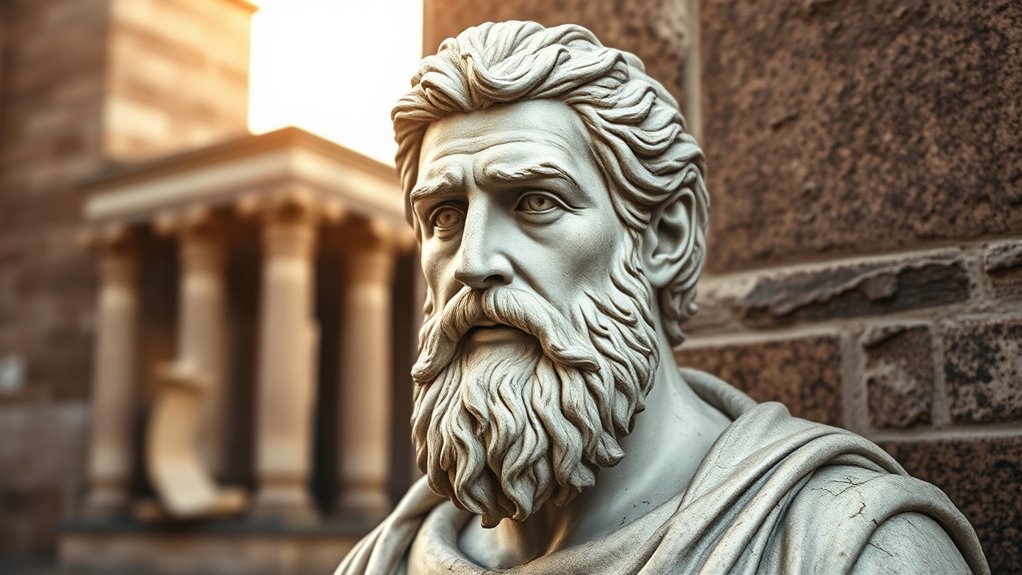
Zeno of Citium’s life was shaped by a pivotal event: a shipwreck that led him to Athens, where he discovered philosophy. Unlike Epicurean thinkers who sought pleasure, Zeno focused on mastering Stoic emotions, emphasizing virtue and rational control. His journey from tragedy to wisdom inspired him to teach that happiness comes from living in harmony with nature and reason. Recognized for his virtue, he was honored with a statue and a public decree praising his conduct. Though no writings survive, his legacy endures through his teachings, shaping Stoicism’s core idea that true happiness arises from inner resilience and virtue, not external events.
The Foundations and Core Principles of Stoicism
Stoicism is grounded in the belief that true happiness comes from cultivating virtue and living in harmony with nature and reason. Its core principles focus on developing emotional resilience and maintaining ethical discipline. You embrace these ideas through: 1. Recognizing what’s within your control and accepting what isn’t. 2. Practicing self-control to align actions with reason. 3. Cultivating virtues like wisdom, courage, justice, and temperance. 4. Living in accordance with nature, fostering harmony with the world. Additionally, understanding the importance of contrast ratio enhances one’s appreciation for clarity and depth in visual representations, paralleling the Stoic aim of clarity and discernment in life. Developing cultural intelligence can also support a deeper understanding of diverse perspectives, enriching your approach to living virtuously. Recognizing toilet flushing mechanisms and efficiency can serve as a metaphor for understanding how different approaches impact resource conservation and overall system performance. Moreover, exploring popular media and culture, such as influential films and art, can provide valuable insights into human values and societal norms, further enriching one’s philosophical outlook. Recognizing the role of biodiversity in ecosystems can deepen one’s appreciation for harmony and interdependence within the natural order.
Zeno’s Vision of a Just and Virtuous Society

A just and virtuous society, according to Zeno’s vision, is one where all members live in harmony by cultivating shared virtues like justice, wisdom, courage, and temperance. He believed virtue ethics should guide societal life, emphasizing moral development rooted in reason. Using Socratic dialogue, Zeno sought to inspire citizens to reflect on their values and actions, fostering collective growth. In this society, everyone endeavors to act in accordance with nature and reason, creating unity and stability. Zeno envisioned a community where virtue isn’t just personal but foundational, ensuring justice and harmony through continuous pursuit of moral excellence.
Key Sayings and Philosophical Insights

Key sayings and philosophical insights from Zeno reveal timeless principles about living virtuously and maintaining inner peace. His words emphasize emotional resilience and virtue ethics as guides to a good life. Consider these core lessons:
- “Happiness is a good flow of life,” reminding you that inner tranquility comes from aligning with virtue and reason. Cultivating emotional resilience is essential to navigate life’s challenges effectively. Developing a mindful attitude can help you stay centered amid stress and uncertainty.
- “A bad feeling is a commotion of the mind,” urging you to master your emotions through rational discipline.
- “We have two ears and one mouth,” highlighting the importance of listening over speaking, fostering wisdom.
- “Better to trip with the feet than with the tongue,” warning against impulsive speech that can disturb inner harmony.
- Embracing mindfulness practices can help cultivate emotional stability and resilience, aligning well with Zeno’s teachings on inner peace. Developing self-awareness can further enhance your ability to maintain equilibrium amid life’s uncertainties, especially when managing complex situations such as asset division in divorce.
Continuing Zeno’s Influence in Modern Thought
Zeno’s teachings continue to shape modern thought by inspiring individuals to cultivate resilience, virtue, and rational living. His emphasis on embracing challenges and maintaining inner calm fosters modern resilience, helping people navigate life’s uncertainties. In leadership, Zeno’s focus on ethical conduct and living in harmony with nature guides many to prioritize integrity and responsibility. Contemporary thinkers draw from Stoicism to promote mental toughness and moral clarity, applying Zeno’s principles to personal development and societal progress. Moreover, understanding the importance of AI safety measures is increasingly vital as technology advances, ensuring that innovations serve humanity positively. As automation and AI integration expand across industries, Zeno’s teachings on ethical living and rational decision-making become ever more relevant, guiding responsible development and use of new technologies. His enduring influence empowers you to face adversity with composure, lead ethically, and pursue a virtuous life grounded in reason and resilience, highlighting the importance of philosophical foundations in today’s ethical considerations. Additionally, integrating decluttering strategies into our lives can foster mental clarity and promote a more focused, ethical approach to technological and personal growth.
Frequently Asked Questions
How Did Zeno’s Personal Experiences Shape His Philosophical Views?
Your personal adversity, like Zeno’s shipwreck, deeply influences his philosophical views, teaching you resilience and acceptance. His early education, influenced by Socrates and Crates, shapes his focus on virtue and reason. You learn that challenges, whether physical or emotional, can lead to growth. Zeno’s life shows that overcoming adversity helps you live in harmony with nature, guiding you toward happiness through virtue and rational living.
What Distinguishes Zeno’S Version of Stoicism From Later Interpretations?
You see, Zeno’s version of Stoicism stands out because of his founder’s originality and focus on living virtuously in harmony with nature. He emphasized happiness as a good flow of life, rooted in reason, and promoted societal equality through his *Republic*. Later interpretations often expanded or adapted these ideas, but Zeno’s core principles remain grounded in his original teachings—centered on virtue, self-control, and rational living.
Are There Any Surviving Fragments of Zeno’S Original Writings?
You might wonder if any ancient manuscripts or philosophical quotations from Zeno have survived. Sadly, no writings directly from Zeno himself have come down to us. Most of what we are aware of comes from later sources like Diogenes Laërtius, who recorded his ideas and quotes. These fragments and quotations help us understand Zeno’s teachings, but the original manuscripts are lost to history.
How Did Zeno’S Ideas Influence Other Ancient Philosophical Schools?
Think of Zeno’s ideas as a pebble causing ripples across the pond of philosophy. His Stoic ethics, emphasizing virtue and reason, deeply influenced schools like Cynicism and Epicureanism, shaping their views on living in harmony with nature. His philosophical influence spread through these teachings, encouraging a focus on self-control and resilience that echoes in later philosophies, making him a foundational figure who helped forge a lasting legacy of ethical living.
What Practical Advice From Zeno Remains Relevant Today?
You can use Zeno’s practical advice to cultivate mindful resilience and ethical leadership today. Focus on living virtuously and in harmony with reason and nature, which helps you stay calm amid challenges. Practice listening more and speaking less, fostering understanding and patience. Remember, happiness flows from a good flow of life, rooted in virtue. Applying these principles guides you to lead ethically and cope resiliently in any situation.
Conclusion
By exploring Zeno’s life and teachings, you see how resilience and virtue shape a meaningful life. His Stoic wisdom reminds you that challenges are opportunities in disguise, guiding you toward inner peace. As you carry his legacy forward, remember: in the face of life’s storms, it’s your reason and virtue that anchor you. Embrace Zeno’s timeless lessons—let them inspire your journey, and transform obstacles into stepping stones.