
TL;DR

Turn your quiet moments into listening time
- Thousands of audiobooks, podcasts and originals
- Listen on your phone, tablet or Echo — also offline
- Cancel anytime
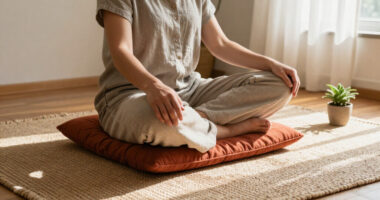
Spiritual meditation cushions are supports for seated meditation, prayer, breathwork, and other reflective practices; the term describes a broad product category, not a specific tradition or guaranteed result. A zafu raises the hips, a zabuton pads the legs and ankles, and a chair or folded blanket can work just as well if it helps you sit comfortably and steadily.
A cushion can help you sit still, but it cannot hand you a calmer mind. That small distinction matters when product pages promise spiritual transformation alongside pictures of soft linen and candlelight.
Spiritual meditation cushions are supports people use for meditation, prayer, breathwork, and other reflective practices. The name covers several shapes and materials; it does not identify one official design or guarantee a particular experience.
In this guide, you’ll learn what they are, how common styles differ, and how to find a comfortable height and filling. You’ll also see when an ordinary pillow, folded blanket, chair, or no cushion at all may serve you better. Think of the cushion like a good pair of shoes: useful when it fits your body and the ground you’re walking on.
The phrase “spiritual meditation cushion” covers a broad range of supports; it is not a formally defined product type.
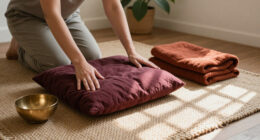
A zafu raises the hips, while a zabuton pads the floor beneath the legs and ankles.
Test height and stability with a folded blanket before buying a cushion.
Buckwheat hulls tend to feel firmer and are adjustable; kapok is lighter and often softer.
A chair or bench is a valid meditation seat, and persistent pain, tingling, or numbness calls for a change in position.
What a spiritual meditation cushion actually does
A spiritual meditation cushion is a support that helps you settle into a seated posture during meditation, prayer, breathwork, or another reflective practice. The phrase is broad and often used in marketing; it is not a defined product category with one required shape or set of features.
In practical terms, a cushion changes where your weight rests. A raised seat may lift your pelvis so your knees can relax lower, while padding beneath you can soften contact between your ankles and a hard floor. That can make sitting feel steadier, much like a small ramp can make a doorstep easier to cross. The difference matters because discomfort can draw attention away from the practice, while a stable position can make it easier to remain settled. Support does not remove every sensation, and a cushion that is too high or soft can create new pressure rather than relieve it.
Say you sit cross-legged on hardwood for ten minutes and notice pressure building at your ankles. A low cushion beneath your hips and a padded mat underneath your legs might ease that pressure. If you instead sit comfortably in a kitchen chair, the floor cushion may add nothing useful. These examples point to a simple tradeoff: more equipment can solve a specific comfort problem, but it also takes up space and may not help if the underlying issue is your posture or how long you sit.
Comfort can support staying still, but a cushion does not guarantee focus, enlightenment, or a particular spiritual experience. Traditions may give certain shapes or practices special meaning; the object alone does not create that meaning. Choose support for how your body feels, and let your practice guide what else matters.
Products Worth Considering

Withings Body Scan Smart Scale with Segmental Body Composition and ECG, Black

Hyperice Normatec Elite Wireless Compression Boots, Standard Size

Levoit Core 300S-P Smart Air Purifier
As an affiliate, we earn on qualifying purchases.
Choose between a zafu, zabuton, bolster, or floor pillow
A zafu is a raised seat, a zabuton is a flat leg mat, a bolster is a long support, and a floor pillow is a general-purpose cushion. These spiritual meditation cushion styles differ mainly in shape and the kind of support they offer. That shape influences how pressure is distributed: lifting the hips can change the angle of your legs, while a mat cushions contact with the floor without raising your seat.
If you picture your practice space, think about where the pressure lands: hips, knees, ankles, or back. A zafu may raise your hips for cross-legged sitting, while a zabuton can soften a firm floor under your shins. A bolster can support a reclining position or restorative yoga, and a stable floor pillow can work for simple seated practice. The tradeoff is that a specialized shape may provide more targeted support but suit fewer positions; a general pillow is versatile, though it may compress or shift when you rely on it for a steady seat.
| Style | Typical use | What to check |
|---|---|---|
| Zafu | Raised seated support | Height, firmness, and width |
| Zabuton | Padding under legs and ankles | Floor coverage and thickness |
| Bolster | Supported sitting or reclining | Length, shape, and stability |
| Floor pillow | Flexible everyday seating | Whether it compresses or shifts |
For example, a person who kneels may prefer a cushion that supports the space between their legs, while someone sitting cross-legged may want a firm lift under the hips. The style name only gets you partway there. Your posture and body proportions decide what feels useful. If possible, test a shape in the position you actually plan to use; a cushion can feel plush in your hands yet prove unstable once it carries your weight.
Find a height that lets your hips and knees relax
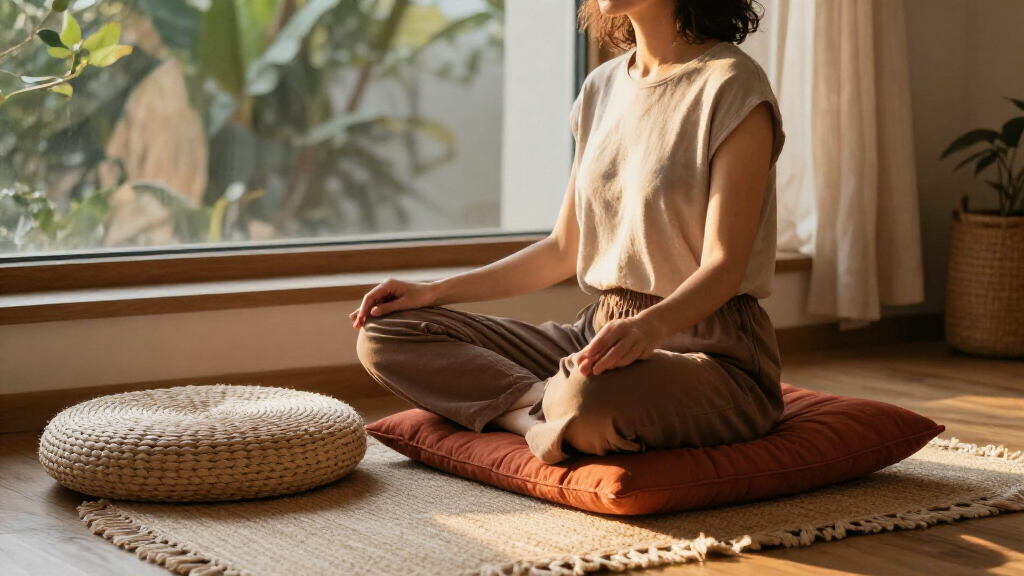
The right cushion height lets you sit steadily without sharp pain, numbness, or excessive strain; it depends on your body and your preferred position. A useful starting point for cross-legged sitting is to raise the hips enough that the knees rest comfortably near or below them, if that feels natural for you. This can make it easier for the pelvis to tip forward and the torso to balance, but the knee position is a guide rather than a rule: anatomy, flexibility, and past injuries vary.
Try this simple setup before buying: sit on a folded blanket for several minutes, then add or remove a fold. Notice whether your pelvis tips forward easily, whether your knees feel supported, and whether you’re bracing your lower back to stay upright. It’s a little like adjusting a chair at your desk: a few centimeters can change the whole feel. A higher seat may reduce strain for one person but make another feel perched; a softer seat may feel welcoming at first yet compress unevenly during a longer sit.
- Choose your posture, such as cross-legged, kneeling, or seated in a chair.
- Test a temporary support, like a folded blanket or firm pillow.
- Check stability: you should feel balanced rather than perched or sinking.
- Notice pressure at the hips, knees, ankles, and back over a short sit.
- Change position or stop if you feel persistent pain, tingling, or numbness.
For instance, if a cushion feels comfortable for the first two minutes but your foot goes numb at minute eight, the setup needs adjusting. You could try a different height, add padding beneath your legs, or use a chair. The gradual change is useful information: comfort at the start does not always predict comfort over a full session. Meditation does not require sitting on the floor, and comfort is a better guide than a prescribed pose.
Pick a filling that matches your comfort and routine
Buckwheat hulls are relatively firm and adjustable, while kapok is lighter and often softer; neither filling suits everyone. Cotton, foam, and synthetic fiber also appear in meditation cushions, and each may feel different under your weight. Filling affects more than first impressions: it changes how the cushion holds its shape, responds to movement, and feels after sitting for a while.
With a cushion that has adjustable filling, you can remove or add material to change its height and firmness. That can be helpful if a cushion feels too tall straight out of the box. Buckwheat hulls often feel like a dense, shifting grain bed, which can be molded around the hips but may feel heavy to carry. Softer fiber can feel more like a padded pillow and weigh less, though it may compress over time and provide less consistent lift. These are tendencies, not guarantees; construction and the amount of filling also affect the result.
Imagine carrying your cushion to a weekly group in a community hall. A lighter cushion may be easier to pack, while a firmer one might keep its shape during a longer sit. At home, washable covers and clear care instructions may matter more than a carry handle. Check whether the cover removes and whether the filling needs airing or spot cleaning. A cushion that is easy to maintain is more likely to fit into a regular routine, while a less convenient care process can make an otherwise comfortable item harder to use.
Natural materials are common, but words like “organic” and “eco-friendly” can mean different things from one seller to another. Look for specific details about the cover and filling, durability, care, and any verifiable certification. A durable cushion that gets years of use may fit your priorities better than a vague label or a fashionable color.
Decide whether you need a cushion at all
You do not need a meditation cushion to meditate; a chair, bench, folded blanket, or comfortable lying position can work, depending on the practice. The useful option is the one that allows you to rest without forcing your body into a posture that causes pain or excessive strain. This flexibility can make practice more accessible: the goal is to support the activity, not to meet an equipment requirement.
If you have a dining chair with both feet resting comfortably on the floor, try that before buying a floor setup. Sit near the front of the seat, let your hands rest easily, and see whether your breathing feels unforced. A folded blanket can also serve as a low-cost trial if you want a slight lift but aren’t ready to choose a cushion. Trying simple options first helps you identify what support actually changes, which makes a later purchase less of a guess.
A cushion can be valuable when you enjoy floor sitting and want more support under your hips or legs. It may be less useful if you move often, prefer kneeling on a bench, or find that your knees object to cross-legged sitting. Like a backpack on a short walk, the right gear helps when it solves a problem; carrying extra gear just because it looks right does not improve the walk. Your choice can also change with the session: a chair may work for a longer sit, while a cushion may suit a short floor practice.
Use the seat that lets you practice comfortably. If pain, tingling, or numbness continues, change position or stop; persistent discomfort is a reason to seek appropriate professional guidance.
For a beginner, the simplest experiment is to try a chair, a folded blanket, and a floor cushion on separate short sessions. Compare how steady you feel and where pressure builds, then use those observations to decide whether a dedicated cushion solves a real need. Your own experience can tell you more than a product photo.
Shop for useful details instead of spiritual promises
Look for a stable shape, suitable height, clear materials, and manageable care instructions when you shop for spiritual meditation cushions. These details tell you more about daily use than claims that a particular design will deepen your meditation or produce a special spiritual outcome. They also let you compare products on things you can check, rather than on a promised result that depends on your practice and circumstances.
Product trends include adjustable fillings, washable covers, travel-friendly shapes, recycled materials, and cushions marketed for both yoga and meditation. These features can solve practical problems: a washable cover helps after regular use, and a travel-friendly design may fit beside a water bottle in your bag. Each feature involves a tradeoff: a compact cushion may offer less coverage, and a recycled-material claim is most useful when the seller explains what material is recycled and how the product should be cared for. A trend alone does not show that a cushion improves meditation.
Picture two listings: one promises a profound practice, while the other lists the cushion’s dimensions, removable cover, filling, weight, and cleaning steps. The second gives you concrete facts to match against your space and body. If you meditate in a small apartment and store your gear in a basket, dimensions and portability may decide the purchase. If you sit for longer periods, firmness and return policies may matter more, since a product description cannot tell you exactly how the cushion will feel under your weight.
Some cushion styles have historical associations with practices such as Zen or yoga, and people use cushions in religious as well as secular settings. You can respect those associations while making a practical choice for your own practice. Check the product’s actual design and care details; do not assume a label tells you what it supports or how it was made.
Frequently Asked Questions
Do you need a cushion to meditate?
No. You can meditate on a chair, bench, folded blanket, or in another comfortable position that suits the practice. If a floor cushion causes strain, try a different seat.
What is the difference between a zafu and a zabuton?
A zafu is a raised cushion for sitting, often used to lift the hips. A zabuton is a flat mat placed under a zafu or beneath the legs and ankles to add padding.
How high should your meditation cushion be?
Choose a height that feels stable and lets your hips and knees relax in your chosen position. Try a folded blanket first, since a few centimeters can change how the seat feels.
Is buckwheat or kapok better for a meditation cushion?
Neither is best for everyone. Buckwheat hulls tend to be firmer and adjustable, while kapok is often lighter and softer; your comfort and routine can guide the choice.
Can you use an ordinary pillow for meditation?
You can try one, especially for a short session. A bed pillow may compress or shift more than a cushion designed for seated support, so check that it stays stable under you.
How do you clean a meditation cushion?
Follow the maker’s care label. Many cushions have removable covers that can be washed, while the filling may need airing or spot cleaning.
Conclusion
Choose your seat by how your body responds, not by what a product promises. A zafu, zabuton, bolster, floor pillow, folded blanket, or chair can all be useful when they help you sit steadily and comfortably.
Try a short session with a simple support, notice where your weight lands, and adjust from there. The best cushion is the one that quietly lets you return to your practice—like a sturdy stone beneath your feet.