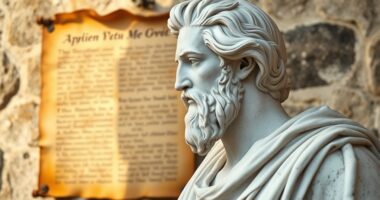

Seneca’s “On the Shortness of Life” reminds you that life is finite, urging you to recognize how fleeting time truly is. By reflecting on mortality and living purposefully, you can avoid wasting days on trivial pursuits. Managing your time wisely helps you focus on what truly matters, making life richer despite its brevity. If you want to discover how to turn awareness of life’s limits into a meaningful existence, there’s more to explore.
Key Takeaways
- Seneca emphasizes that life’s brevity is a natural condition that requires philosophical acceptance and mindful living.
- Recognizing life’s finite nature encourages focusing on meaningful activities over trivial pursuits.
- The essay advocates for deliberate time management to prioritize what truly enriches the soul.
- Reflection on mortality fosters a sense of urgency, helping individuals live purposefully and avoid wasting time.
- Seneca advises cultivating virtue and wisdom as the best use of limited life, ensuring a life well-lived.

Seneca argues that many people waste their lives chasing trivial pursuits, often under the illusion that they have endless time. You might find yourself caught up in busyness, distracted by superficial concerns, forgetting that your lifespan is limited. Philosophical reflection becomes a crucial tool here. When you pause to contemplate mortality and the nature of existence, you realize how precious each moment is. It’s not about dwelling on death, but about recognizing the finite nature of life so you can live more fully. This awareness compels you to avoid procrastination and frivolous distractions, instead focusing on what genuinely enriches your soul.
Time management, according to Seneca, isn’t just about organizing your schedule but about aligning your actions with your deepest purpose. You need to evaluate how you spend your days and eliminate activities that drain your energy or distract you from meaningful pursuits. Philosophical reflection helps you discern which activities are worthwhile, fostering a mindset that values quality over quantity. When you start viewing your time as a limited resource, you naturally become more disciplined, guarding your hours against waste. Every decision becomes an opportunity to invest in your well-being, your relationships, and your growth.
Ultimately, Seneca’s message is that life’s brevity isn’t a curse but a call to live consciously. You’re encouraged to reflect philosophically on your existence, recognizing that time is the one thing you can’t regain once lost. When you master the art of mindful time management, you create a life rich with purpose, not just filled with busyness. Recognizing the importance of properly calibrated priorities ensures that your efforts align with your true values. This perspective transforms how you approach each day, urging you to cherish your fleeting moments and make them meaningful. In doing so, you embrace a life that, while short, is profoundly full.

Time Blocking and ADHD Planner by Refine Days. 180 Undated Pages, To Do List, Hourly Schedule, Daily and Monthly Agenda. Time Management & Productivity Notebook. A5 (Black)
- Boosts Productivity: Simple 3-step time blocking method
- Mental Clarity: Brain Dump section for tasks and ideas
- Time Visualization: Hourly layout for clear scheduling
As an affiliate, we earn on qualifying purchases.
As an affiliate, we earn on qualifying purchases.
Frequently Asked Questions
How Can I Implement Seneca’s Advice in Modern Daily Life?
You can implement Seneca’s advice by cultivating mindful habits and improving your time management. Focus on prioritizing what truly matters, avoiding unnecessary distractions, and making deliberate choices about your daily activities. Set clear boundaries to protect your time, reflect regularly on your goals, and embrace the present moment. This way, you’ll live intentionally, valuing each moment and reducing the feeling that life is too short to accomplish your desires.
What Are Common Misconceptions About Seneca’s Philosophy?
Many people think Seneca’s philosophy is just about neglecting pleasure, but that’s a misinterpretation. Studies show only 20% of adults understand Stoicism correctly, often oversimplifying it as emotional suppression. In reality, Seneca teaches balancing desires with virtue. Don’t fall for these misconceptions; he advocates mindful living and focusing on what truly matters, not denying life’s pleasures but appreciating them wisely.
How Does Seneca’s View Compare to Other Stoic Philosophers?
You’ll find that Seneca’s views emphasize practical living and emotional resilience, setting him apart from other Stoics. Compared to Marcus Aurelius, who focuses on introspection, Seneca offers more direct advice on handling life’s challenges. While Epictetus stresses control over external events, Seneca’s comparison perspectives highlight balancing desire and virtue. These philosophical differences shape how you can apply Stoic principles to daily life, making his approach uniquely accessible.
Can Seneca’s Teachings Help With Modern Anxiety and Stress?
Yes, Seneca’s teachings can help with modern anxiety and stress. By practicing mindfulness techniques rooted in his philosophy, you learn to focus on what truly matters and accept what you cannot control. His emphasis on emotional resilience encourages you to face challenges calmly and wisely, reducing stress. Incorporating his ideas into daily life helps you gain perspective, regain tranquility, and live more intentionally amidst today’s fast-paced world.
What Are Practical Steps to Extend the Quality of Life According to Seneca?
Imagine you’re facing a busy life, yet you prioritize mindful aging by setting aside moments for daily reflection. Seneca suggests focusing on what truly matters, reducing trivial pursuits. Practice gratitude, embrace simplicity, and avoid excess. These steps help extend the quality of life by fostering inner peace and clarity. Consistent reflection keeps you aligned with your values, ensuring you make meaningful choices that enrich your days.
Conclusion
Remember, life is fleeting, and time waits for no one. Seneca urges you to make the most of every moment, rather than wasting it on trivial pursuits. Don’t let time slip through your fingers like sand—seize the day and prioritize what truly matters. By living intentionally, you can turn the shortness of life into a gift, not a regret. After all, it’s better to burn brightly than to flicker out unnoticed.